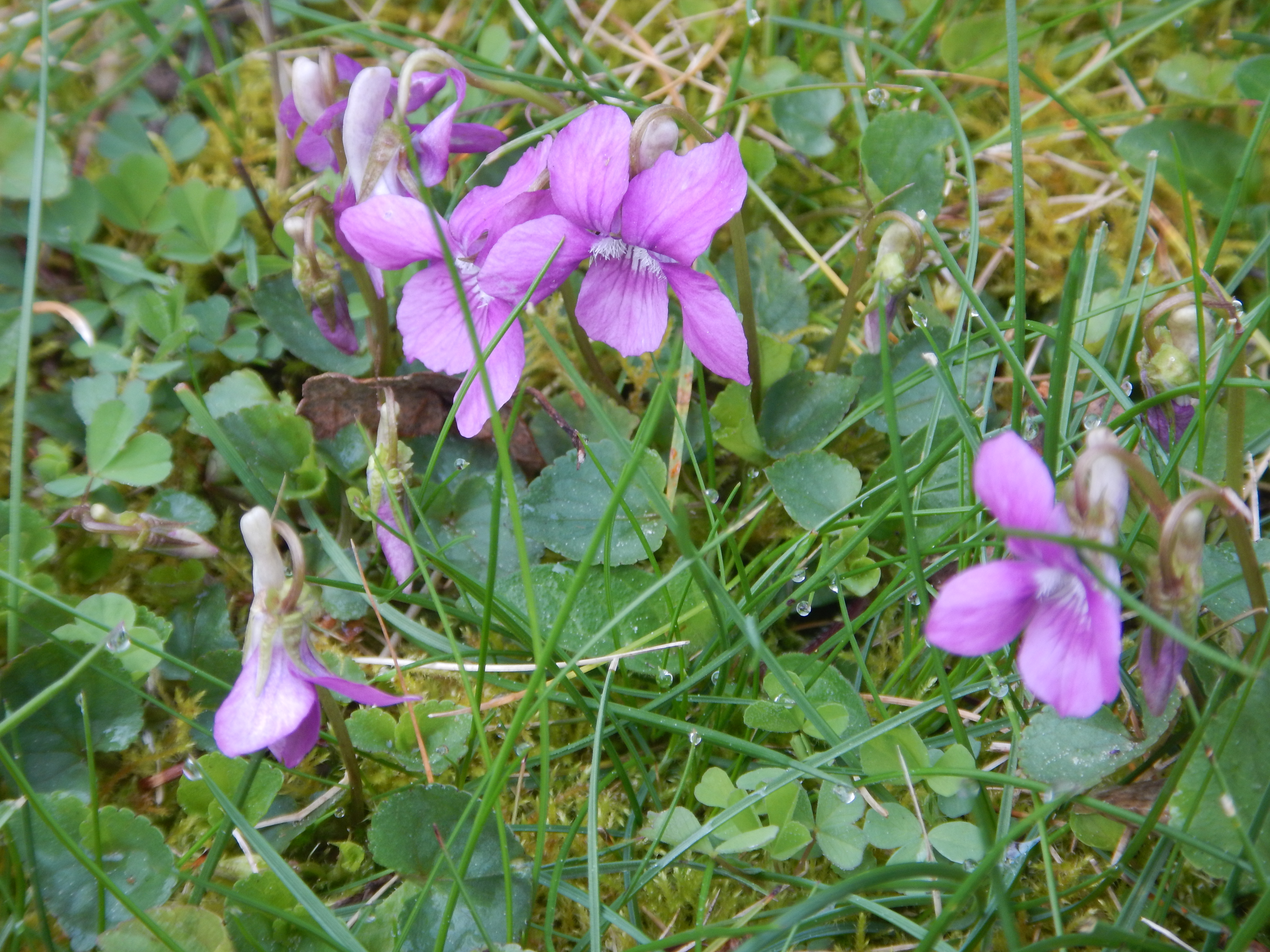
In digging a planting hole for a new treasure, I found a splendid example of the wild violet root system. How deep do you think they grow?
photo by SVSeekins
Deep. And Strong.
The primary root went at least 6 inches into the clay before sending out its feeder roots.
Who knows how much further those fine roots reach down to get moisture in a dry summer!
photo by SVSeekins
Can you imagine the mess I’d make trying to dig the wild violets out of our lawn? (I don’t bother coz I enjoy seeing them there … but…) Undoubtedly, some root would be left in the ground & in no time, the bees would be feeding on the violet’s sweet nectar again.
Some plants are so resilient. 🙂 Let’s hope my new treasure does half as well as the wild violets.
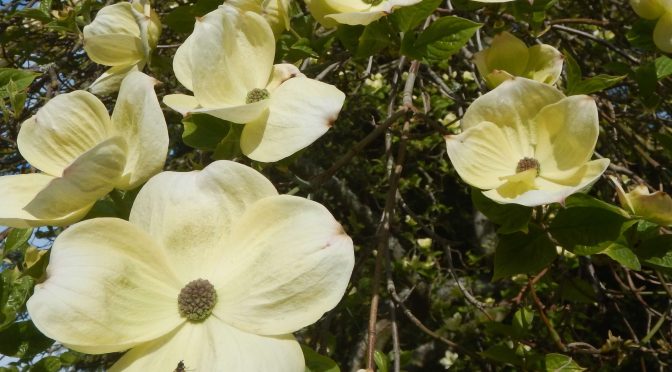
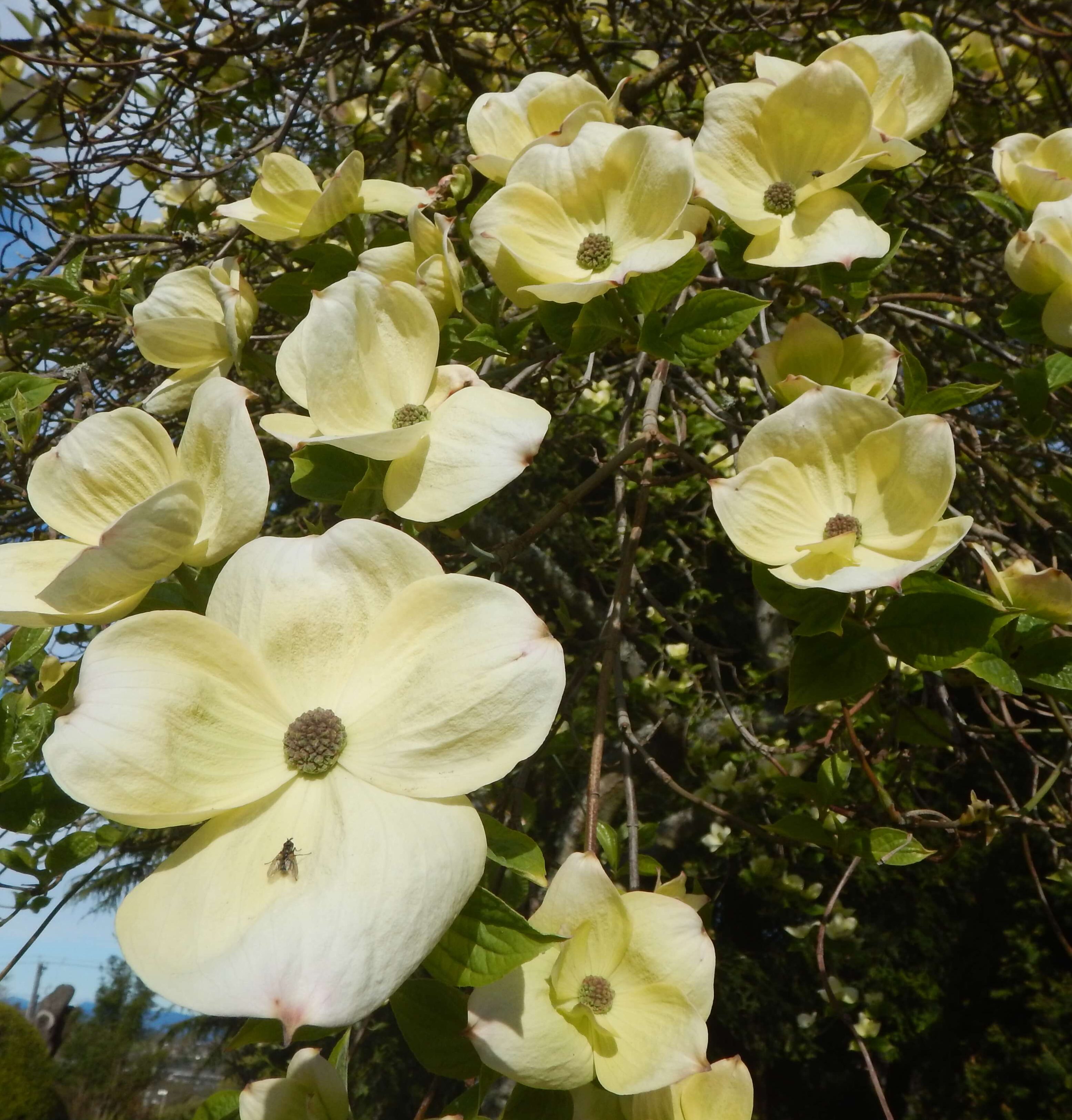
On the very southern coastal region of BC is our native Pacific Dogwood (Cornus nuttallii). So admired that it’s honoured as our provincial flower.
Across the continent, Eastern Flowering Dogwood (Cornus florida) is native to the southernmost tip of Ontario.
photo by SVSeekins
Both species often suffer from anthracnose fungus that disfigures leaves & causes twig & branch dieback. Ontario’s native dogwood is considered ‘at risk.’
The answer? A genuinely Canadian fix: combine them.
Enter H.M. Eddie (Henry Matheson Eddie). A nurseryman in BC’s Fraser Valley who got a kick out of creating new varieties of any number of plants. His 1945 success, ‘Eddie’s White Wonder,’ is the combo of the Pacific & the Eastern dogwoods.
Deer leave the tree alone (except the occasional buck needing to scratch his antlers – so trunk protection is needed.)
And fall leaf colour is another spectacle. photo by SVSeekins
It’s been such a triumphant landscape success that Eddie’s White Wonder was honoured as Vancouver’s Centennial tree... and as one of my favourite trees to find blooming during our morning walks each April 🙂
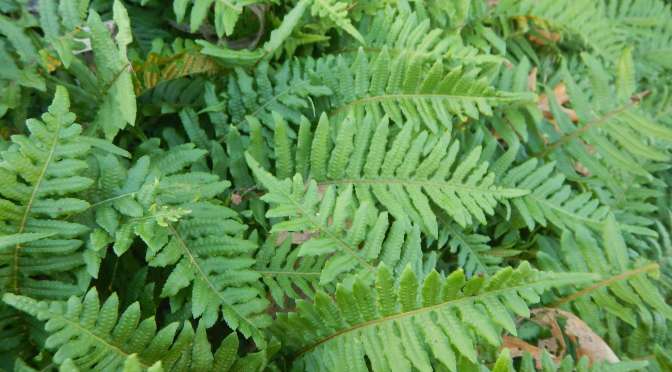
When we first moved to the slopes of Mt. Tolmie, lush licorice fern decorated the mossy rock outcropping in our side yard.
photo by SVSeekins
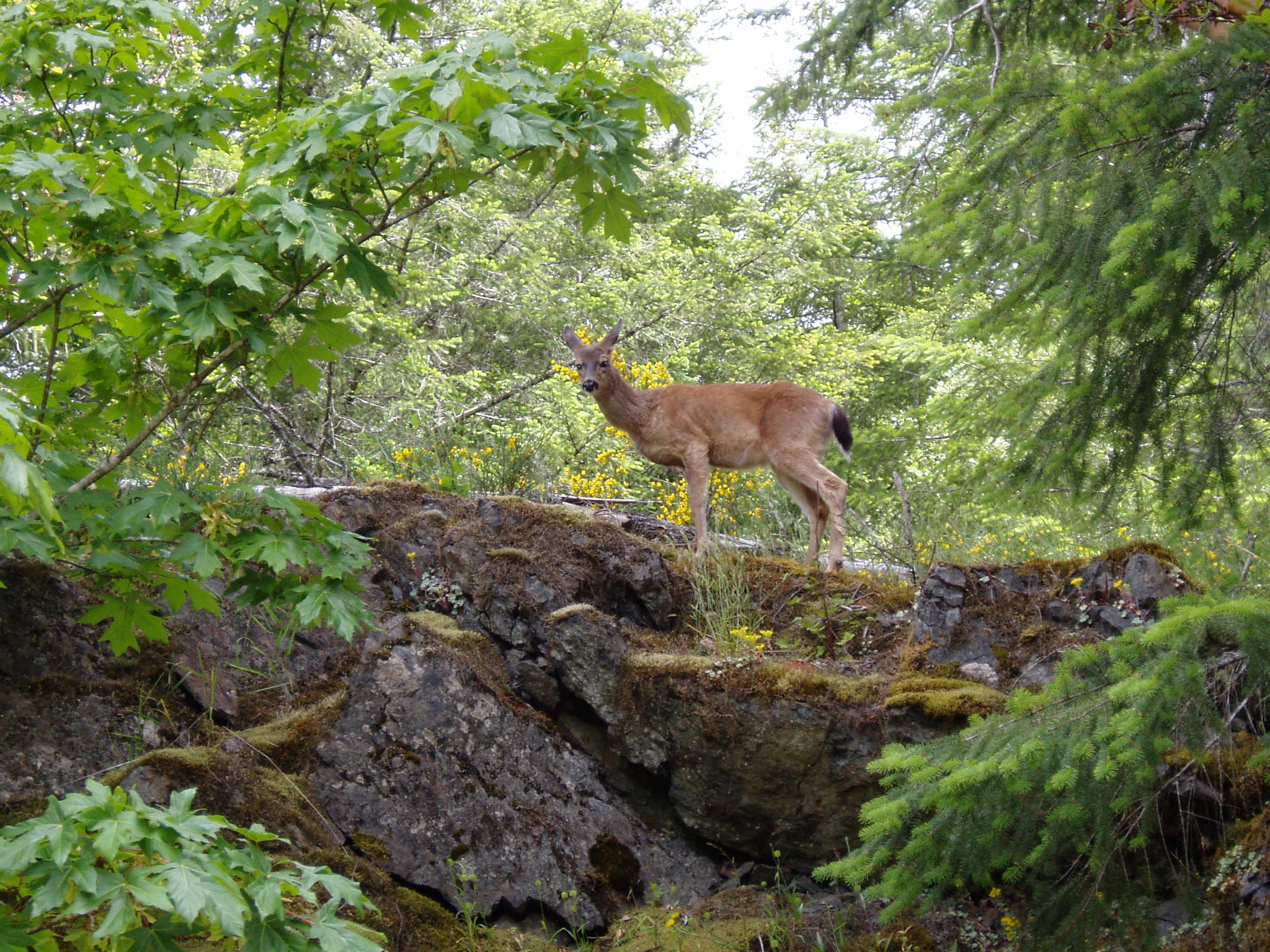
Urban deer wandered the neighbourhood. They spent long afternoons hanging out at the top of our rock, chewing their cud & enjoying the safety of the vantage point.
A dozen years pass & their family grows. The large buck has several generations of grandkids browsing the neighbourhood.
Just down the street, beside a busy pathway to the college, licorice ferns still flourish on a similar rock outcrop.
photo by SVSeekins
Perhaps the deer don’t linger there?
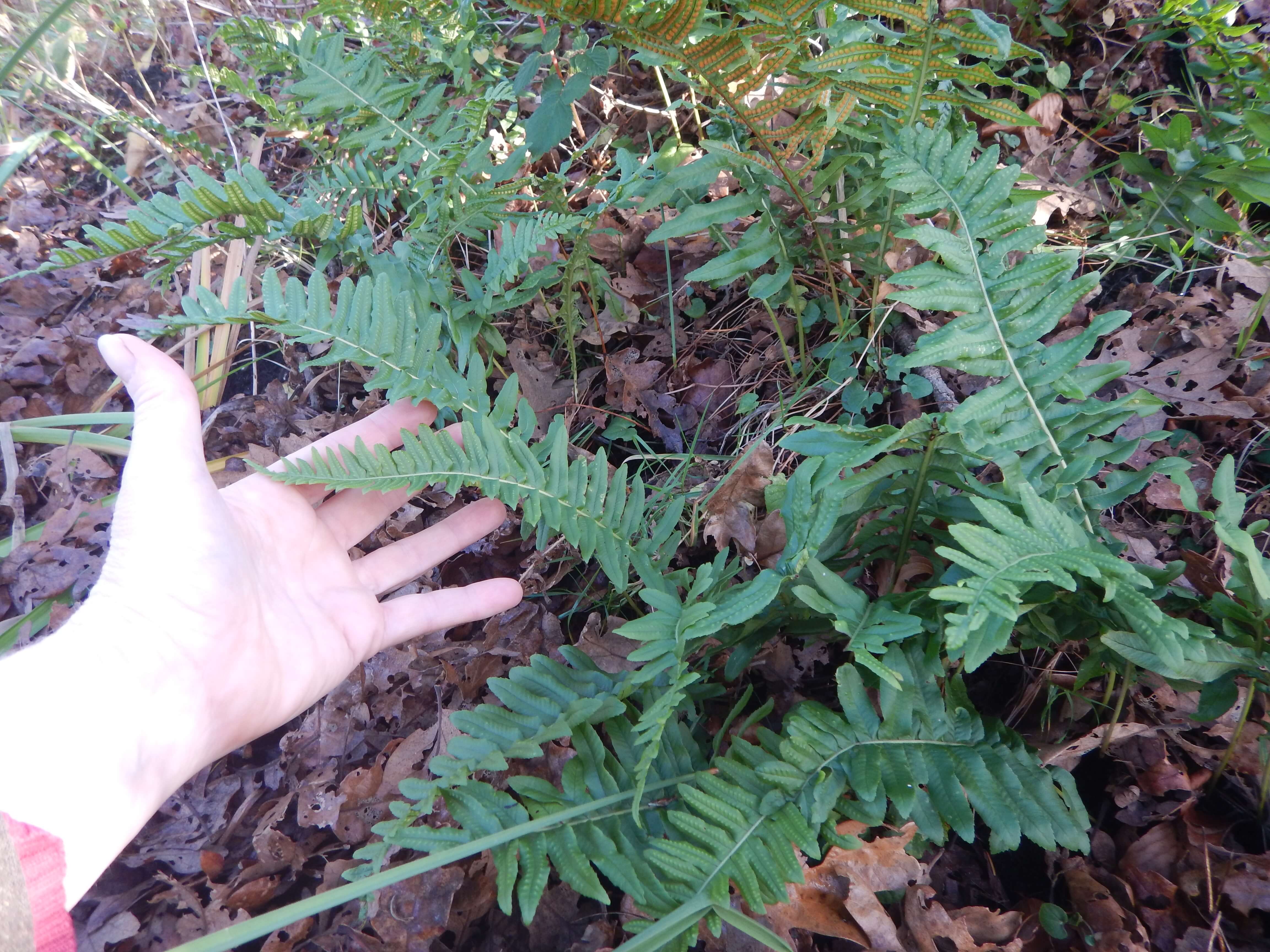
Looking more carefully, I find a couple fronds that have been munched. Mostly the ferns are full-sized & healthy.
photo by SVSeekins
On our chunk of rock – where several more deer now hang out – – the licorice ferns are small, nibbled and struggling.
Coincidence?
Perhaps they’re less ‘deer resistant’ than I think.
photo by SVSeekins
A couple years ago, I shifted a few small mats of licorice fern from our rock to other spots around the garden. In places where the deer rarely linger, the ferns grow to their regular size. Hmmmmmm.
photo by SVSeekins
Deer aren’t typically interested in licorice fern…
unless there’s a dense population of deer…
and the hyper-active fawns just want to taste everything…
and the herd’s favourite hangout is carpeted in licorice fern…
photo by SVSeekins
THEN deer can have a negative impact on licorice ferns.
Just because a plant is considered deer resistant, doesn’t mean it won’t suffer when the population of deer intensifies.
photo by SVSeekins
That’s my guess.
But really, who knows for sure?
Maybe it’s the raccoons?
Or squirrels?
Rabbits?
Ravens? Cats?
Maybe I’m just blaming deer because I notice them so often.









 Garden Variety Life