Tag Archives: rocky hillsides

Meadow Blooms 2 – Chionodoxa

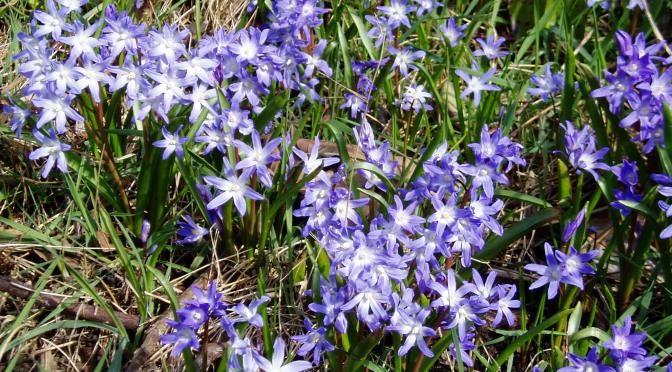
Chionodoxa - Glory of Snow near Dunlop House
photo by SVSeekins

A couple of years ago, in March, I started noticing patches of tiny blue flowers along the roads of older neighbourhoods. Flowers flourished in areas that hadn’t been manicured for a very long time.

I soon realized these blooming meadows are the naturalized dreams of gardeners past. I’m charmed by that romance.

These hardy bloomers are Glory of Snow, or, if you like unpronounceable names: Chionodoxa. Try to say that easily the first time around! 🙂

Glory of Snow originated in Turkey & Greece – along the Mediterranean.  I’ve heard southern Vancouver Island compared to a Mediterranean rain forest, so it makes sense these plants survive well here.  What surprises me more is that they’re hardy to zone 4!  They can withstand a whole lot more cold. Do these grow in your neck of the woods??

Chionodoxa - Glory of Snow in rock crevice
photo by SVSeekins

Aside from naturalizing well, these plants are also valuable to me because they’re:

  • winter blooming
  • drought tolerant 
  • low maintenance

Once planted, just leave them to their own devices.  How great is that?  I’ve even seen them surviving in shallow crevices of rocky outcroppings.
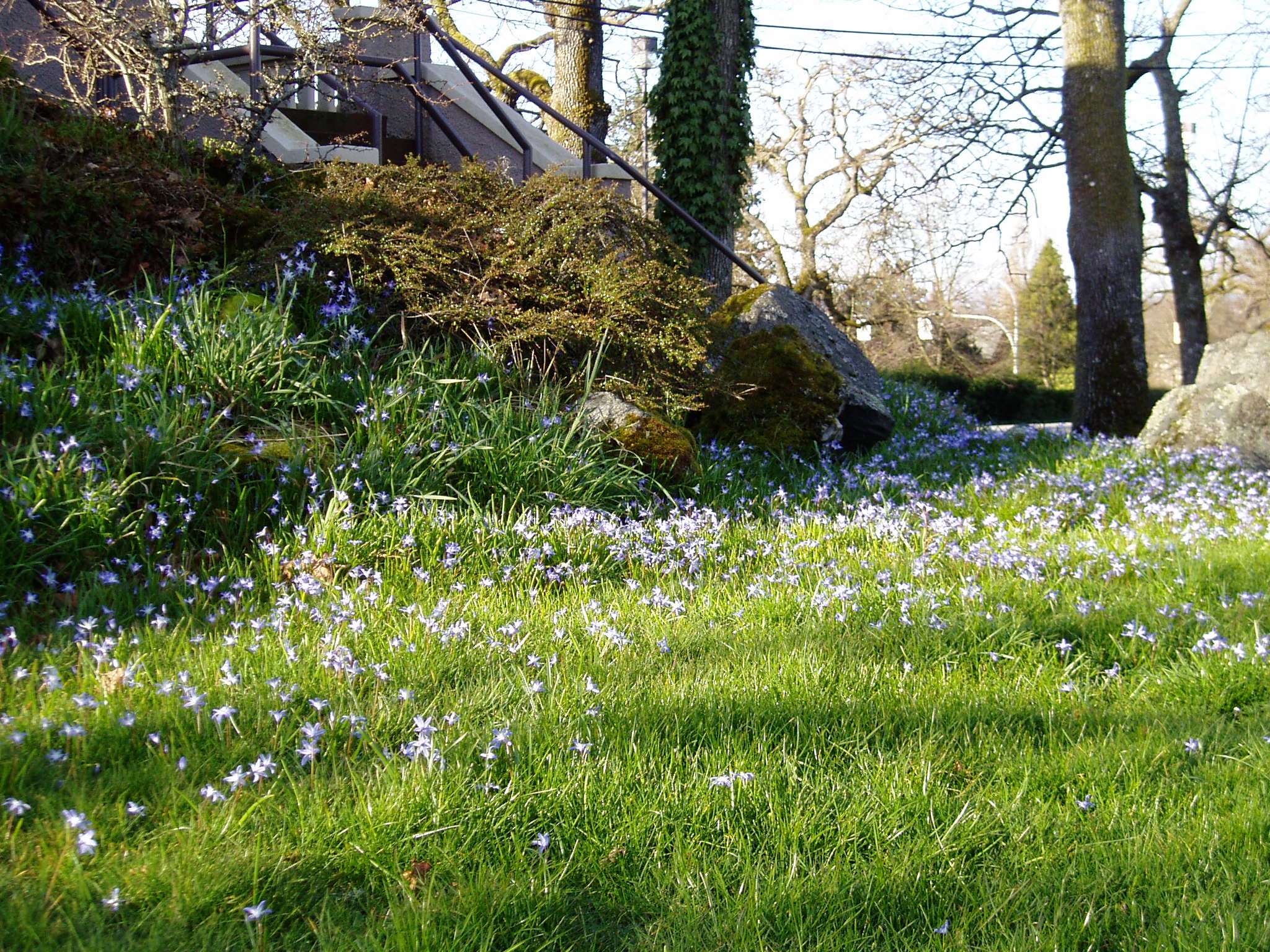
Chionodoxa - Glory of Snow meadow behind Dunlop House
photo by SVSeekins

They seem perfectly happy in lawns, too, although I’ll bet they do better if the grass isn’t cut until late April when they’re done for the season.  That would mean it’s more of a meadow than a lawn.  C wouldn’t go for that.  He likes lush but trim.  That’s why I’ve added Glory of Snow as under-story plantings in our shrub border instead.

The best patch I’ve ever encountered is around Dunlop House Restaurant, a heritage building on the grounds of Camosun College, and their Hospitality Management Program facility.  C’s mum took us there for supper the other night.  The meal was lovely, and the meadow: spectacular!

-30-
© SVSeekins and Garden Variety Life, 2013

P.S. Here are some other meadow faves:

California Poppy

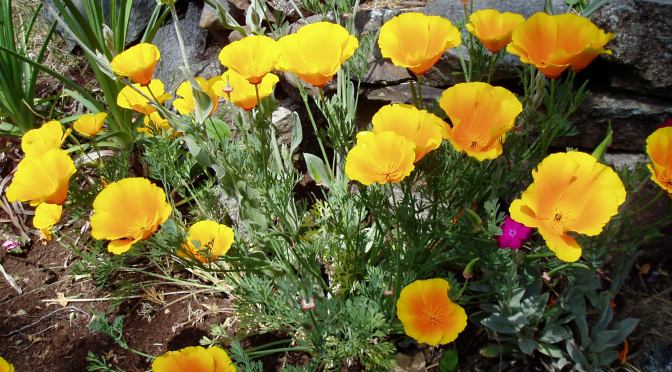
California Poppy - many blooms, garden Victoria BC
photo by SVSeekins

I like the saturated orange of the California Poppy bloom.  It’s bright and happy.

Even more, I like that the plant survives well on roadsides & rocky areas.  A plant that doesn’t need nurturing – bonus!

California Poppy at Snake Rock, garden Victoria BC
photo by SVSeekins

This little patch of poppies lives just down the street at Snake Rock.  It blooms in mid-spring & continues well into the dry summer.

Of course, the thought occurred to me, “We NEED that in our garden!” Can’t you imagine how lovely a wave of bright orange would be in the shrub border?

California poppy - seed pod, garden Victoria BC
photo by SVSeekins

Even C is encouraging.  He really likes the bright orange blooms, too. So, for the past 5 years, I’ve gathered seed from the roadside, then spread it through our gardens.

There’s been the occasional reward, but mostly I’ve had little success.

The California Poppy has a long tap-root, so where ever it pops up, that’s where it has to stay.  It does not like being moved.  And it doesn’t seem to like being watered either.   Nor fed.  Nor coddled in any way.

The shrub border had a fair amount of fertilizer, mulch & water over the past few years, as the plants were all so new & getting established.  Maybe that’s been too much attention for the poppy.

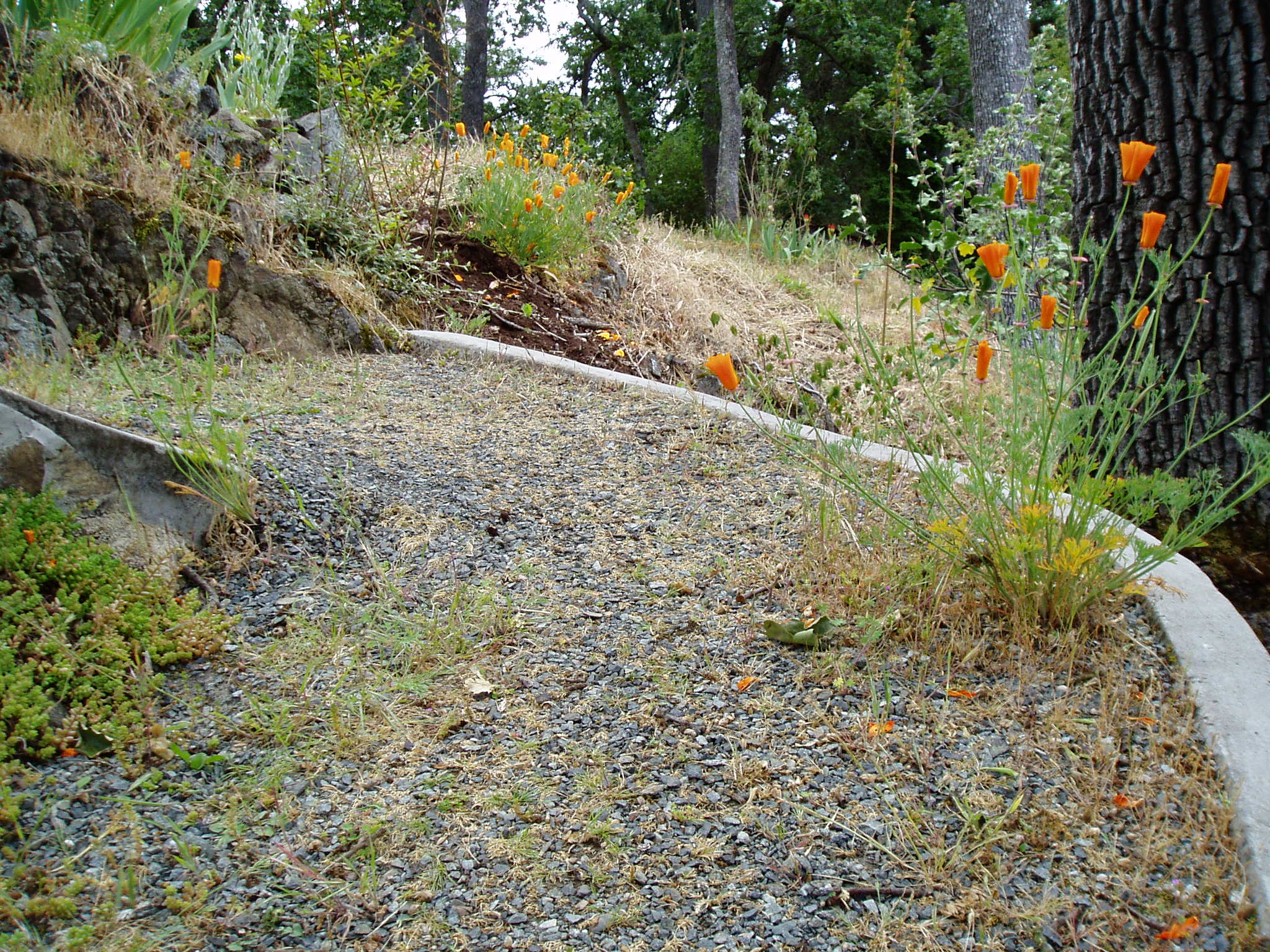
The most successful patch is on our rocky hillside.  It’s a well-drained site and bakes in the sun.  The California Poppy will grow in the soil, but seems even happier in the gravel of the pathway!  Go figure.

California Poppy in gravel path, garden Victoria BC
photo by SVSeekins

So far, I’m resisting the urge to weed it out of the path.  I’ve decided that it’s ‘whimsical’ growing there.

I’m happy about growing a local wildflower.  I’m also delighted that the deer, who spend their afternoons on our little mountain, leave the California Poppy alone.

My plan is to keep spreading seed in the rest of the garden & be happy with whatever we get.  That’s the true definition of ‘low maintenance,’ isn’t it?

-30-

© copyright 2012 SVSeekins

Enter your email address to subscribe to this blog and receive notifications of new posts by email.

Youthful Blush of Spring

Last spring, I came across the loveliest drift of foamy flowers that I’d ever seen.  It grew on a rocky outcrop.  Pink blooms smothered the moss-covered rocks.  It was as if the hillside was blushing.

grape hyacinth on hillside
photo by SVSeekins

“That would look great in my garden!” I thought.

We have a rocky slope that blooms with grape hyacinth at this same time.  Wouldn’t the pink & blue combo look fabulous?

My friend SK had similar thoughts.  Little green plant-coveting monsters chorused from our shoulders, encouraging us both to forage some of this wildflower.

It was a group consensus.

We just took a few plants.  We only took them from crevices already overflowing with the pink population.  I felt a weensy bit ashamed by our boldness – but only for a moment.

The plants were tucked into similar mossy crevices in my garden as soon as was possible.  Fingers crossed for their survival, I went inside to search out the details on the plant.

It turns out that it’s named appropriately.  Sea Blush.  Blooming on rocky hillsides throughout the Pacific Northwest, it’s a native wildflower.

I certainly hadn’t noticed any unusual smell from the flowers, but when I read about it, I hoped there might be just enough to deter the deer from feasting.  Deer frequent this part of the garden more than any other.  Time would tell.

It was disappointing to find out Sea Blush is an annual.  Since we’d moved it while it was in bloom, I figured there wasn’t much chance it would set seed.

sea blush 3
photo by SVSeekins

What a delight to find it blooming this spring!    Was the winter mild enough that the plants survived?  Did the seeds develop even though I’d set it back by transplanting?  I’m not sure how it survived, but I’m thrilled it did.

sea blush 1
photo by SVSeekins

Now I hope it’ll spread across the rocks & produce the blushing spring meadow of my fantasies.

Swan Lake Nature Sanctuary offers classes on native plant gardening. I took one last weekend.  The instructor, Pat Johnson, listed Sea Blush as one of her plant picks for native gardens.  She has superwonderful photos of gardens on Vancouver Island that benefit from the use of native plants.  I definitely recommend the 1/2 day class if you ever get the chance.

Swan Lake also has a native plant sale coming up this weekend.  Imagine –

  • getting coveted plants without scavenging…
  • and raising funds for a local park.

Win-Win
Even better than foraging, don’t you think?

-30-

© SVSeekins and Garden Variety Life, 2012. Unauthorized use and/or duplication of this material without express and written permission from this blog’s author and/or owner is strictly prohibited. Excerpts and links may be used, provided that full and clear credit is given to SVSeekins and Garden Variety Life with appropriate and specific direction to the original content.

Enter your email address to subscribe to this blog and receive notifications of new posts by email.