Category Archives: natives

Canada’s Dogwood Tree

It’s a tale of 2 trees…

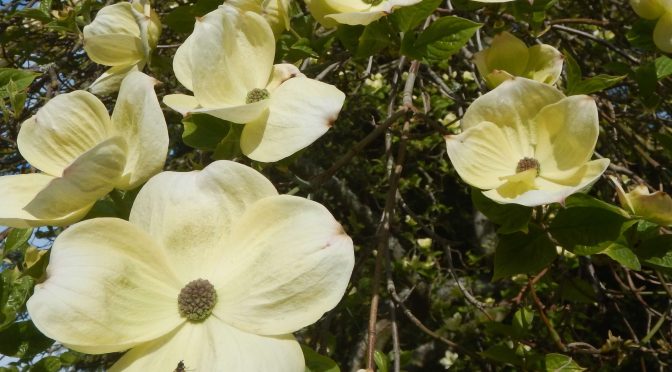
Dogwood Eddie's White Wonder tree in bloom, garden Victoria, Vancouver Island, BC Pacific Northwest
photo by SVSeekins

On the very southern coastal region of BC is our native Pacific Dogwood (Cornus nuttallii).  So admired that it’s honoured as our provincial flower.

Across the continent, Eastern Flowering Dogwood (Cornus florida) is native to the southernmost tip of Ontario.

Dogwood Eddie's White Wonder tree in bloom, Cornus controversa 'Eddie's White Wonder' Cornus nuttallii 'Eddies White Wonder', garden Victoria, Vancouver Island, BC Pacific Northwest
photo by SVSeekins

Both species often suffer from anthracnose fungus that disfigures leaves & causes twig & branch dieback.  Ontario’s native dogwood is considered ‘at risk.’

The answer? A genuinely Canadian fix: combine them.

Enter H.M. Eddie (Henry Matheson Eddie).  A nurseryman in BC’s Fraser Valley who got a kick out of creating new varieties of any number of plants.  His 1945 success, ‘Eddie’s White Wonder,’ is the combo of the Pacific & the Eastern dogwoods.
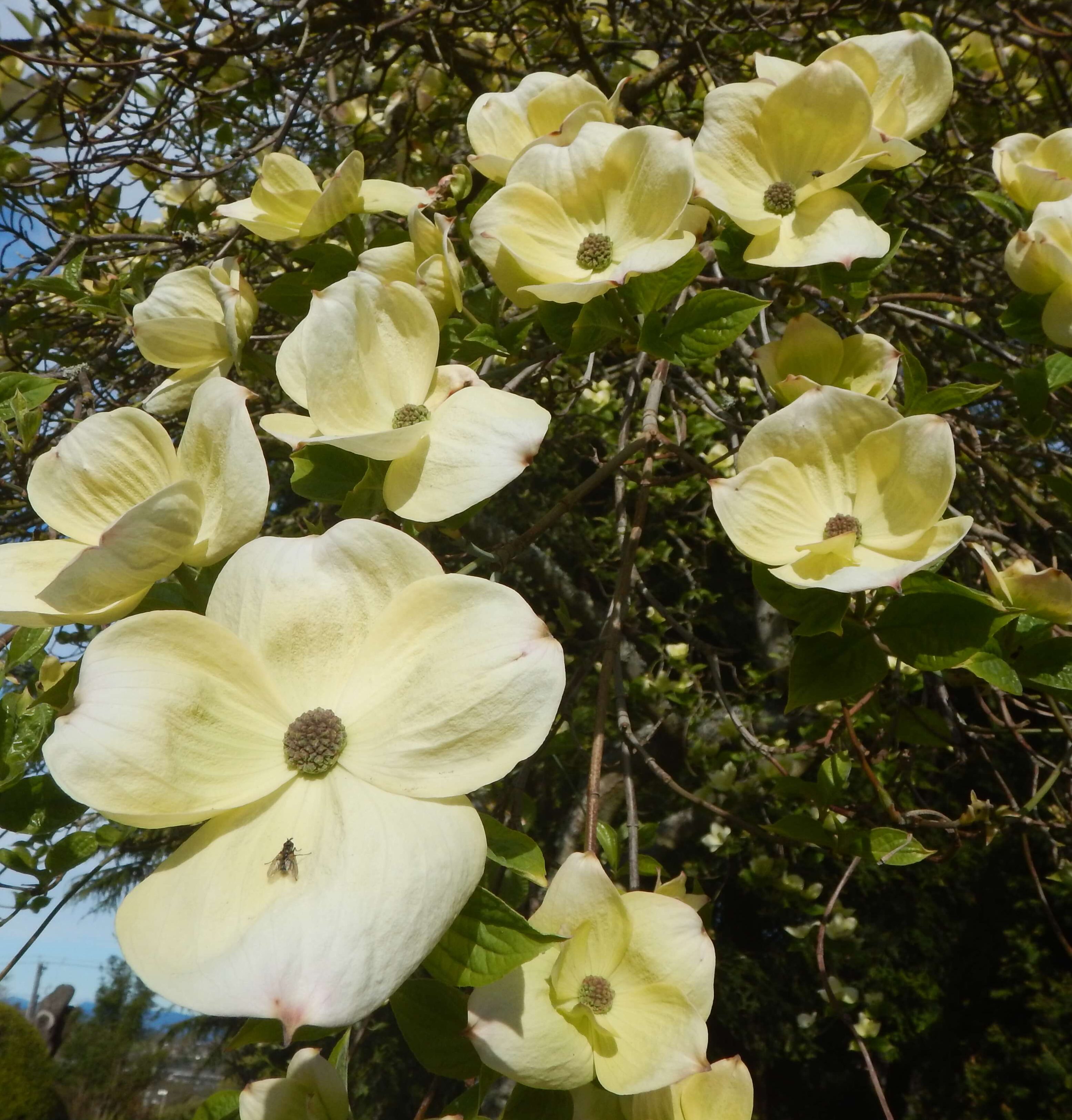
Dogwood Eddie's White Wonder tree in bloom, garden Victoria, Vancouver Island, BC Pacific Northwest
photo by SVSeekins

Eddie’s dogwood is pretty much disease-free!  Beyond that,

  • pollinators love the spring flowers.
  • Birds gorge on the berry clusters.
  • Deer leave the tree alone (except the occasional buck needing to scratch his antlers – so trunk protection is needed.)
  • And fall leaf colour is another spectacle.
    Dogwood Eddie's White Wonder tree in bloom, Cornus controversa 'Eddie's White Wonder' Cornus nuttallii 'Eddies White Wonder', garden Victoria, Vancouver Island, BC Pacific Northwest
    photo by SVSeekins

It’s been such a triumphant landscape success that Eddie’s White Wonder was honoured as Vancouver’s Centennial tree...
and as one of my favourite trees to find blooming during our morning walks each April 🙂

-30-

Enter your email address to subscribe to this blog and receive notifications of new posts by email.

Hungry Deer

It wasn’t unusually cold but this must’ve been a looooong winter for our local deer. They’re feeding on things they don’t even like.

species tulips - browsed by deer,
photo by SVSeekins

Gardeners know that deer like tulips.  But the smaller species tulips have always been safe.  Not this year.  Check this out: in a plot of a dozen botanical tulips- only 4 blooms survive.  It looks like a deer snacked on leaves, then came back a few days later to taste-test the flowers. The flavour must be pretty bad because someone didn’t clean his plate.

laurel browsed by deer
photo by SVSeekins

Each winter the deer get hungry enough to nibble on some of the broad-leaved evergreens. This laurel has never been chewed down like this before.  There’s a toxin in laurels, so deer avoid it most of the time.  I’ll bet this browsing session caused indigestion!

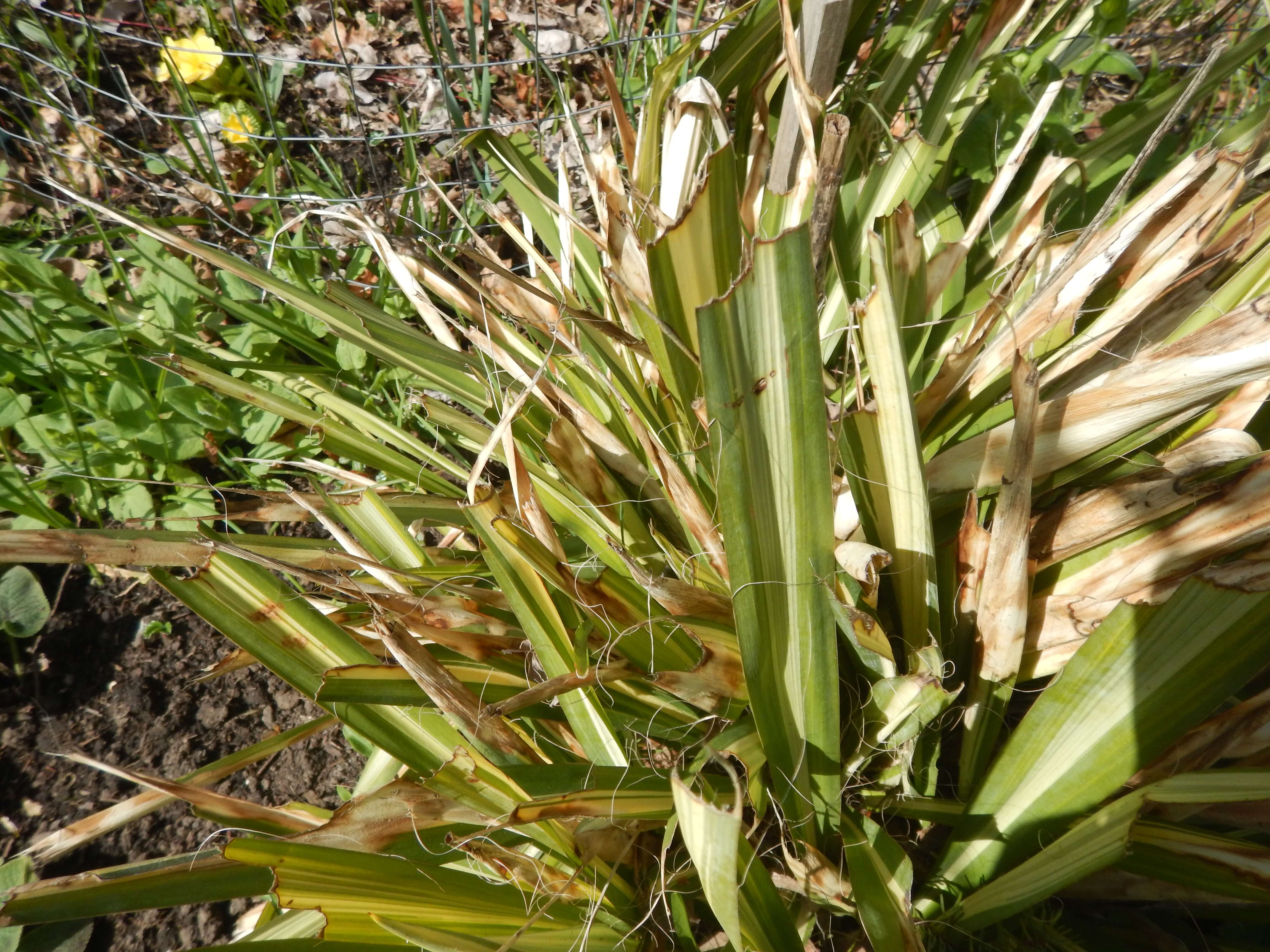
variegated yucca browsed by deer
photo by SVSeekins

Even variegated yucca is looking tattered & much worse for wear.  In our garden, the deer always take the bloom before it opens, but the leaves – – they’re so sharp  & tough & stringy!!  Good grief.  Aside from the toxicity factor, how is it even palatable?

I’ll bet the herd is glad the spring growth is on its way.

But then again…
Even in the growing season, the deer on Mt. Tolmie have taken to eating Lily of the Valley.  They never used to do that.

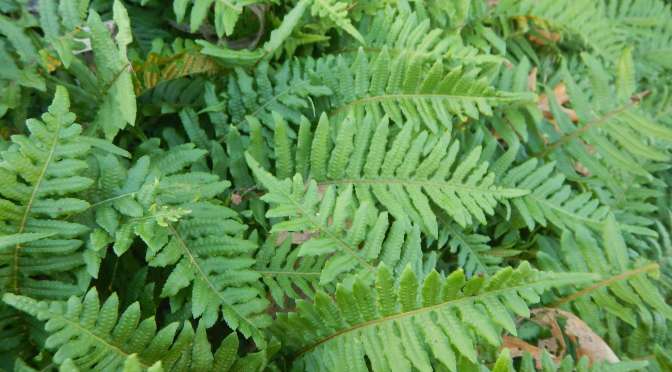
Licorice fern, Polypodium glycyrrhiza,Polypodium occidentale, Polypodium vulgare subsp. occidentale, many footed fern, sweet root, , garden Victoria, Vancouver Island, BC, Pacific Northwest
photo by SVSeekins

We used to have lush licorice fern in the yard.  Now it’s barely holding on.

There must be some other reason than the scarcity of winter.  I reckon it’s because our urban herd is growing, as is human density.  This dynamic presents some challenges:

  • Housing is taking up a higher percentage of space in a city lot.
  • In turn, that increased housing is reducing the size & number of gardens.
  • There are more & more urban deer – – grazing on fewer & smaller gardens.
  • The deer are getting hungry.

I’ve improved some of the caging around our garden beds.  I’m not much of a fan of that look, but it’s better than naked shrubs & dead perennials.  It’s getting more difficult to decide which plantings to leave exposed.
I still enjoy seeing wildlife in our neighbourhood.
We’re both caught between a rock & a hard place.

-30-


What’s Eating The Licorice Fern

When we first moved to the slopes of Mt. Tolmie, lush licorice fern decorated the mossy rock outcropping in our side yard.

Licorice fern, Polypodium glycyrrhiza,Polypodium occidentale, Polypodium vulgare subsp. occidentale, many footed fern, sweet root, , garden Victoria, Vancouver Island, BC, Pacific Northwest
photo by SVSeekins

Urban deer wandered the neighbourhood. They spent long afternoons hanging out at the top of our rock, chewing their cud  & enjoying the safety of the vantage point.

The licorice fern flourished.  The deer seemed uninterested.  Typically deer aren’t interested in licorice fern.  Typically.

Licorice fern, Polypodium glycyrrhiza,Polypodium occidentale, Polypodium vulgare subsp. occidentale, many footed fern, sweet root, , garden Victoria, Vancouver Island, BC, Pacific Northwest
photo by SVSeekins

A dozen years pass & their family grows.  The large buck has several generations of grandkids browsing the neighbourhood.

Just down the street, beside a busy pathway to the college, licorice ferns still flourish on a similar rock outcrop.

Licorice fern, Polypodium glycyrrhiza,Polypodium occidentale, Polypodium vulgare subsp. occidentale, many footed fern, sweet root, , garden Victoria, Vancouver Island, BC, Pacific Northwest
photo by SVSeekins

Perhaps the deer don’t linger there?

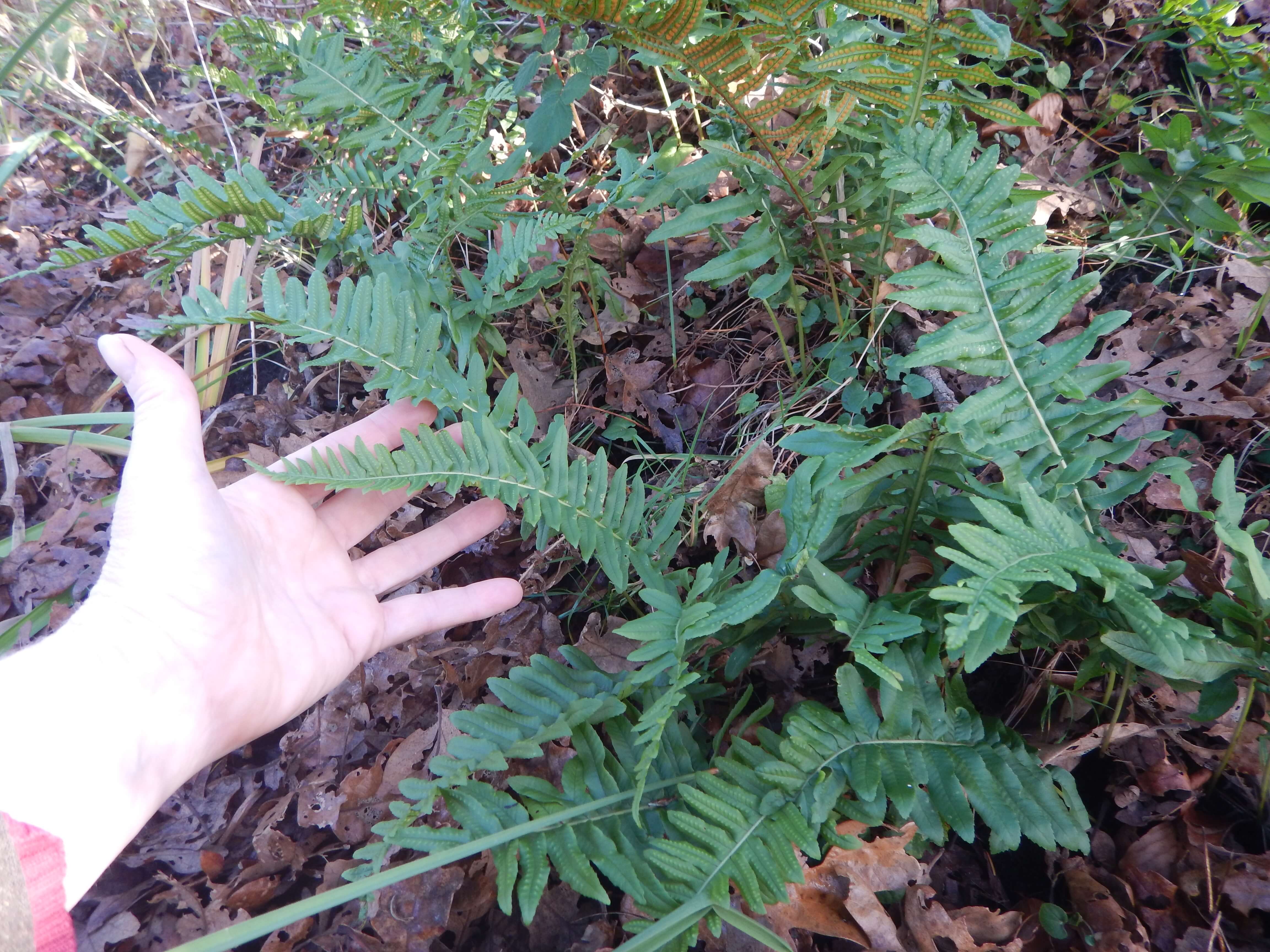
Looking more carefully, I find a couple fronds that have been munched.  Mostly the ferns are full-sized & healthy.

Licorice fern, Polypodium glycyrrhiza,Polypodium occidentale, Polypodium vulgare subsp. occidentale, many footed fern, sweet root, , garden Victoria, Vancouver Island, BC, Pacific Northwest
photo by SVSeekins

On our chunk of rock – where several more deer now hang out – – the licorice ferns are small, nibbled and struggling.

Coincidence?

Perhaps they’re less ‘deer resistant’ than I think.

Licorice fern, Polypodium glycyrrhiza,Polypodium occidentale, Polypodium vulgare subsp. occidentale, many footed fern, sweet root, , garden Victoria, Vancouver Island, BC, Pacific Northwest
photo by SVSeekins

A couple years ago, I shifted a few small mats of licorice fern from our rock to other spots around the garden.  In places where the deer rarely linger, the ferns grow to their regular size.  Hmmmmmm.

Licorice fern, Polypodium glycyrrhiza,Polypodium occidentale, Polypodium vulgare subsp. occidentale, many footed fern, sweet root, , garden Victoria, Vancouver Island, BC, Pacific Northwest
photo by SVSeekins

Deer aren’t typically interested in licorice fern…

  • unless there’s a dense population of deer…
  • and the hyper-active fawns just want to taste everything
  • and the herd’s favourite hangout is carpeted in licorice fern…

    Licorice fern, Polypodium glycyrrhiza,Polypodium occidentale, Polypodium vulgare subsp. occidentale, many footed fern, sweet root, , garden Victoria, Vancouver Island, BC, Pacific Northwest
    photo by SVSeekins

THEN deer can have a negative impact on licorice ferns.
Just because a plant is considered deer resistant, doesn’t mean it won’t suffer when the population of deer intensifies.

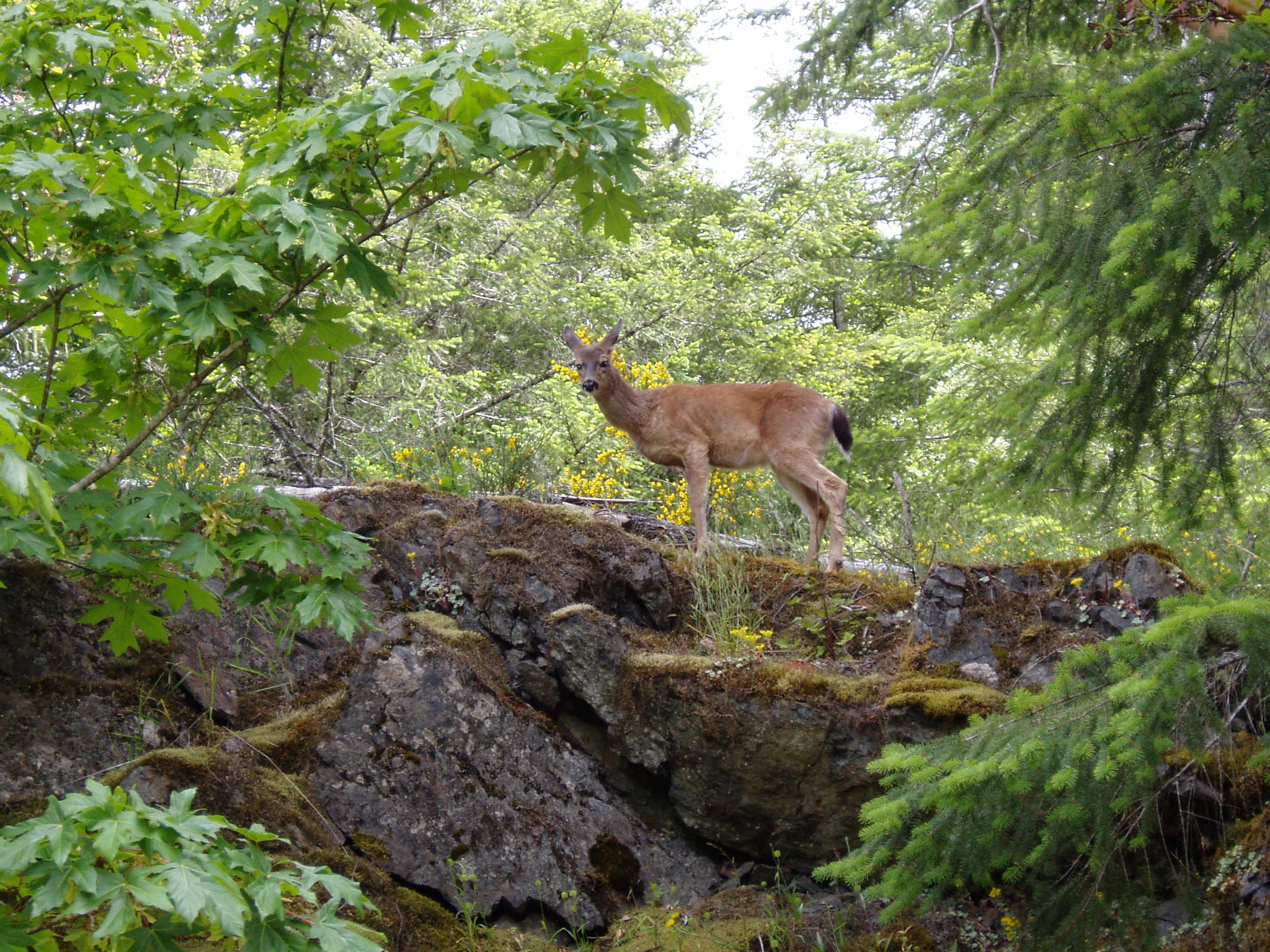
black tail deer near hiking trail in Sooke, Victoria, Vancouver Island, BC, Pacific Northwest
photo by SVSeekins

That’s my guess.
But really, who knows for sure?

Maybe it’s the raccoons?
Or squirrels?
Rabbits?
Ravens? Cats?
Maybe I’m just blaming deer because I notice them so often.

-30-

Some other ‘resistance’ musings: