Category Archives: perrennials

Living Wall Garden

Last week I flew into Alberta expecting their usual June entertainment.  Hot sunshine, rampant mosquitoes and evening lightning storms.  The big sky & open prairies create that kind of excitement.  I wasn’t expecting a touch of the tropics, but that’s what appeared before me at the Edmonton International Airport.
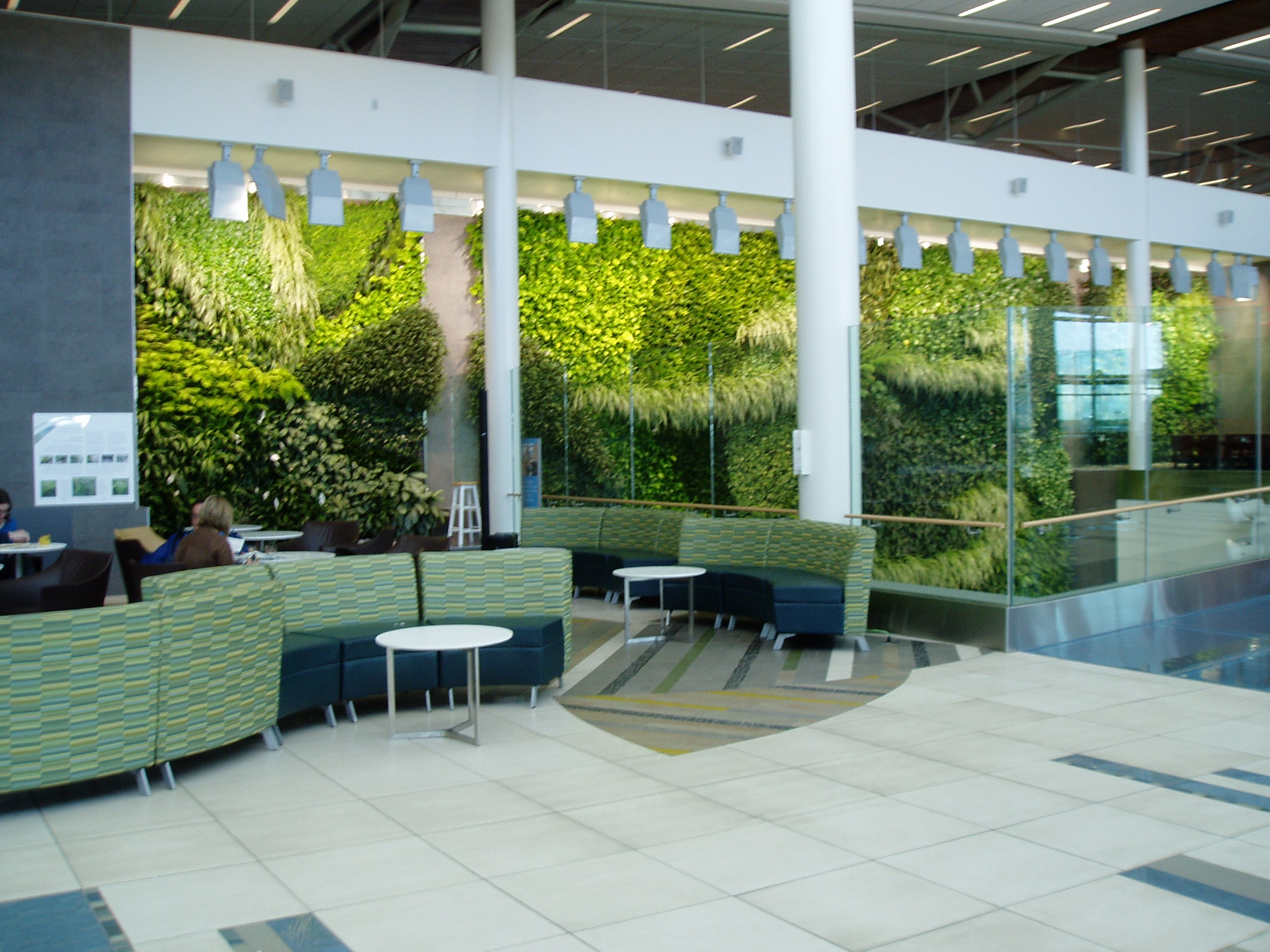
green living wall garden- Edmonton International Airport 1
photo by SVSeekins

Even though family was waiting for me at arrivals, I just had to stop & check it out.   Through the glass, I could see the wall descended a 2nd full story down into another part of the airport.  It was a massive living wall garden!

green living wall garden- Edmonton International Airport 2
photo by SVSeekins

The lounge to the left of the glass was a lovely spot for passengers to relax while waiting to board their planes.  It also allowed me the opportunity to walk up close to see if the plants were real.  They were.   🙂

This particular wall was created by Mike Weinmaster of Green Over Grey, a company that builds green walls across North America.  Apparently, Mike has a Masters of Science in Environmental Engineering & Sustainable Infrastructure.  It figures it would take some know-how for adding moist tropicals to a building’s wall without having it rot out & fall down in short order.  🙂
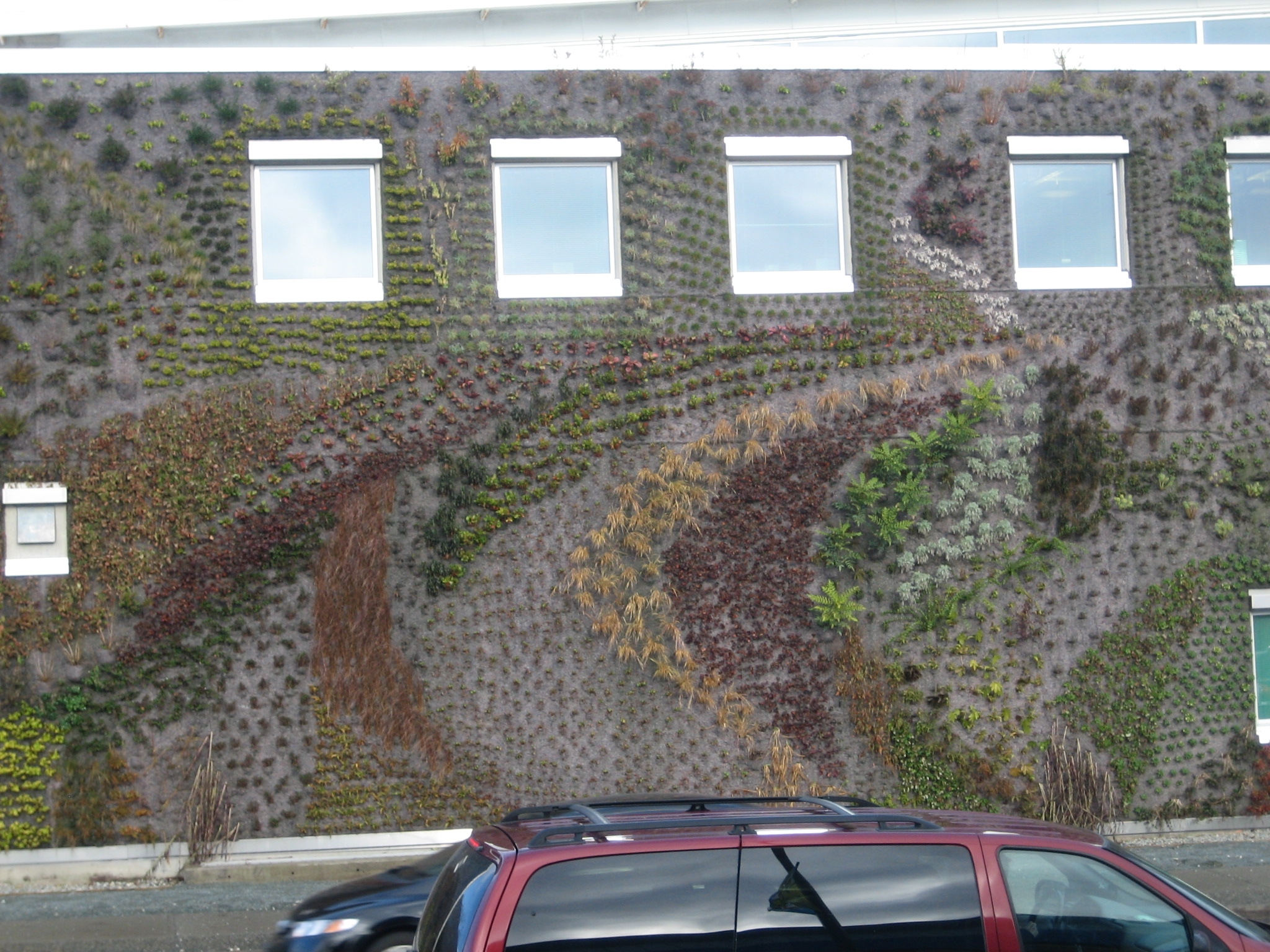
outdoor plant wall at the Surrey Library 2
photo by Barbara Hansen

As it turns out, these are the same folk who created the world’s largest outdoor living wall on the library in Surrey (Vancouver).  Some friends & I ran across that piece of public art shortly after it was planted in the fall of 2010.

It has all sorts of drought-tolerant native plants that typically thrive on rocky cliff sides with minimal soil.  I figured it was smart to add the new plantings in autumn after the stress of summer heat had passed.  The new little guys were probably much happier getting acclimatized during the fall wet.

I’ve wanted to make a pilgrimage back there, to see how the vertical garden is surviving. Imagine the 3D effect of a short mat of wild strawberries, interspersed with Oregon grape shrubs  & grasses growing out from the wall itself.  That’s depth & texture, eh?
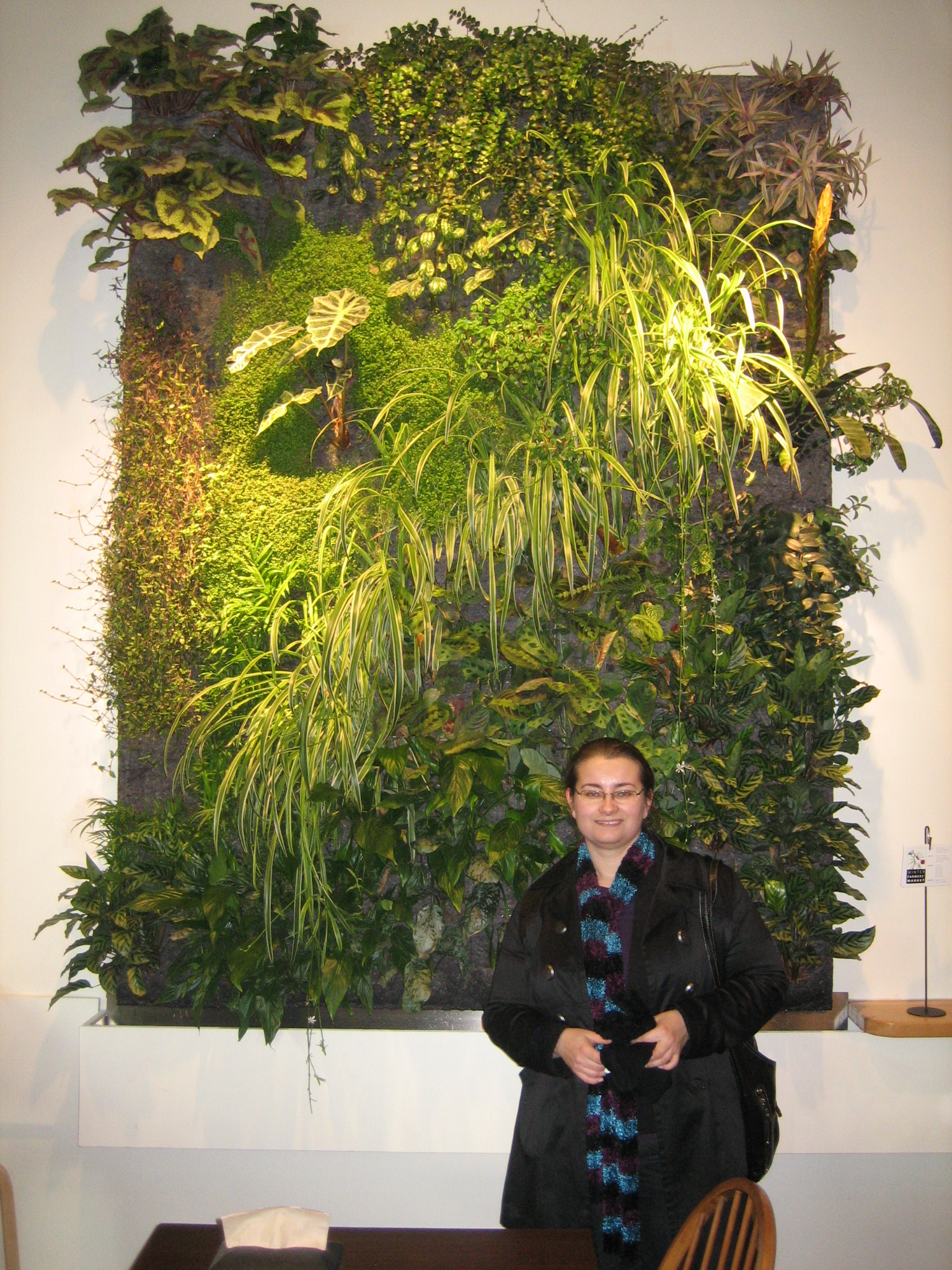
Vertical Wall Garden inside the Atrium building in Victoria
Photo by Barbara Hansen

A couple of months later, those same friends from the Vancouver trip discovered a small version of a bio wall inside a little café in Victoria’s Atrium building.  When I inquired, it turned out Green Over Grey created it as well.  What wonderful botanical art!

Since then, I’ve been looking for a guest for our garden club to speak about creating a vertical garden.  More projects are showing up around town, but so far, folks are so busy building these plant walls, that I haven’t been able to get anyone to spare an evening for us.  I can understand.  These projects look pretty fun to me.  I wouldn’t want a distraction from my goal of completing one.  🙂

-30-
© SVSeekins and Garden Variety Life, 2013
Enter your email address to subscribe to this blog and receive notifications of new posts by email.

Meadow Blooms 3 – daisy

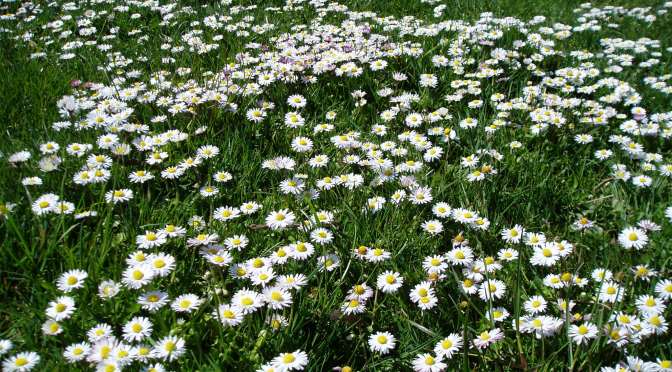
English Daisy meadow WSO
photo by SVSeekins

My breath caught when I turned the corner along a wooded trail revealing this spring meadow.  Doesn’t it evoke images of butterflies & unicorns?

In my quest to ID this tiny smiling flower, I sent these photos to Saanich Parks’ horticultural supervisor, Kelly Mulhern.  She quickly confirmed my suspicions: English Daisy.

Kelly says it originated in Europe but has naturalized all over the world.    Although many folks enjoy it, “lawn purists” don’t.

The Cedar Hill Golf Course is home to this particular meadow.  Their white drift of spring bloom laughs in the face of the perfect golf green.

English Daisy meadow CU
photo by SVSeekins

I reckon it might be a new version of a sand trap.    The plant grows in a low rosette shape, almost making a cup; perfectly suited for catching & cuddling a golf ball.  And wouldn’t it be a bugger to find a white ball in this sea of white daisies?

The Royal Horticultural Society supports this daisy’s usefulness for planting in a wildflower meadow.  I’m with them (surprise surprise).

But the debate rages.  🙂

C says he prefers the even texture of uninterrupted grasses.  He’s one of those purists.  How about you?

-30-
© SVSeekins and Garden Variety Life, 2013
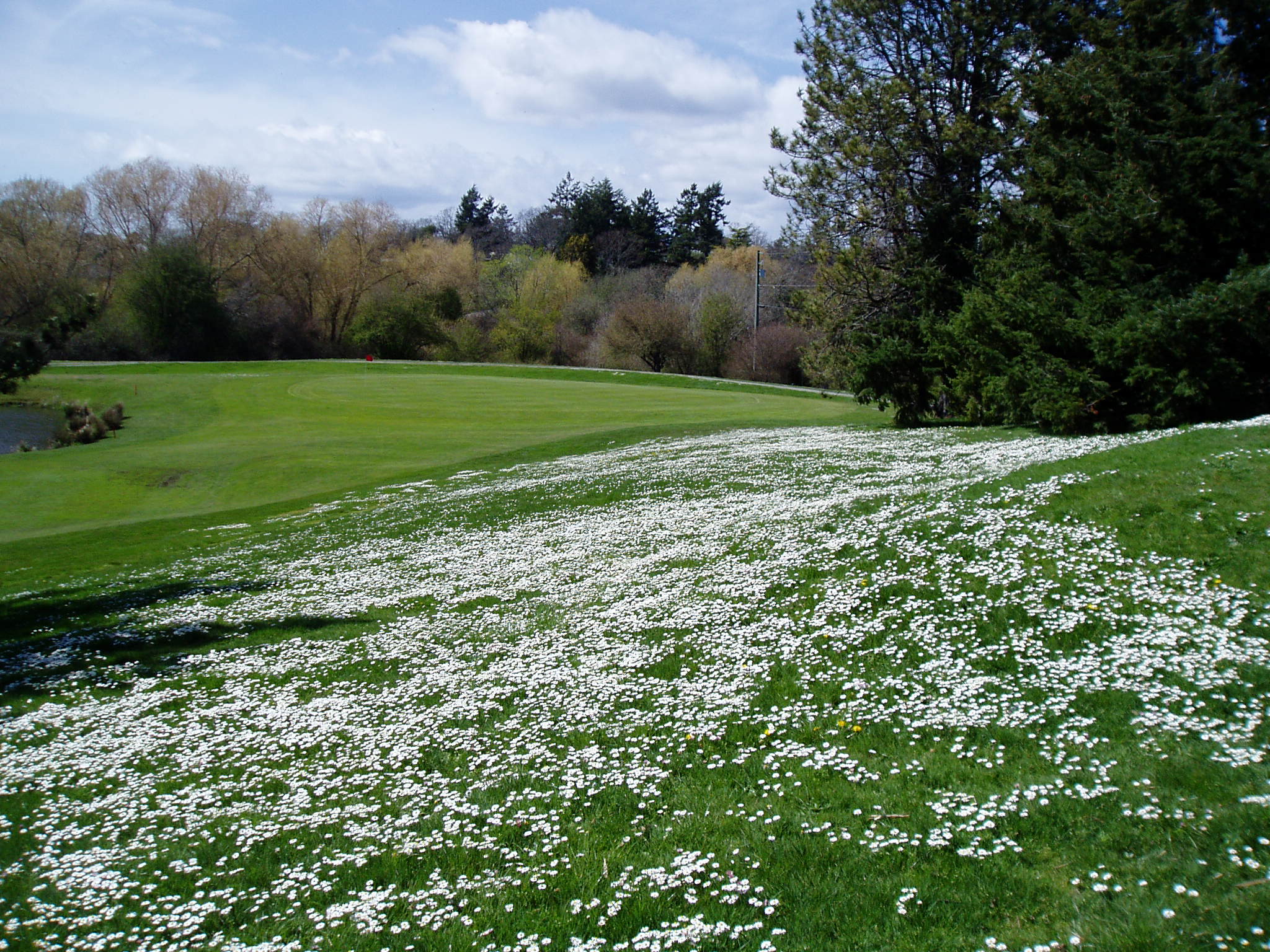
P.S.  Here’s some other meadow faves:

10 February Faves

Even in the ‘banana belt’ of Canada, we celebrate the signs of the spring to come.  Our annual Flower Count might be an in-your-face promotion for our tourism industry, but in reality, it’s as much a mental health exercise for locals.  It’s good for our souls to get outside & search for signs that the grey skies & depressing drizzle of our west coast winter will one day fade in the spring sunshine.

Snowdrops - January 31, 2013
photo by SVSeekins

1. Snowdrops
Their name speaks for the hardiness of this winter bloomer.  I’m always excited to see their tentative arrival in early January.  By February they’re in full show.

aka: Galanthus

Click here for more info on snowdrops.

hardy cyclamen coum, persian violet, eastern sowbread, round-leaf cyclamen, C. coum, Cyclamen orbiculatum, garden Victoria, Vancouver Island, BC, Pacific Northwest
photo by SVSeekins

2. Hardy Cyclamen
Even though they’re tiny, the brightness of this exotic-looking flower draws the eye from across the winter landscape. It’s a close cousin to the cyclamen that bloom in early fall.

aka: Cyclamen coum

Can you believe there’s a Cyclamen society?

iris reticulata
photo by SVSeekins

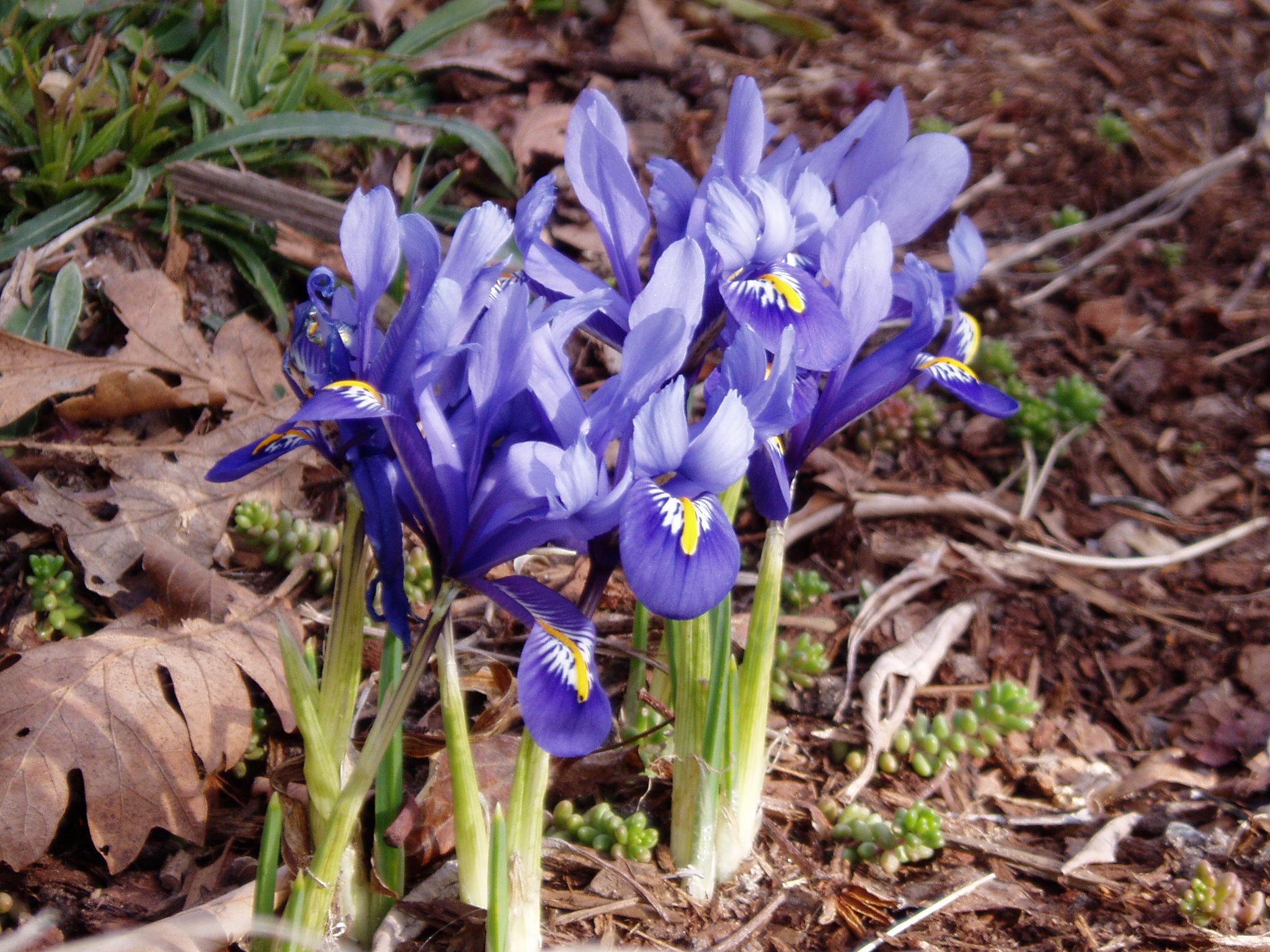
3. Dwarf Iris
Here’s another little flower that in my mind looks too exotic to grow in Canada.  Considering this iris, and the cyclamen above can both be found in Russia proves that exotic doesn’t just mean tropical.

aka: Iris reticulata

It’s even received an Award of Garden Merit!

Helebore - full bloom in march
photo by SVSeekins

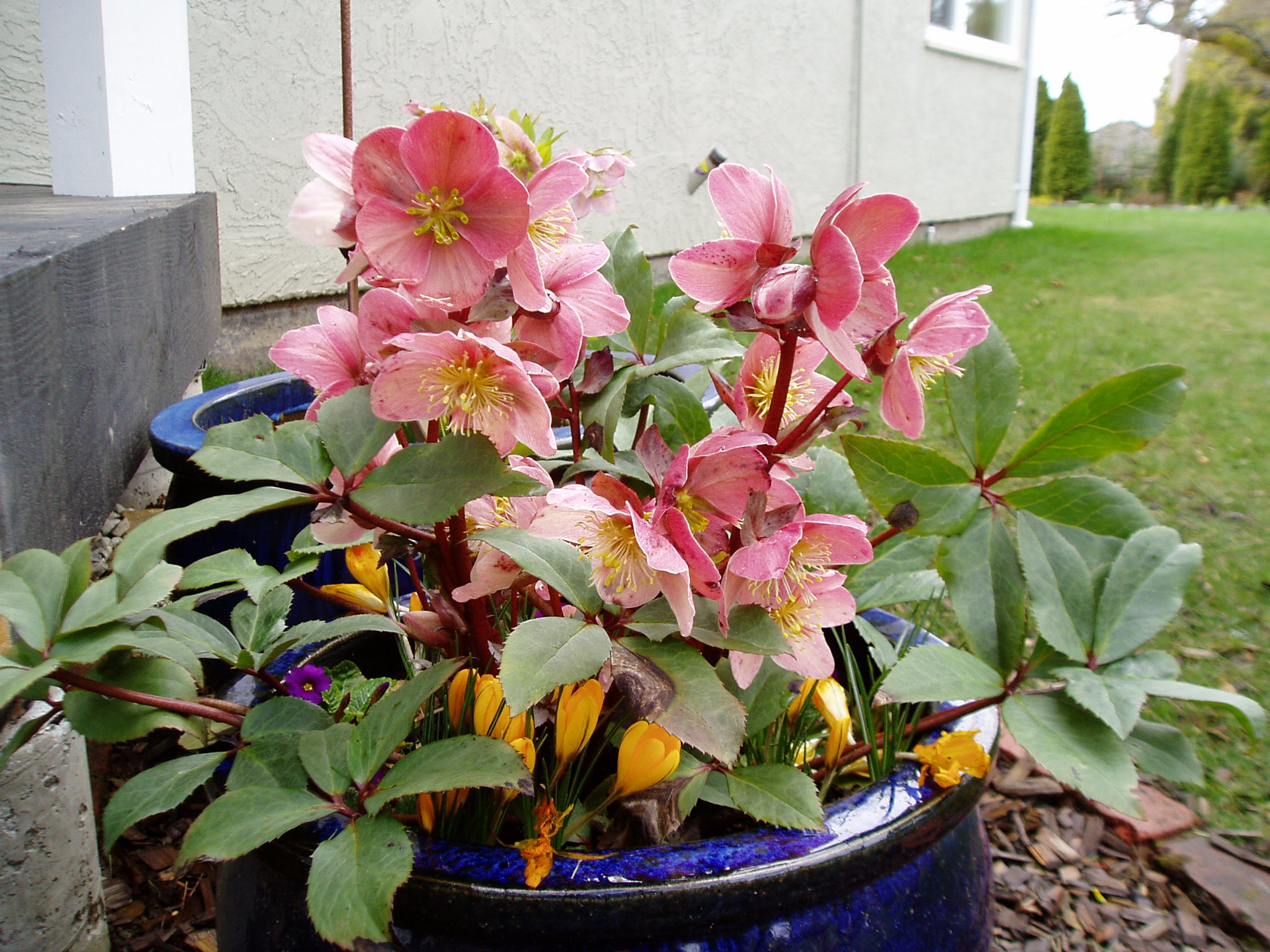
4. Hellebore
Just being a winter bloomer automatically qualifies hellebore for space in our borders.  The evergreen foliage adds interest to the garden for the rest of the year.  Win-Win!

aka: Christmas rose or Lenten rose

These days there are many choices of Hellebore.

eranthis, winter aconite, Vereyesque aconites, cyclamen coum, galanthus, snowdrops, garden Victoria BC Pacific Northwest
photo by SVSeekins

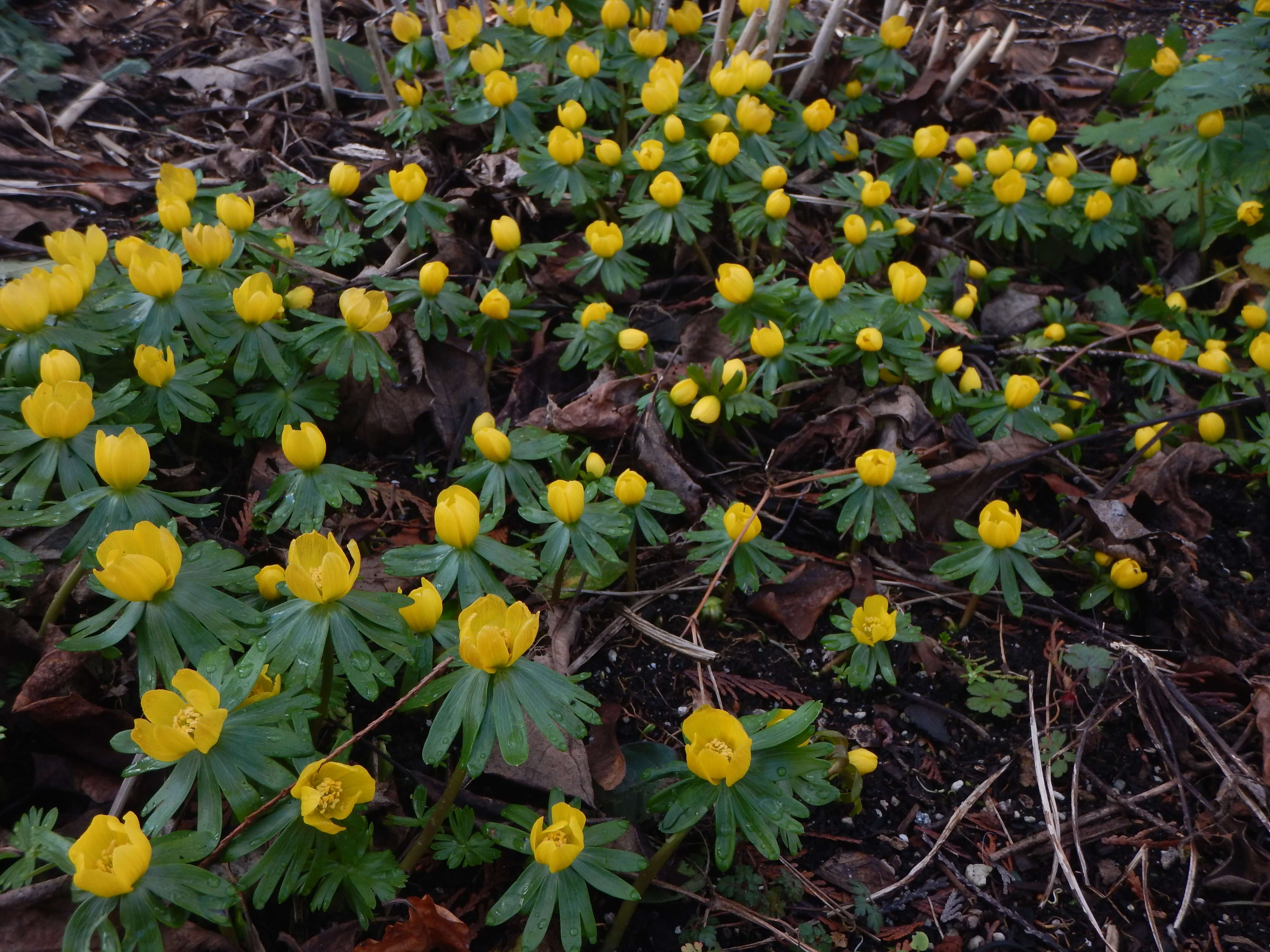
5. Winter Aconite
This gem is actually a distant relative of hellebore.  Go figure. One of the best similarities between these 2 is that neither are bothered at all by deer.

aka: Eranthis

There are some better photos in this article.

crocus cluster
photo by SVSeekins

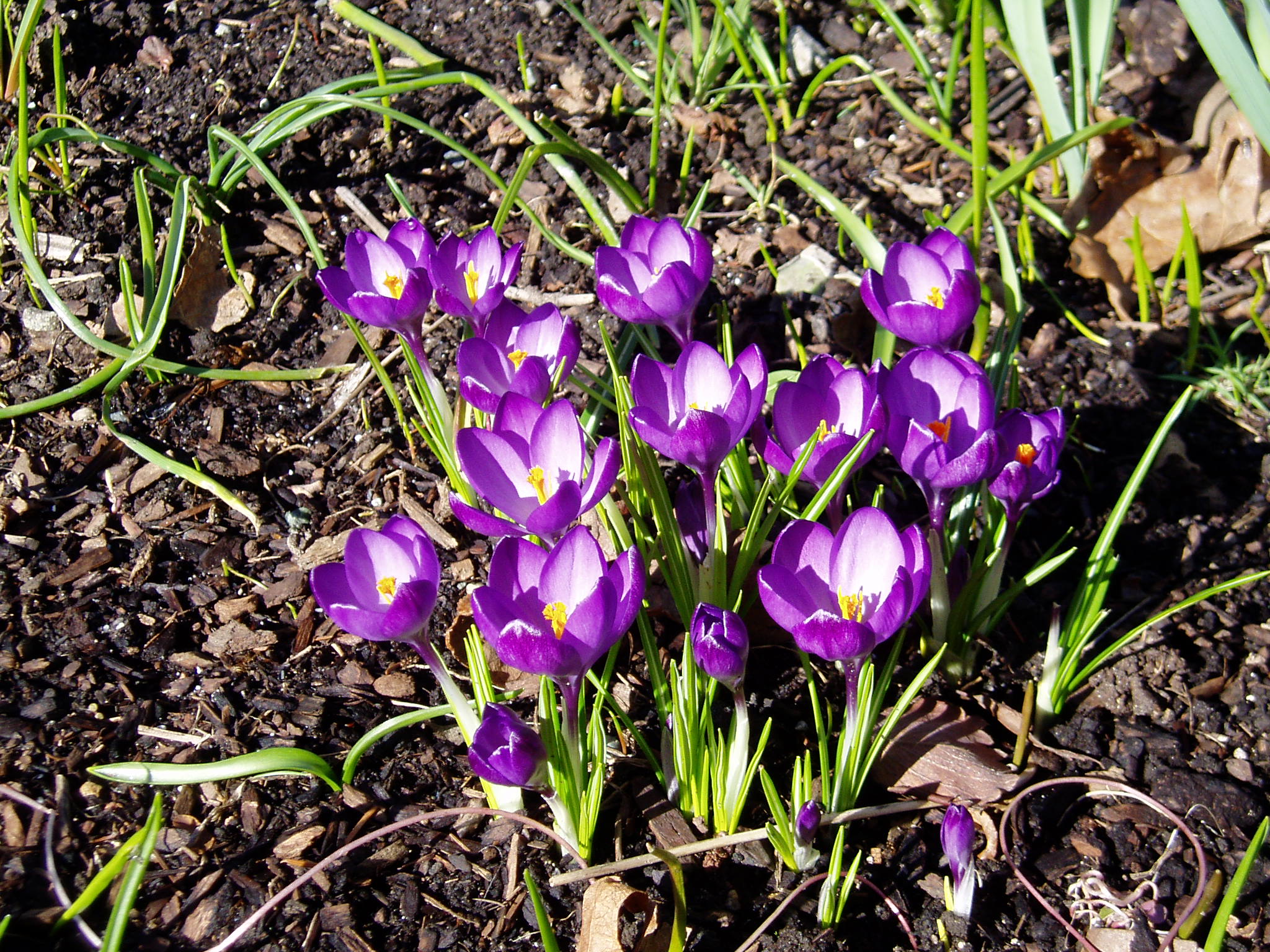
6. Crocus
Crocus are my Valentines tradition.  When searching for a flower in our garden in mid-February, crocus never let me down.

aka: Crocus  🙂

I’m naturalizing some crocus in the lawn.

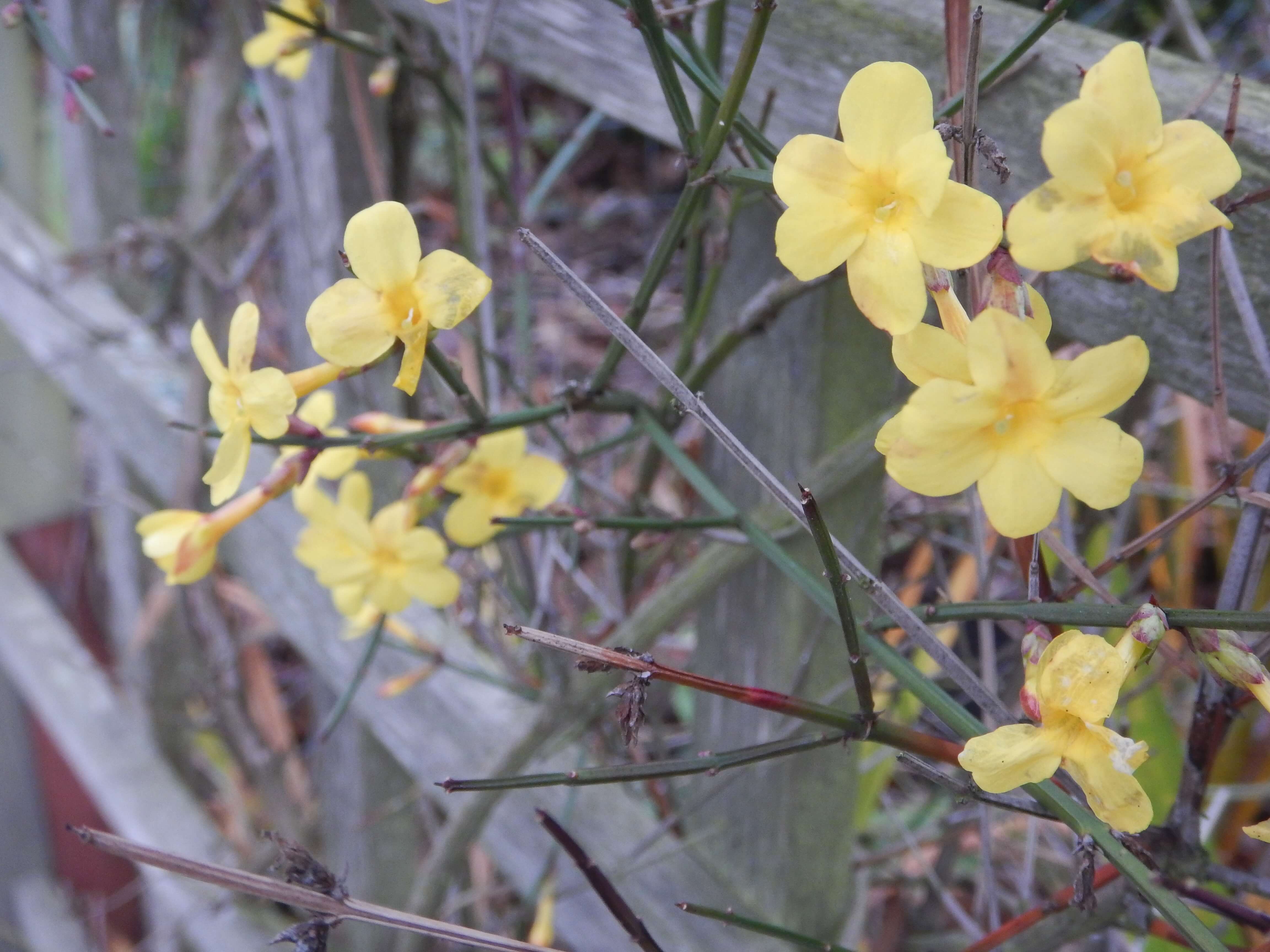
winter jasmine, winter-flowered jasmine, jasminum nudifolium, Jasminum sieboldianum, garden Victoria, Vancouver Island, BC, Pacific Northwest
photo by SVSeekins

7. Winter Jasmine
This specimen is from a cutting that DS stole from Government House during the New Year’s Day Levi a few years ago.  He decided we NEEDED it in our garden too!  Wasn’t that thoughtful?

aka: Hardy Jasmine (not summer jasmine)

The gardens are lovely at Government House.

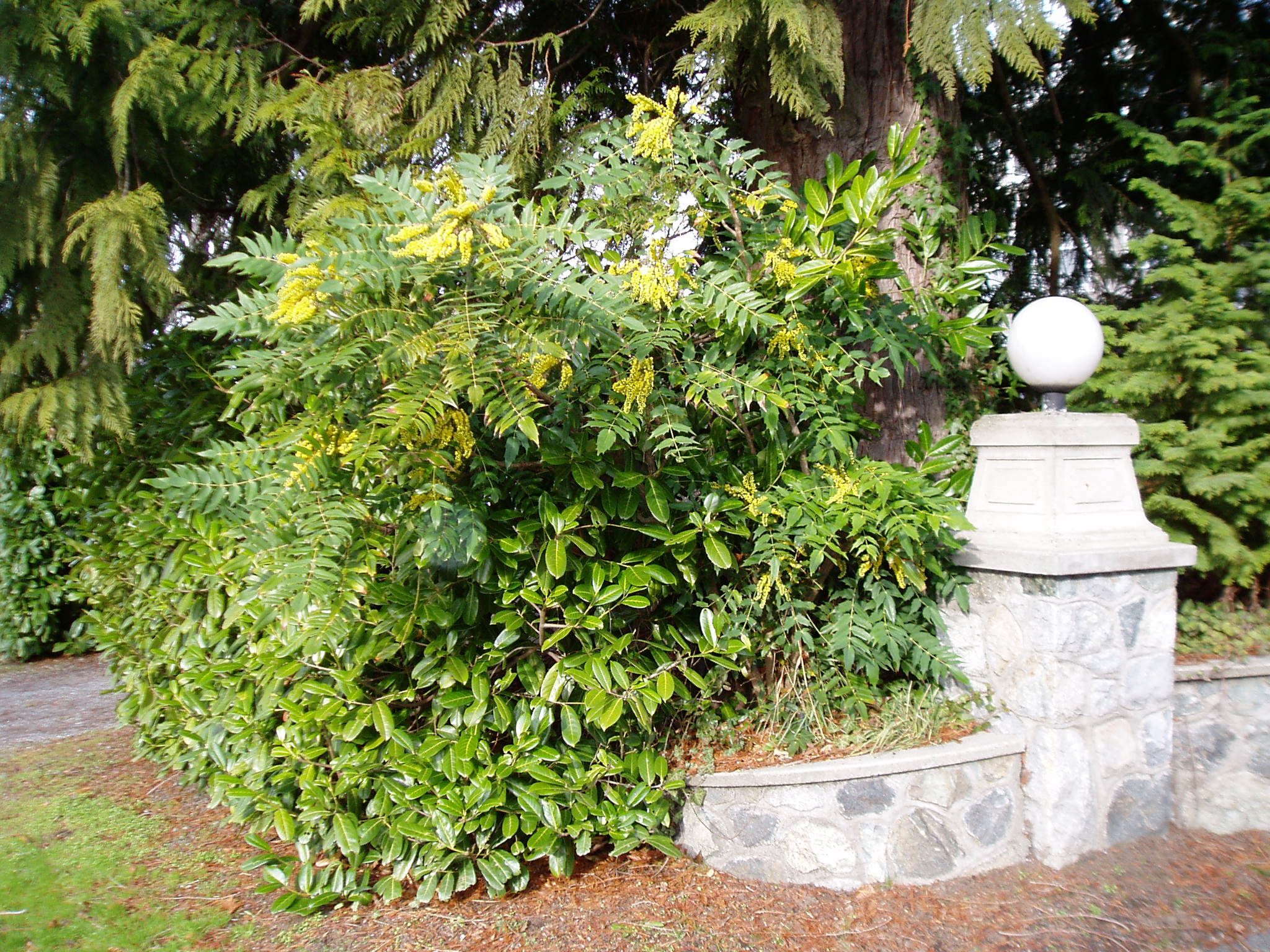
mahonia in February
photo by SVSeekins

8. Mahonia
Oregon Grape is the native mahonia to these parts, but it doesn’t bloom until early spring, so I understand why some folks plant this ‘outsider’.  It will bloom as early as December.

aka: Mahonia ‘winter sun’

Mahonia varieties grow all over the world.

bergenia - pig squeak
photo by SVSeekins

9. Pig Squeak
It’s a traditional favourite for our area, probably because of the winter blooms, and the unusual fleshy leaves.  But also because it is super hardy & tolerates neglect and DEER.

aka: Bergenia

Sometimes they’re called elephant ears.

primrose
photo by SVSeekins

10. Primrose
I thought they were just grocery store annuals, but when they finished up in the spring, I plunked them into the garden just in case.  They came back – –  every winter!

aka: Polyanthus

They’re not just a grocery store annual.

So there’s my list.  10 flowers in February – who would think there are that many?    There’s sure to be space for some other early bloomers as I find them; perhaps some rhododendron, camellia, or witch hazel

-30-
© SVSeekins and Garden Variety Life, 2013

P.S.  You might enjoy these stories: