Category Archives: perrennials

Swamp Lantern, Lysichiton americanus

The first glimpse was a flash of yellow along the trail’s edge. Mid-March can be so grey — but this was bright & happy. 🙂
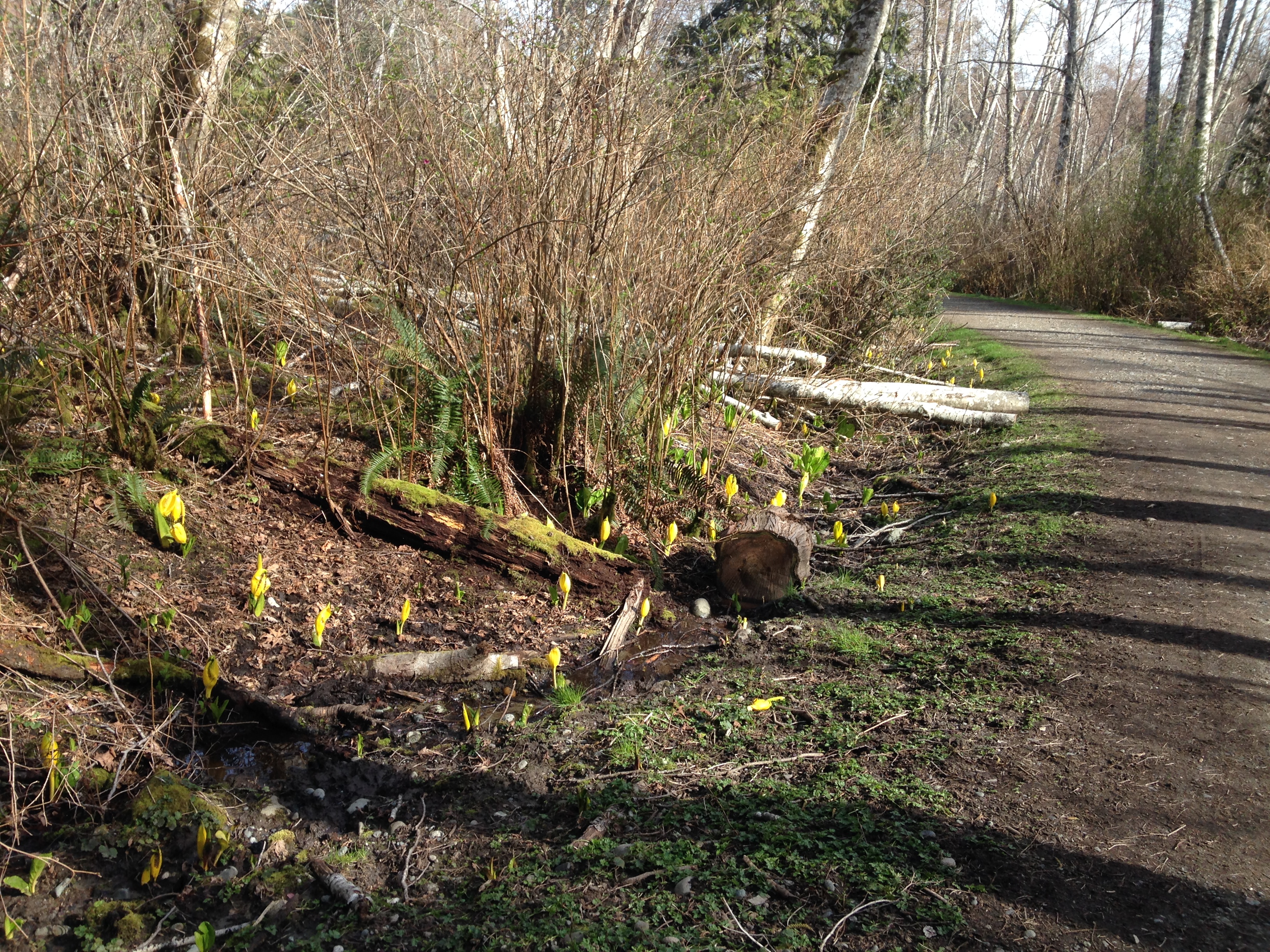
Lysichiton americanus, Western Skunk Cabbage, swamp lantern, yellow skunk cabbage, American skunk cabbage, garden Victoria BC Pacific Northwest
photo by SVSeekins

Anything blooming at this time of year makes me smile. Western Skunk Cabbage is no exception. With a name like that, perhaps you’ll think yourself fortunate to see it in a photo rather than in person… but I’ve never noticed a foul odour around this plant. Some say the smell comes when leaves are bruised. Others contend it’s the flowers trying to attract pollinating flies & beetles.
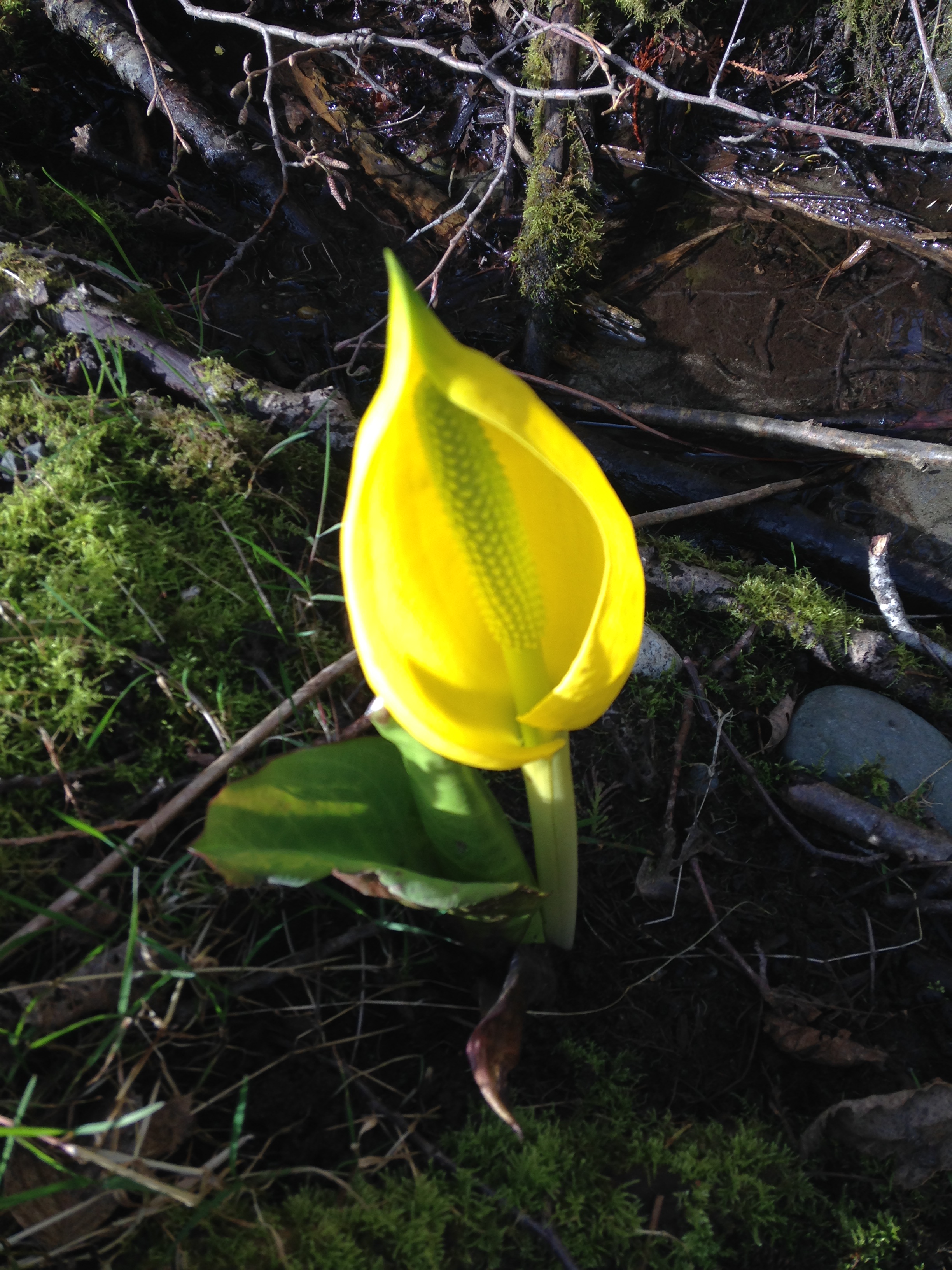
Lysichiton americanus, Western Skunk Cabbage, swamp lantern, yellow skunk cabbage, American skunk cabbage, garden Victoria BC Pacific Northwest
photo by SVSeekins

Lysichiton americanus is also called the Swamp Lantern. To my mind, this name is more suited. The flower spike is like the candle flame & it’s cupped by a protective spathe that glows & reflects the light– just like a lantern.
A more fitting name, right?
Even still, I often revert to the first name I learned & struggle to remember this one. Perhaps I just need to concentrate more.

In early spring, the flowers emerge in wet areas all along the Pacific Northwest. This spring is no exception. The low laying wetlands bordering Esquimalt Lagoon are prime habitat for this west coast native.

Lysichiton americanus, Western Skunk Cabbage, swamp lantern, yellow skunk cabbage, American skunk cabbage, garden Victoria BC Pacific Northwest
photo by SVSeekins

I’ve seen lots of Swamp Lantern before, but just around the corner the patch swells into the largest. The southern trails at Royal Roads University are a prime pick-me up for my March blues.

The leaves follow the bloom, unfurling in a rosette around the flower. At first they’re small, but they grow quickly in the rich, moist soil.

Lysichiton americanus, Western Skunk Cabbage, swamp lantern, yellow skunk cabbage, American skunk cabbage, garden Victoria BC Pacific Northwest
photo by SVSeekins

By May, the plants are large & lush. Here’s a patch just off McKenzie Beach near Tofino.

Through the summer they grow even bigger. At peak, a single leaf can be 2 feet wide & twice as long!
Dramatic, eh?

It’s no wonder folks in the UK were impressed when it was introduced as an ornamental in the early 1900’s. It became very popular. It received an Award of Garden Merit from the Royal Horticultural Society.

Lysichiton americanus, Western Skunk Cabbage, swamp lantern, yellow skunk cabbage, American skunk cabbage, garden Victoria BC Pacific Northwest
photo by SVSeekins

The conditions in England are so similar to Vancouver Island it thrived. Within 50 years Lysichiton americanus escaped the British garden & was gradually naturalizing along streams & wetlands.
That’s a little too much drama.
Now, the RHS advises against its cultivation.

I’m glad to see Swamp Lantern here, where it grows naturally. It warms my heart. I’m relieved it hasn’t been threatened by more competitive introduced species like many of our wildflowers have been. Its a reminder of how delicate an ecosystem can be.

-30-

Lorraine says:
Hi SV,
I hope you are well and still landscaping.
I remember one of the naturalist talking about bears eating them. So had to look it up.
http://www.mossomcreek.org/swamp-lanterns-skunk-cabbage/
Stay safe,
LS
https://www.yyjproductions.ca/

Winter Iris

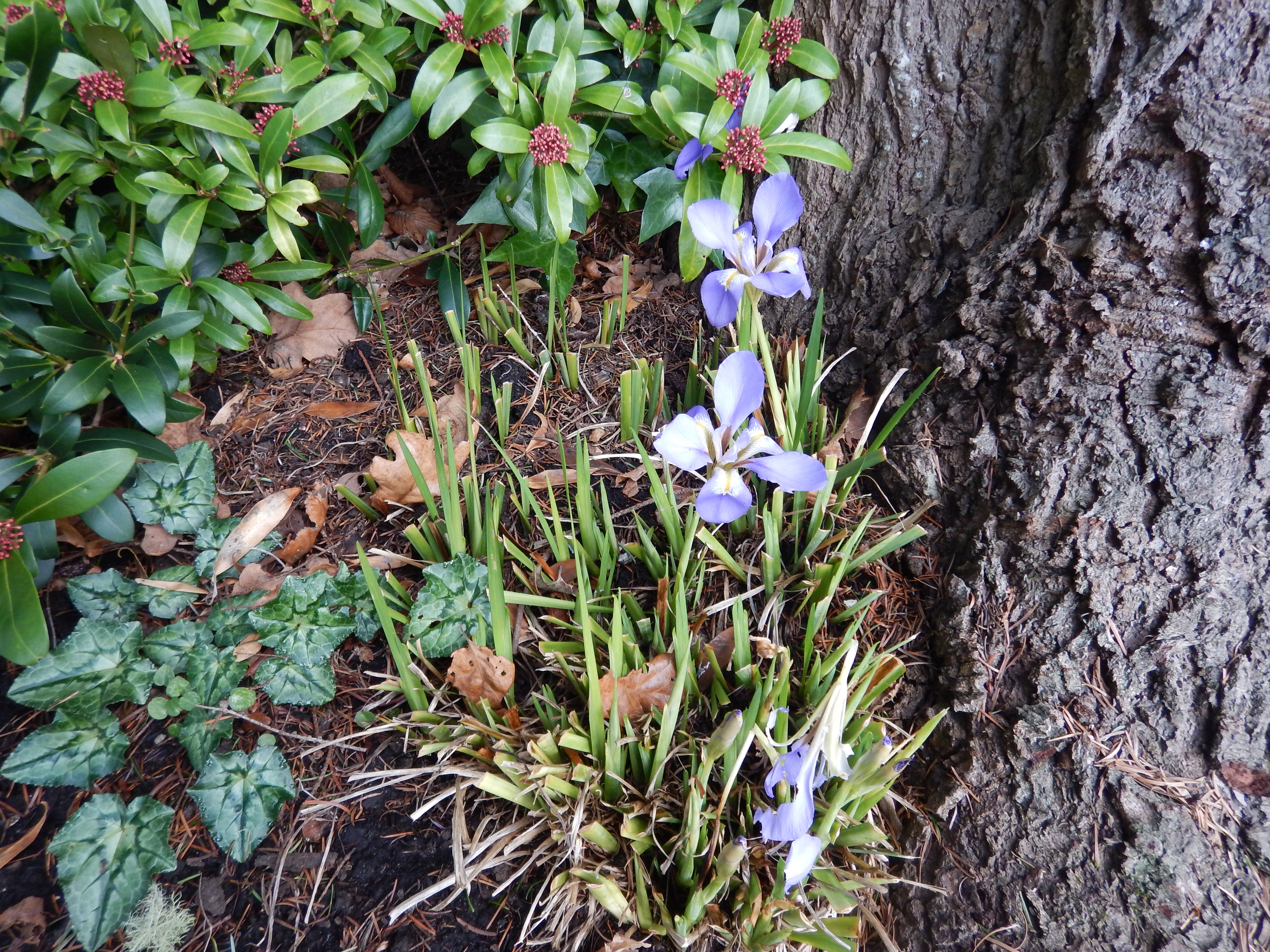
In the first week of February, I cycled past this lovely front yard. Basking in the winter sunshine are some very early flowers. I know about snowdrops blooming in January & snow crocus flowering by Valentine’s Day… but iris? These aren’t the dwarf iris reticulata we have in our garden. These are different.

iris unguicularis, winter blooming allgerian iris, winter iris, Iris stylosa, Joniris stylosa, Neubeckia stylosa, Siphonostylis unguicularis, garden Victoria BC Pacific Northwest
photo by SVSeekins

These are Iris unguicularis… aka Algerian iris or winter iris. This evergreen is native to dry Mediterranean regions. We have a very similar climate in the Pacific Northwest, so it can grow here, too. It might be set back by the occasional snowstorm, but it pulls through.

Blossoms start opening as early as November & continue until spring. An unusual feature is that the flowers nestle, protected, near the base of the leaves. Look closely: in this yard, the gardener trims the leaves to the same height the flowers bloom at. Better to see the blooms.

iris unguicularis, winter blooming allgerian iris, winter iris, Iris stylosa, Joniris stylosa, Neubeckia stylosa, Siphonostylis unguicularis, garden Victoria BC Pacific Northwest
photo by SVSeekins

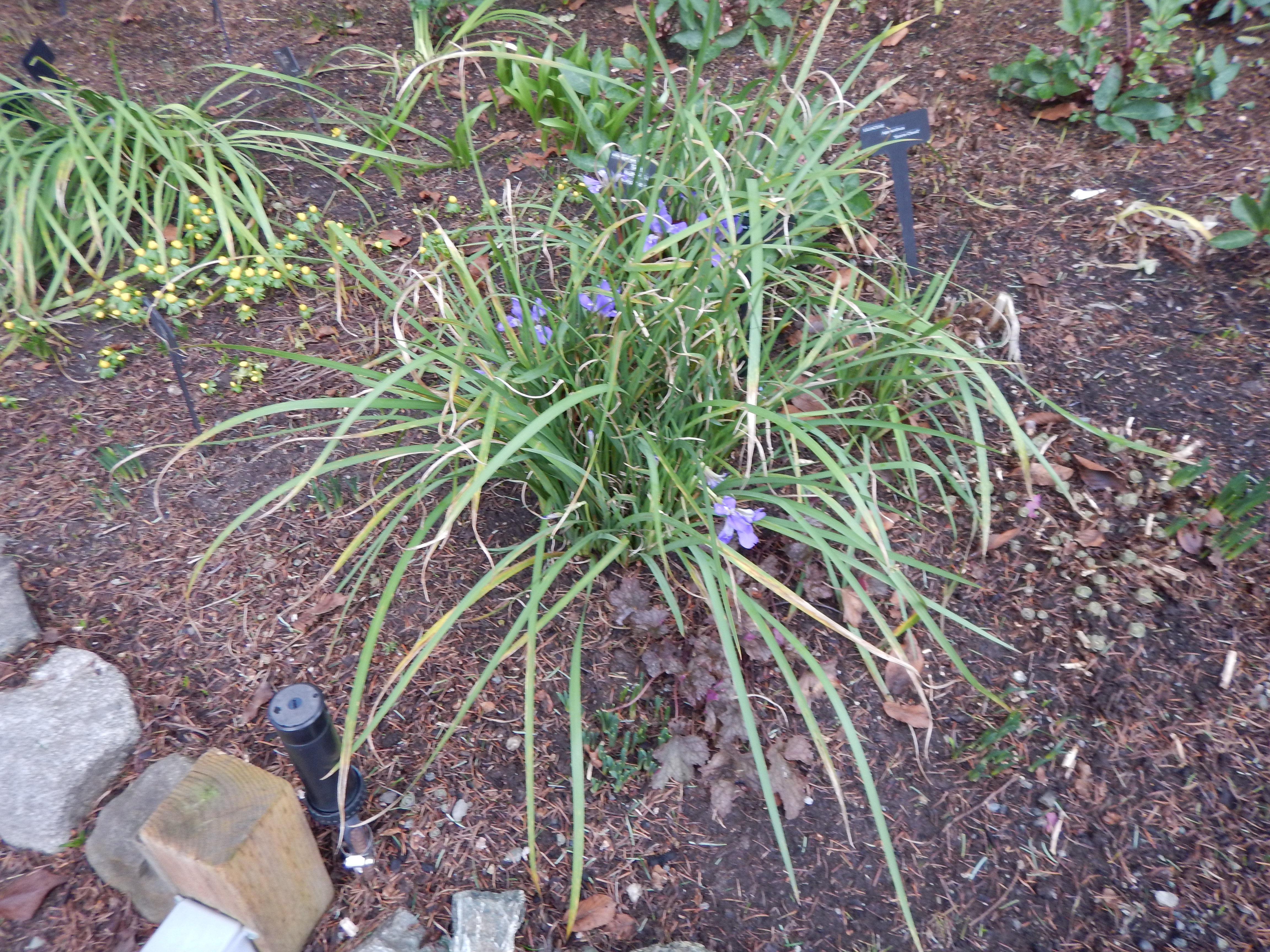
Back in January (2016), at the Horticultural Centre of the Pacific, I saw Iris unguicularis with full leaf. The flowers bloom inside the clump, almost hidden. To my mind, the clump looks a little messy.

It’s a tough call – trim back the leaves or not? Letting them grow natural is not as showy but probably better for overwintering insects. I reckon I can put up with messy if it means the beneficials are snug & warm, and I’m still seeing flowers in January.

iris unguicularis, winter blooming allgerian iris, winter iris, Iris stylosa, Joniris stylosa, Neubeckia stylosa, Siphonostylis unguicularis, garden Victoria BC Pacific Northwest
photo by SVSeekins

Here’s the same clump 5 weeks later. The winter aconites are almost done. The Hellebores are blooming like mad. The narcissi are opening. And the winter iris is still blooming. 🙂

That’s enough to prove to me Algerian iris is a keeper. But there are even more reasons why I’m a fan:

iris unguicularis, winter blooming allgerian iris, winter iris, Iris stylosa, Joniris stylosa, Neubeckia stylosa, Siphonostylis unguicularis, garden Victoria BC Pacific Northwest
photo by SVSeekins
  • The flowers are fragrant.
  • It’s deer & rabbit resistant (probably because it’s poisonous).
  • It’s happy in part shade under deciduous trees – or the sunny base of evergreens.
  • It survives our summer drought.

Wouldn’t it make sense that every garden in Victoria would have some Algerian iris? I suppose most nurseries don’t carry it because most shoppers don’t show up in winter to purchase plants. By the time we show up in April & May, this iris looks inconspicuous amongst the jewels of spring.
My bad.
I want to find some anyway. It’s my new mission.

-30-

Other January gems in the Pacific Northwest:

Winter Blooming Hepatica

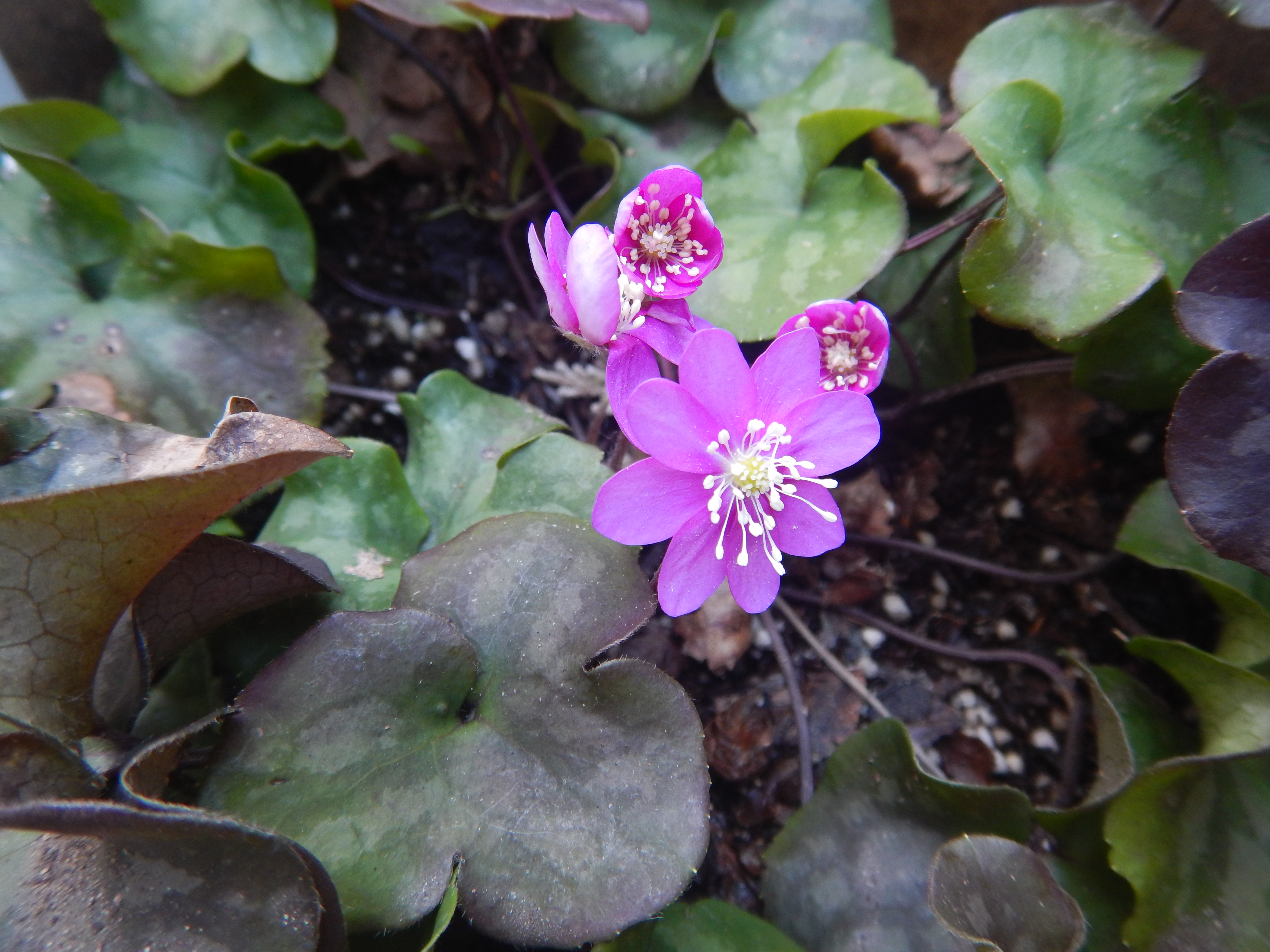
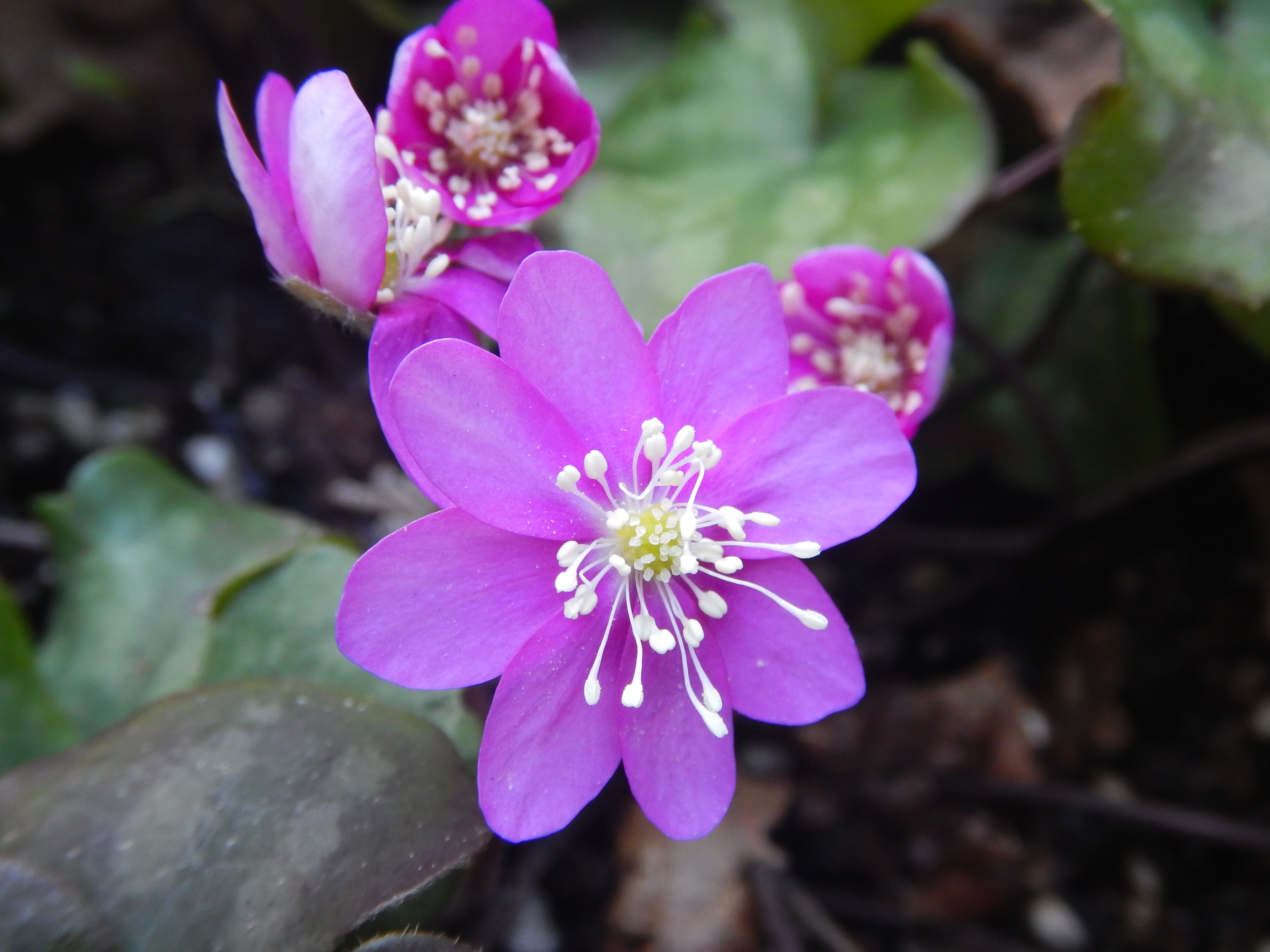
In a patch of January sunshine, bright violet flowers glow. They’re tiny– but in winter, every flower is precious. I’m stoked.

Hepatica, ica January bloom,common hepatica, liverleaf, liver leaf liverwort, hepatica nobilis var. obtusa, round-lobed hepatica, garden Victoria BC Pacific Northwest
photo by SVSeekins

This is Hepatica. I got a pot of it from the Vancouver Island Rock & Alpine Garden Society meeting last January. I’m happy that it’s settled into its new home & is blooming so early. This winter has been fairly mild so far, but we did have snow for 3 days over Christmas. Tough little plant, eh? The leaves didn’t even die back.

These leaves are kind of unusual, too. Each leaf grows up from the crown of the plant & has 3 rounded lobes. They were mottled green last summer but are now changing to a more bronzy colour. Years ago someone decided they looked a bit like a human liver, so that’s why Hepatica is also called liver-leaf or liverwort. I think it’s prettier than that name implies.

Hepatica, common hepatica, liverleaf, liver leaf liverwort, hepatica nobilis var. obtusa, round-lobed hepatica, garden Victoria BC Pacific Northwest
photo by SVSeekins

This little woodland gem grows in zone 4-9 across the northern hemisphere, so it can handle some pretty tough winters. It’s a native wildflower in Eastern Canada.

The flowers open wide in the sunshine then close as the cloud cover moves in or night falls. I reckon that’s a clever strategy for protecting itself until another day when the insects might be out again to help with pollination.

Some sources say Hepatica needs moisture, so I’ve kept it in a pot in the courtyard where I’m sure it’ll get summer water more often than our garden beds do. Other sources say it can be drought-tolerant, too. Here in Victoria, the summers are REALLY dry so I wonder if it can survive that much drought? (There’s certainly no lack of moisture through our Pacific Northwest winters.)

Hepatica, January bloom, common hepatica, liverleaf, liver leaf liverwort, hepatica nobilis var. obtusa, round-lobed hepatica, garden Victoria BC Pacific Northwest
photo by SVSeekins

Hepatica is listed as a handy ‘winter browse‘ & is not safe from deer. That’s just another reason to keep it in our courtyard.

I only have this one plant & I’m reticent to risk it. Hopefully, it’ll set seed. If I can get some new plants started, I might be able to encourage the babies to grow in a protected spot in our garden. Until then, it’ll stay in the pot where I know it’s happy.

-30-

Other January gems in the Pacific Northwest: