Category Archives: months 04-06: spring

April thru June

Great Camas In Bloom

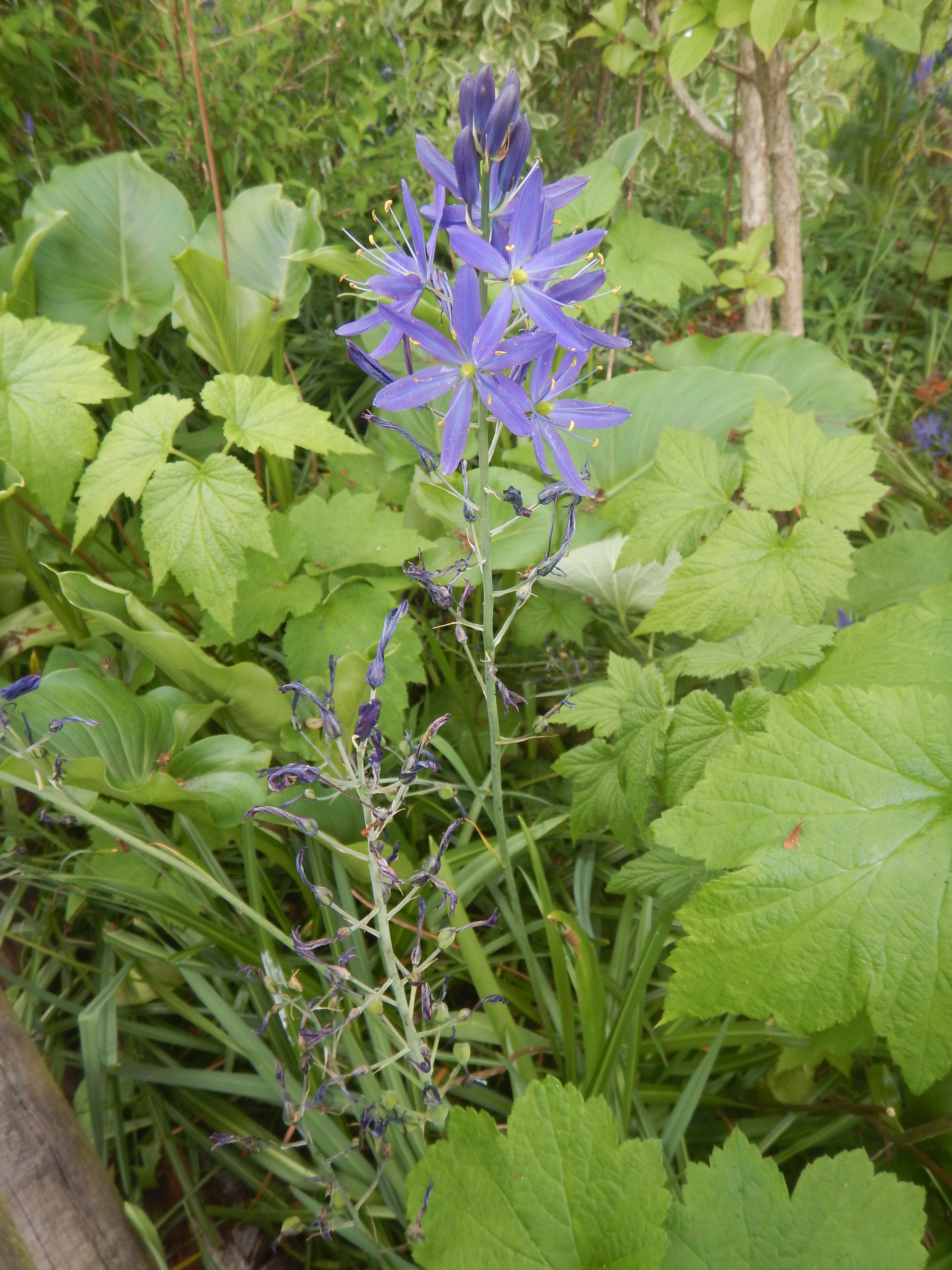
Great Camas, Camassia leichtlinii garden Victoria, Vancouver Island, BC, Pacific Northwest
Great Camas photo by SVSeekins

It’s easy to tell the Great Camas flower from the Common Camas flower, especially in our garden.

  • Each May, Great Camas blooms naturally in the full sun of an open meadow. That said, it’s also happy with a bit of dabbled shade along the forest edge. (Common Camas is a stickler for full sun.) So, if you see Camas flowering in our garden borders, it’s Camassia leichtlinii.
  • Great Camas blossoms open gradually from bottom to top. Sometimes the flowers at the bottom of the spike are finishing while the very top is yet to begin. (Common Camas blooms in more of a rush to open all at the same time. I’m trying to restore a Camassia quamash meadow in some deeper soil around our rocky outcropping.)
  • The spent petals of Great Camas twist themselves into a hug. (Common Camas petals die back willy-nilly without even thinking about tidying up).

While the strappy Camas leaves naturally wither to the ground, feeding the bulb for next year’s bloom, I enjoy the decorative seed heads amongst the supporting foliage of other perennials. The glossy black seeds feed birds (and deer) or eventually drop to sprout in the spring.

In the meantime, the Calla Lily follows with its elegant summer flower. Later, simple pink Japanese Anemone flowers float in the breeze atop tall stems. Then the Viburnum ‘pink dawn’ entertains me through winter. Together, they all make good garden companions.

-30-

Check out these local Camas Meadows:
Lithodora Drought Tolerance

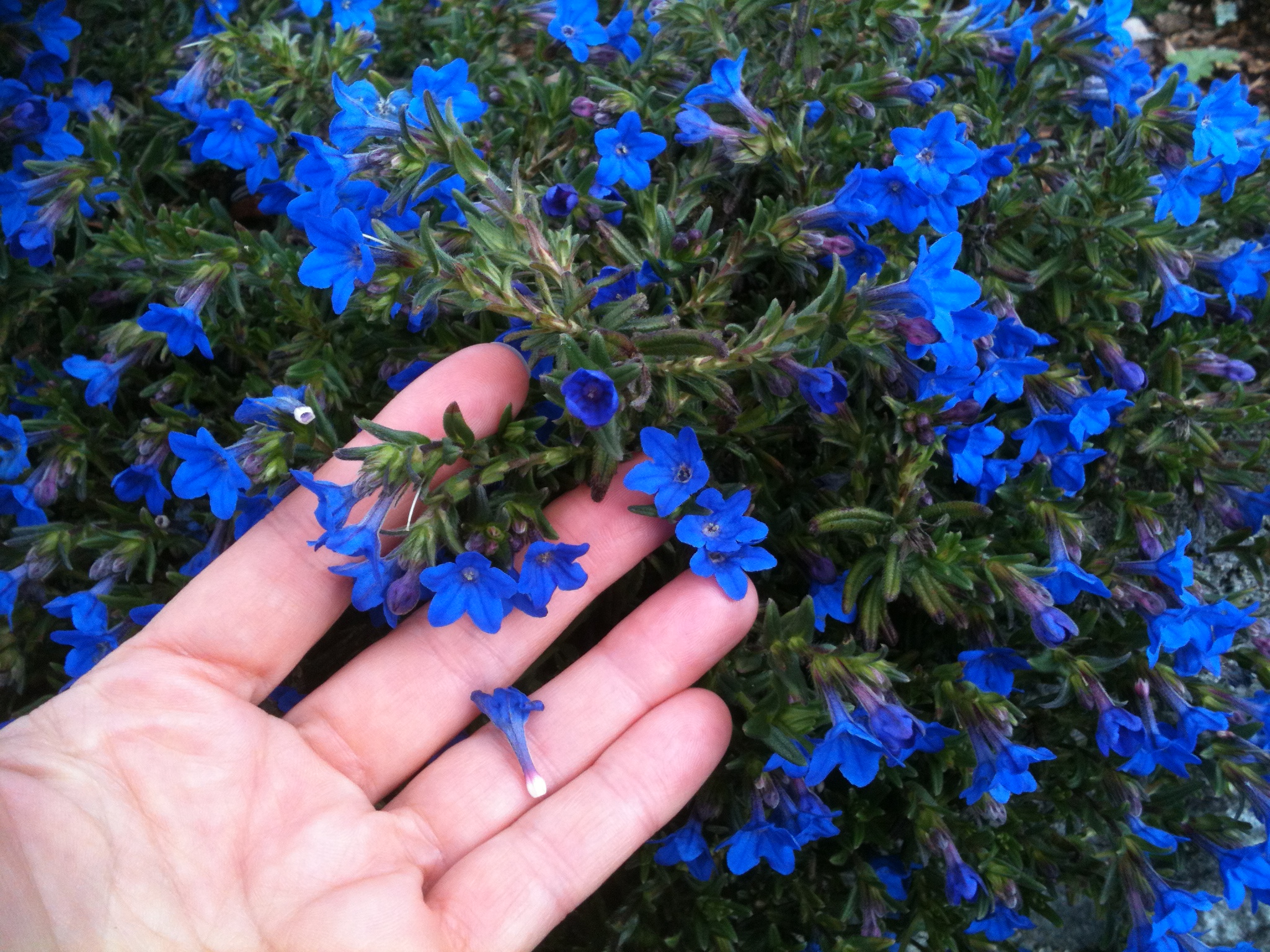
Lithodora diffusa, lithospermum diffusum, glandora diffusa, purple groundwell, garden Victoria BC Pacific Northwest
photo by SVSeekins

I planted Lithodora diffusa underneath the apple tree years ago. It flourished.

A few years later, a Garden Club Speaker told us Lithodora is far more drought tolerant than most people think. He said that, after getting its root system established, it pretty much took care of itself. I love hearing this kind of news from experienced local gardeners. He would know about the months of drought we get on Southern Vancouver Island. He would know what ‘drought tolerant’ really means to us.

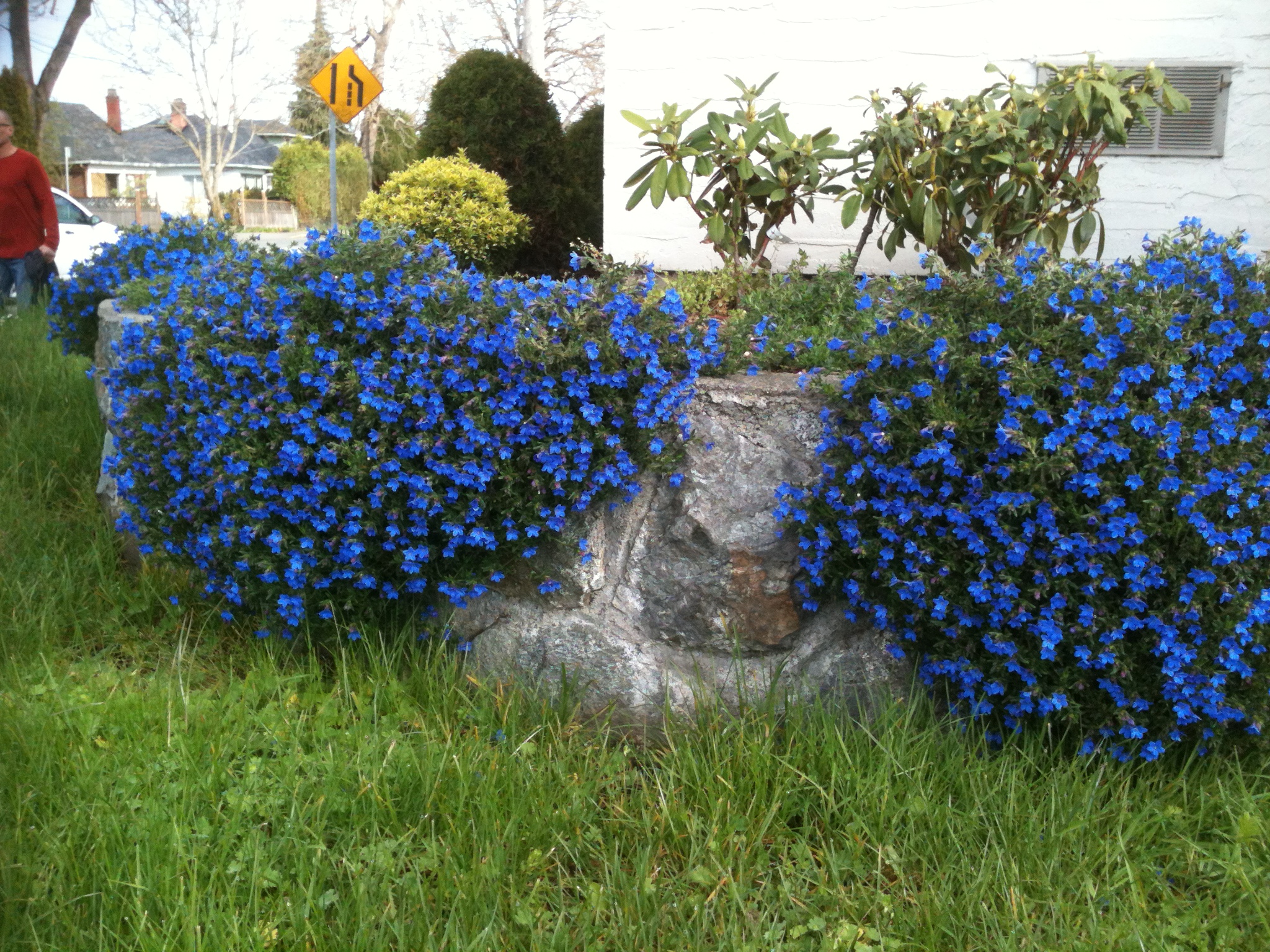
Lithodora diffusa, lithospermum diffusum, glandora diffusa, purple groundwell, garden Victoria BC Pacific Northwest
photo by SVSeekins

Lithodora originates in Turkey & Greece – another area of the globe with long, dry summers. And temperatures there get a lot hotter than ours. (More clues that Lithodora can survive without me hauling the water hose out every other day. )
Sweet.

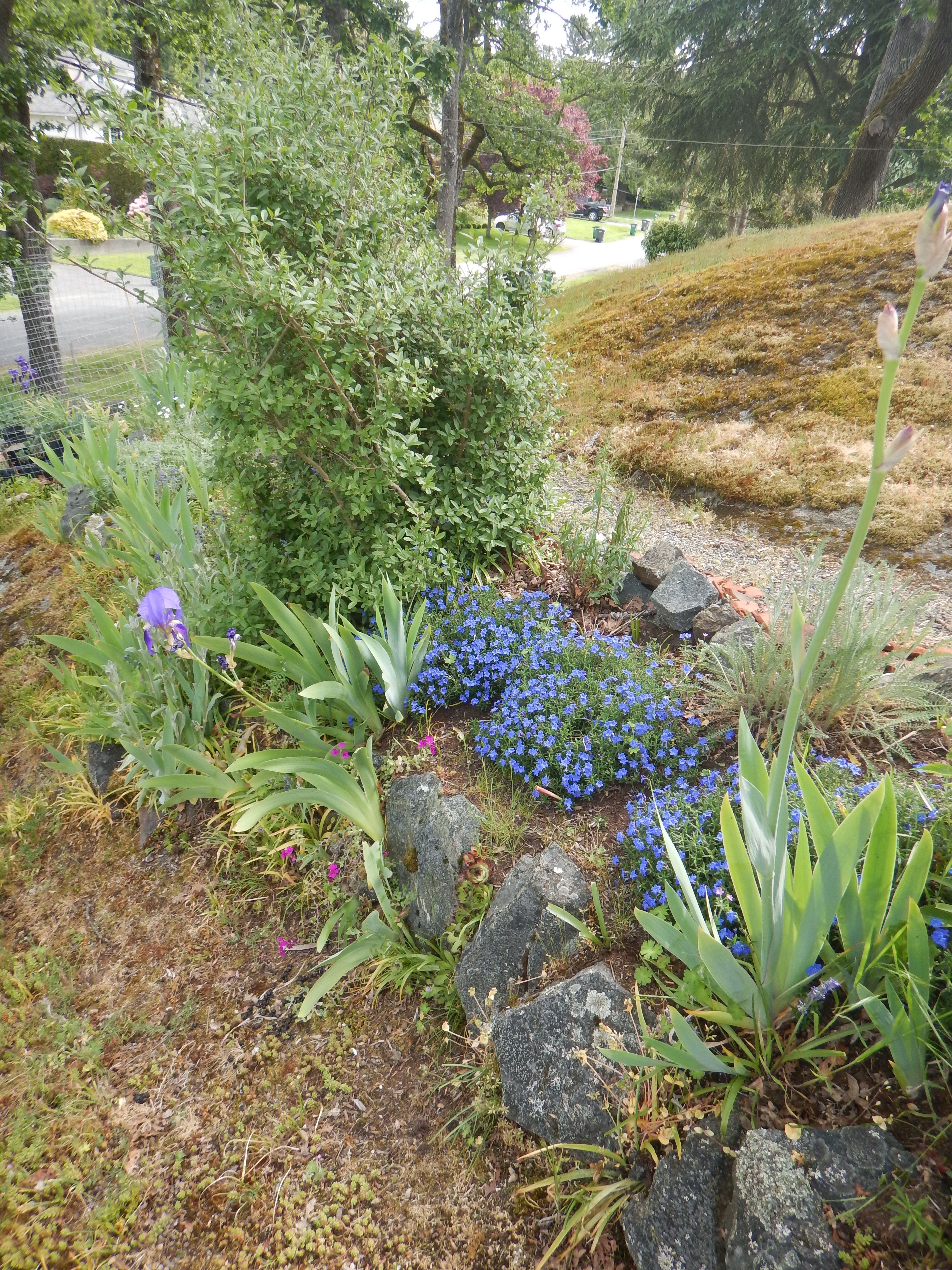
Lithodora diffusa, lithospermum diffusum, glandora diffusa, purple groundwell, garden Victoria BC Pacific Northwest
photo by SVSeekins

So, I shifted our 3 Lithodora plants to the shallow bed near the top of our rocky outcrop in the fall. They were all large enough to have decent-sized root systems, but I watered them occasionally through the following summer just to be sure they established thoroughly in the new bed.
They survived. 🙂
The next year, with hardly any summer moisture, they did just as well. 🙂 🙂

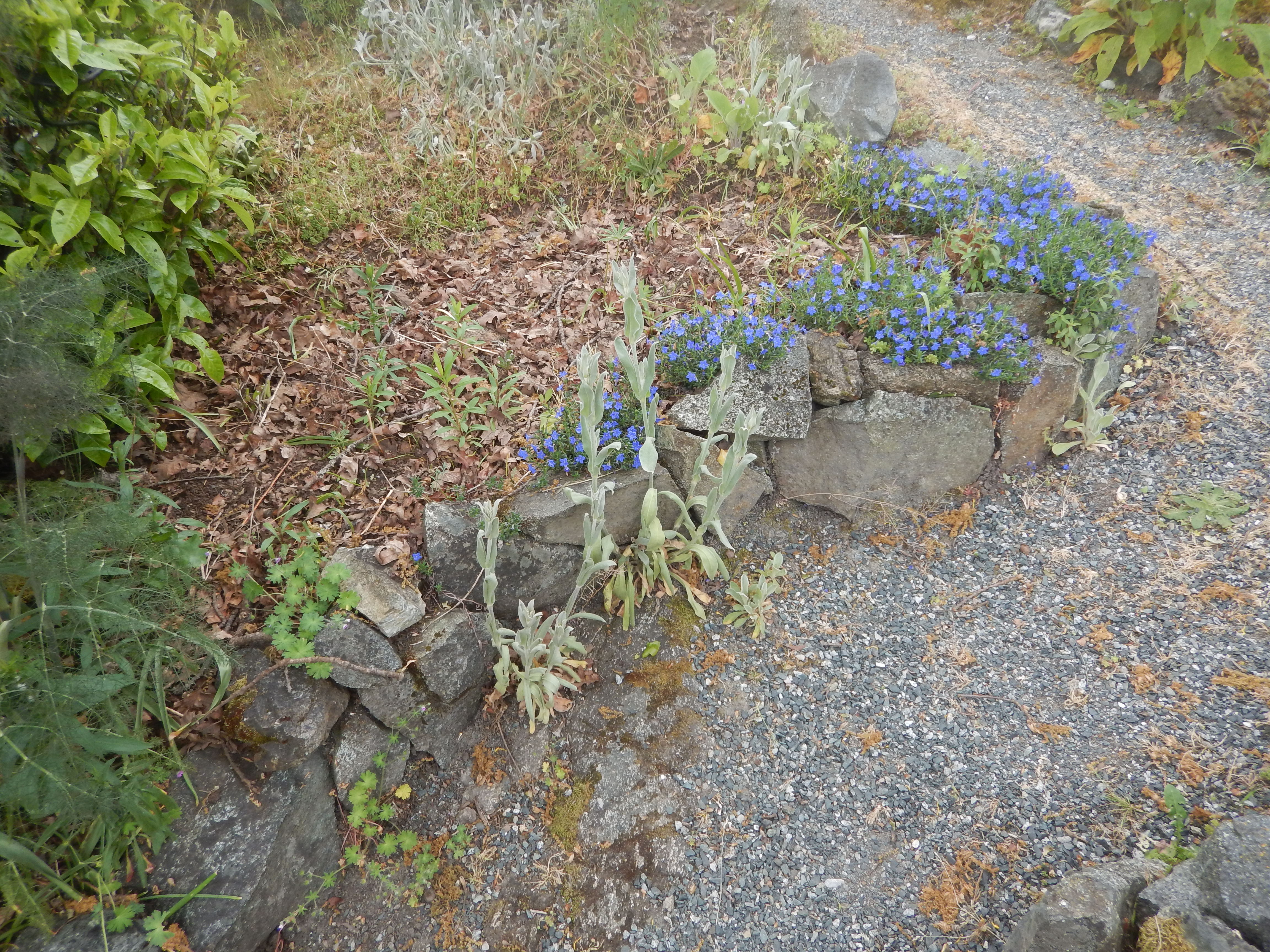
Then I discovered some small Lithodora volunteers under the apple tree. I decided to risk them. So I planted them on a bit of stacked rock along the path leading up the slope.
They survived. 🙂
They established themselves during our rainy winter…
grew more…
and even bloomed.

Lithodora diffusa, lithospermum diffusum, glandora diffusa, purple groundwell, garden Victoria BC Pacific Northwest
photo by SVSeekins

I’m so stoked.

Lithodora makes it onto my list of High-Value Plants.

  • The low-growing evergreen covers the ground like I want.
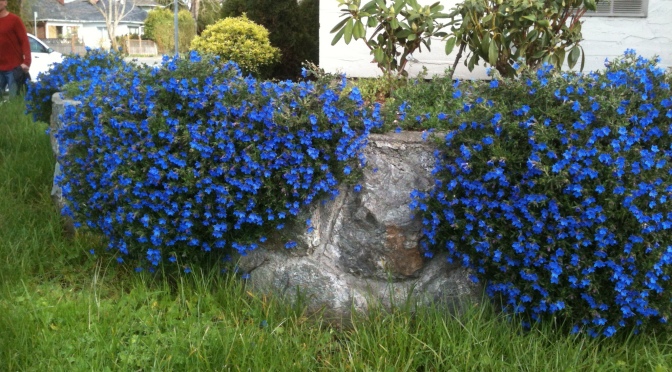
  • It looks even better draping down rock walls.
  • Each May, blue flowers brighten the spring garden.
  • It’s winter tolerant to -15 C — and that’s plenty cold for here.
  • AND the deer leave it alone.

Happiness blooms in our low-maintenance garden.

PS—Fast-forward a couple more years… the lovely patch of Lithodora in the shallow soil kicks the bucked. But the patches in the deeper soil beside the gravel path flourish.

-30-

Swamp Lantern, Lysichiton americanus

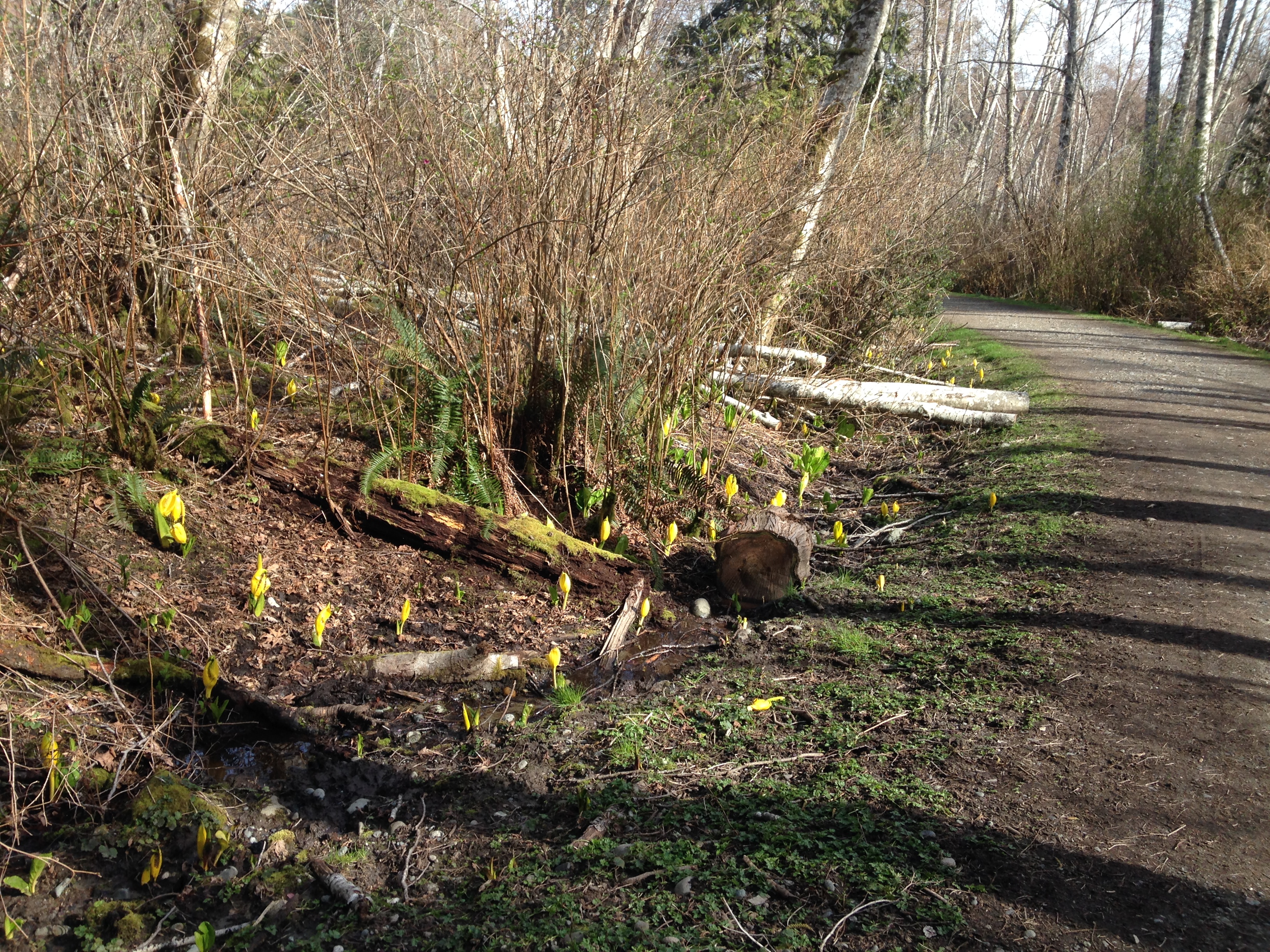
The first glimpse was a flash of yellow along the trail’s edge. Mid-March can be so grey — but this was bright & happy. 🙂

Lysichiton americanus, Western Skunk Cabbage, swamp lantern, yellow skunk cabbage, American skunk cabbage, garden Victoria BC Pacific Northwest
photo by SVSeekins

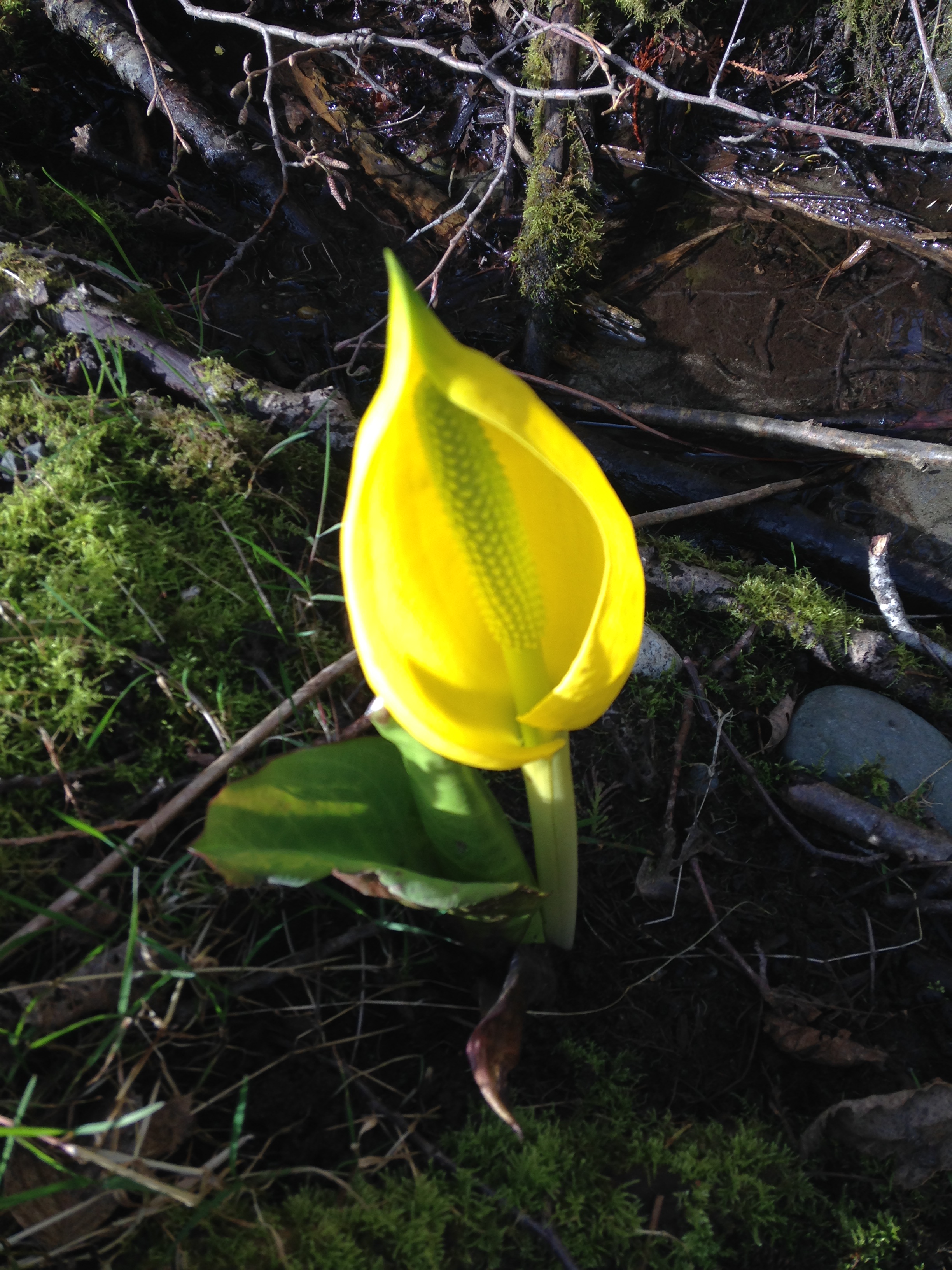
Anything blooming at this time of year makes me smile. Western Skunk Cabbage is no exception. With a name like that, perhaps you’ll think yourself fortunate to see it in a photo rather than in person… but I’ve never noticed a foul odour around this plant. Some say the smell comes when leaves are bruised. Others contend it’s the flowers trying to attract pollinating flies & beetles.

Lysichiton americanus, Western Skunk Cabbage, swamp lantern, yellow skunk cabbage, American skunk cabbage, garden Victoria BC Pacific Northwest
photo by SVSeekins

Lysichiton americanus is also called the Swamp Lantern. To my mind, this name is more suited. The flower spike is like the candle flame & it’s cupped by a protective spathe that glows & reflects the light– just like a lantern.
A more fitting name, right?
Even still, I often revert to the first name I learned & struggle to remember this one. Perhaps I just need to concentrate more.

In early spring, the flowers emerge in wet areas all along the Pacific Northwest. This spring is no exception. The low laying wetlands bordering Esquimalt Lagoon are prime habitat for this west coast native.

Lysichiton americanus, Western Skunk Cabbage, swamp lantern, yellow skunk cabbage, American skunk cabbage, garden Victoria BC Pacific Northwest
photo by SVSeekins

I’ve seen lots of Swamp Lantern before, but just around the corner the patch swells into the largest. The southern trails at Royal Roads University are a prime pick-me up for my March blues.

The leaves follow the bloom, unfurling in a rosette around the flower. At first they’re small, but they grow quickly in the rich, moist soil.

Lysichiton americanus, Western Skunk Cabbage, swamp lantern, yellow skunk cabbage, American skunk cabbage, garden Victoria BC Pacific Northwest
photo by SVSeekins

By May, the plants are large & lush. Here’s a patch just off McKenzie Beach near Tofino.

Through the summer they grow even bigger. At peak, a single leaf can be 2 feet wide & twice as long!
Dramatic, eh?

It’s no wonder folks in the UK were impressed when it was introduced as an ornamental in the early 1900’s. It became very popular. It received an Award of Garden Merit from the Royal Horticultural Society.

Lysichiton americanus, Western Skunk Cabbage, swamp lantern, yellow skunk cabbage, American skunk cabbage, garden Victoria BC Pacific Northwest
photo by SVSeekins

The conditions in England are so similar to Vancouver Island it thrived. Within 50 years Lysichiton americanus escaped the British garden & was gradually naturalizing along streams & wetlands.
That’s a little too much drama.
Now, the RHS advises against its cultivation.

I’m glad to see Swamp Lantern here, where it grows naturally. It warms my heart. I’m relieved it hasn’t been threatened by more competitive introduced species like many of our wildflowers have been. Its a reminder of how delicate an ecosystem can be.

-30-

Lorraine says:
Hi SV,
I hope you are well and still landscaping.
I remember one of the naturalist talking about bears eating them. So had to look it up.
http://www.mossomcreek.org/swamp-lanterns-skunk-cabbage/
Stay safe,
LS
https://www.yyjproductions.ca/