Big in California

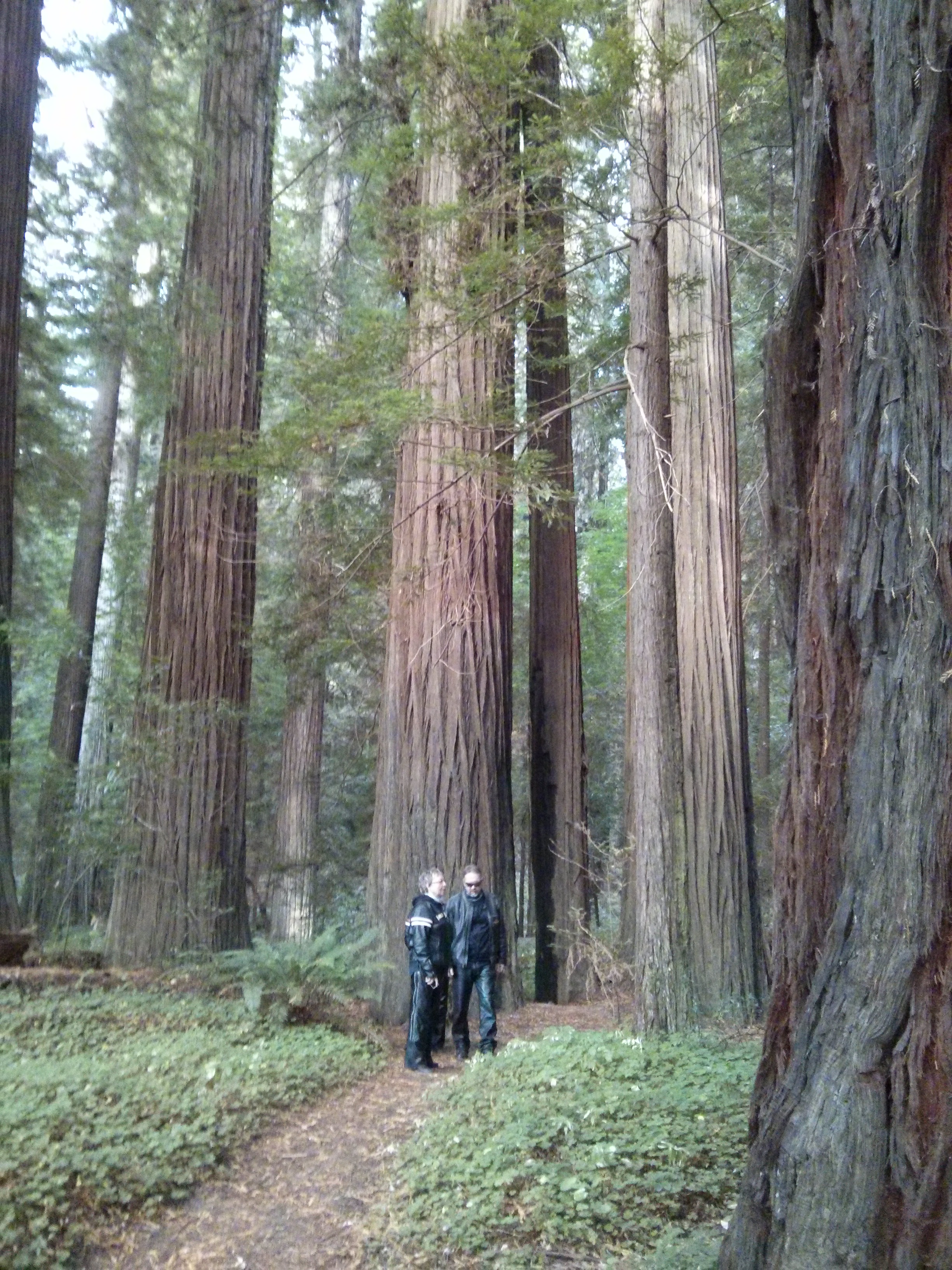
Redwoods along the Avenue of the Giants
photo by SVSeekins

It’s known for big waves & big beaches, so those didn’t surprise me at all on my recent adventure along California’s northern coast.

I also anticipated being in awe when seeing the giant redwoods for the first time.   I expected them to be BIG – – and they are.  Sort of.

Now, if I’d just come out of the prairies, where I grew up, the redwoods’ size would have seemed ENORMOUS.  But having lived among the big cedar & fir of Vancouver Island, the redwood just didn’t seem AS big as I’d expected them to be.
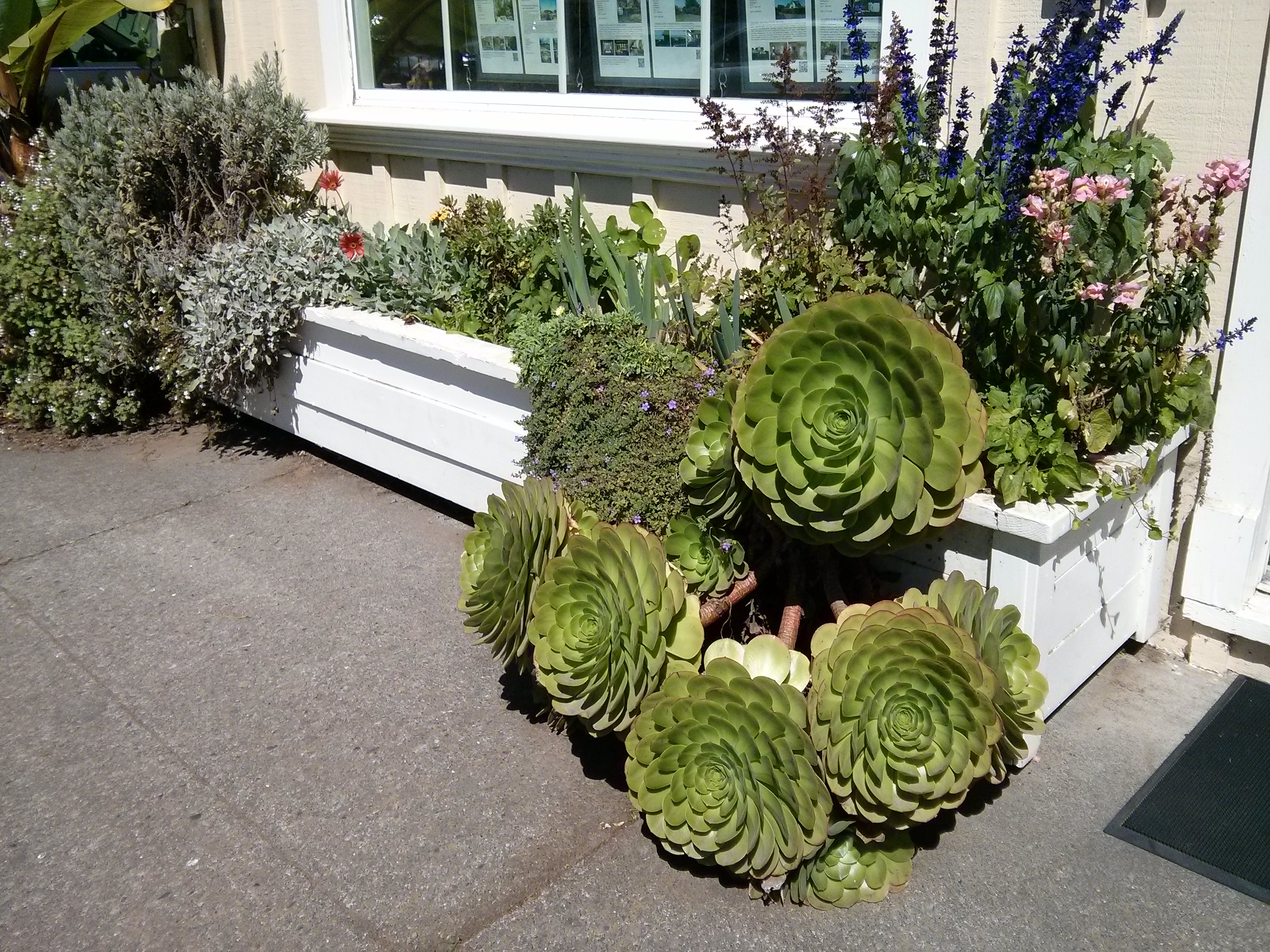
Planter box in Mendocino California
photo by SVSeekins

What did surprise me was the size of some other plants.  Many of these I’d only ever seen as much smaller indoor house plants.

Who knew they could get so big?
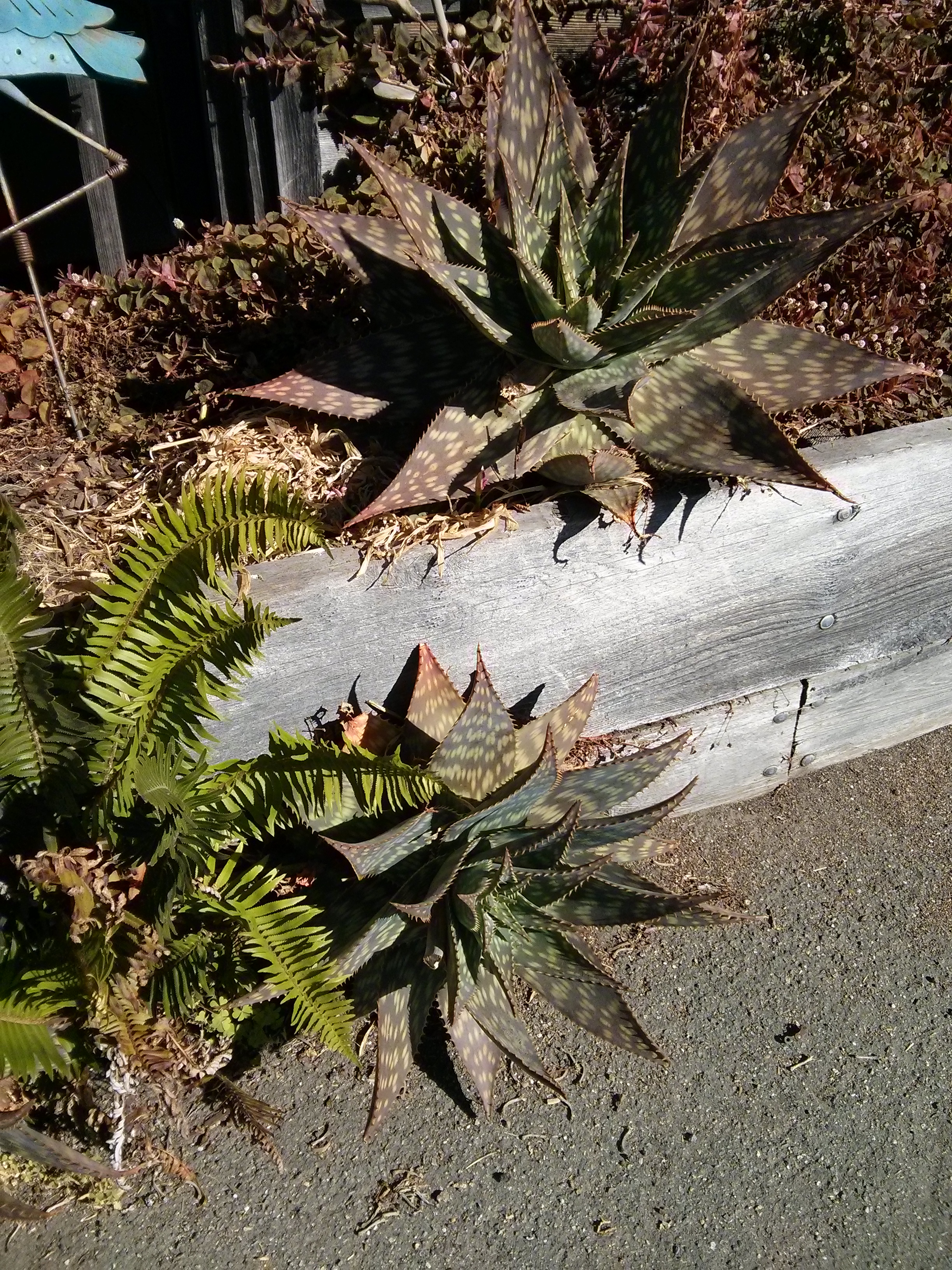
succulents beside a driveway in Gualala, California
photo by SVSeekins

Or were tenacious enough to grow out of cracks in a planter wall!?!

It was these surprises that put me in a state of awe.  I oogled.

Locals just smiled indulgently at the crazy woman snapping photos of plants instead of beaches.

Iron Dog art in Gualala, California
photo by SVSeekins

Then we came along some giant statues in a little seaside town called Gualala.  They weren’t part of some touristic theme park as I expected. It turns out they’re garden art – really, really BIG garden art!

They looked pretty cool. Even though it was after-hours at the retail nursery, I had to stop & check them out.  No doubt other tourists pop by out of curiosity too…  This time I smiled indulgently, imagining the character running Iron Dog Fabrication.  The dinosaurs are a superb marketing gimmick. I just can’t imagine any customers taking one home.

coastal trail in Gualala, California
photo by SVSeekins

Now my imagination recreated California as some giant prehistoric jungle.

Had it somehow been spared destruction from glaciers during the last ice age?

Did flora still survive from those ancient jungles?

Considering the odd plants bordering a trail along the bluffs, I figure it must be true.

Are they trees?

Plants?

What?

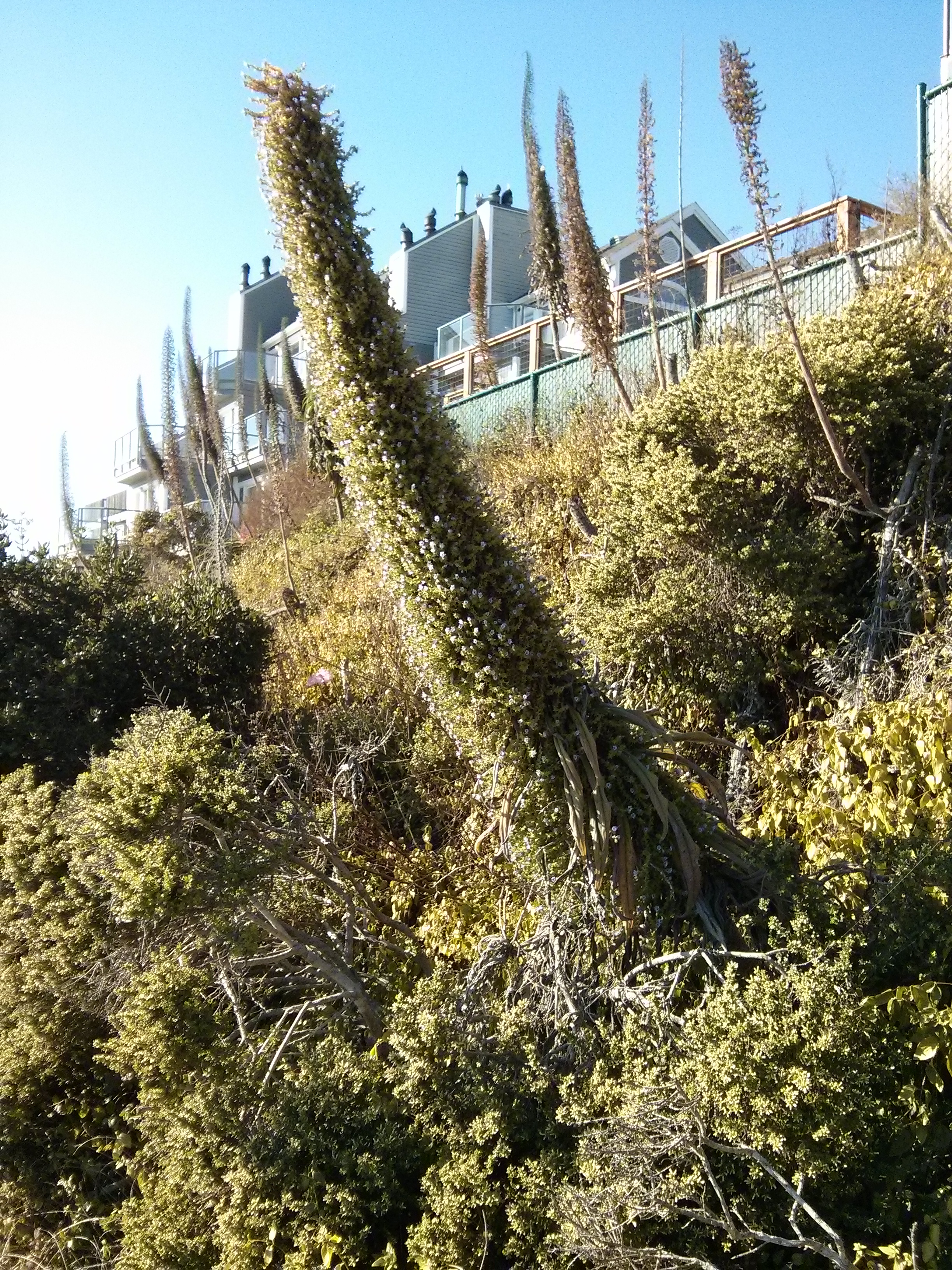
unusual plant along trail in Gualala, California
photo by SVSeekins

They certainly didn’t look like anything I’d seen before.

On closer inspection I noticed the base of the strange plant looked like a yucca – – only the leaves were a bit fuzzy.

But it was the spike at the top of the thing I found most fascinating.

It easily reached 12 feet into the sky!

Wow.
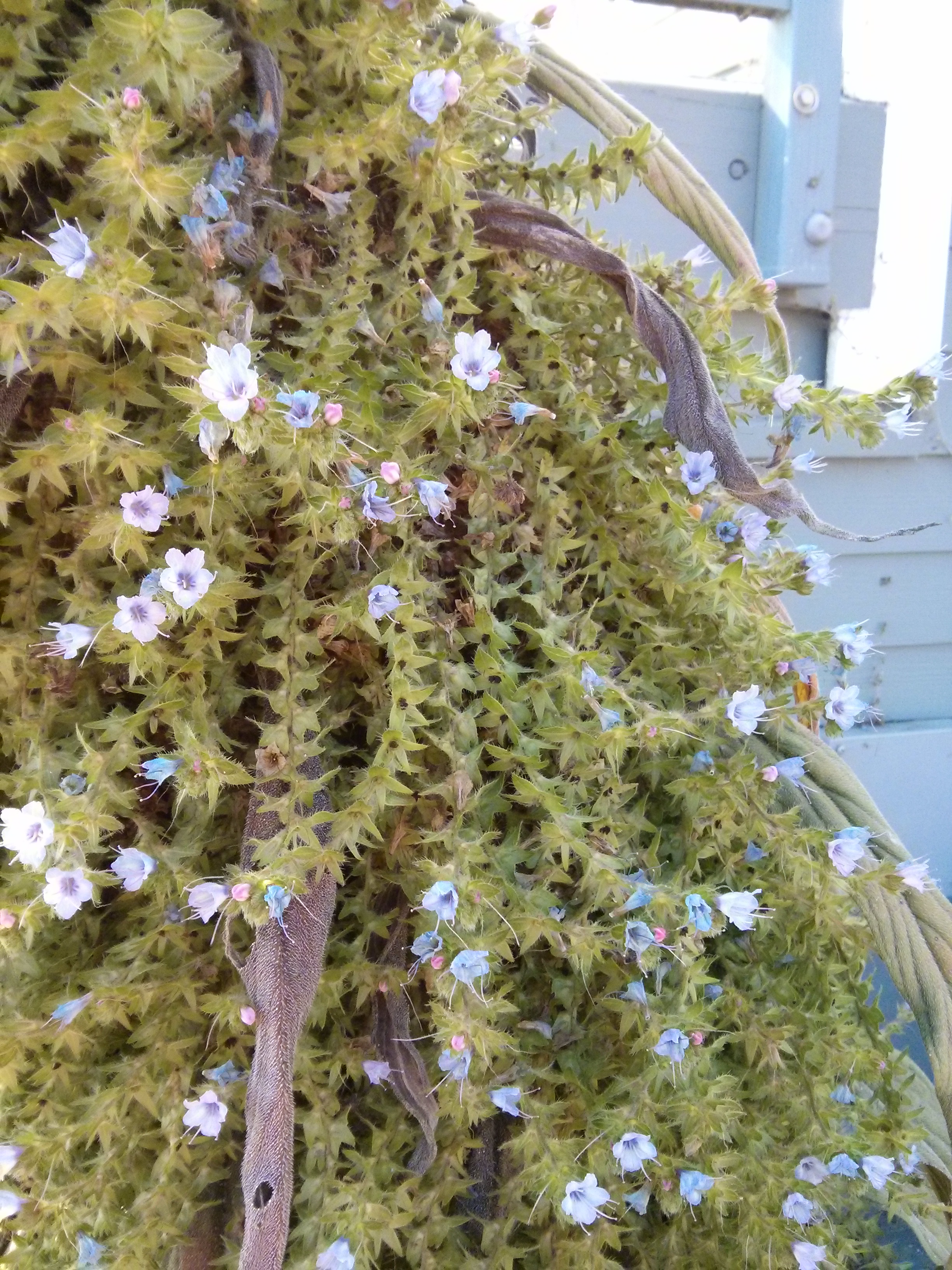
a closer look at the spike
photo by SVSeekins

I finally found a specimen I could get closer to.  It gave me some clues.

It looks to me like the spike is part of a big bloom made up of lots & lots of tiny blue flowers.  Cool.  At this time of year they’re pretty much done, but still so striking.  Can you imagine what this must look like in full bloom?

Still, curiosity tingled.  I had to know more about this big stranger.

The answer came from chatting with another guest of the motel we were staying at.  She ran a nursery a few hundred miles away, so I figured she’d know for sure.

Echium.

Never heard of it.

echium invasion of a bluff
photo by SVSeekins

It’s not native to California, so there goes my theory of the prehistoric jungle.

Apparently echium is often used for dramatic effect in landscape designs, but can get out of hand when it finds a location it really likes. (In Australia it’s actually considered an invasive.)  In California it’s on the Watch List, but because it spreads fairly slowly it’s still welcome.

I’d be really tempted to grow echium in our garden if I thought it would survive in our less arid climate.  Isn’t it easy to understand the urge to experiment with new plantings, especially big dramatic kinds?  But I suppose that’s how invasions get started.   What an awful legacy that would be.  Imagine being responsible for next big invasion.

Even in California, where big seems to be fairly common, that would be a BIG deal…

another big beach in California
photo by CDMiller

-30-
© SVSeekins and Garden Variety Life, 2013

Enter your email address to subscribe to this blog and receive notifications of new posts by email.

Hooray For Naked Ladies

Yes, this title is cheeky, but it’s true.  It’s no secret I like Naked Ladies.  Last fall, I admitted it.  At the time, I was referring to Colchicum.  The common name made sense to me because the flowers & stems appeared so naked without the leaves as to clothe them.

Naked Ladies in a California ditch
photo by SVSeekins

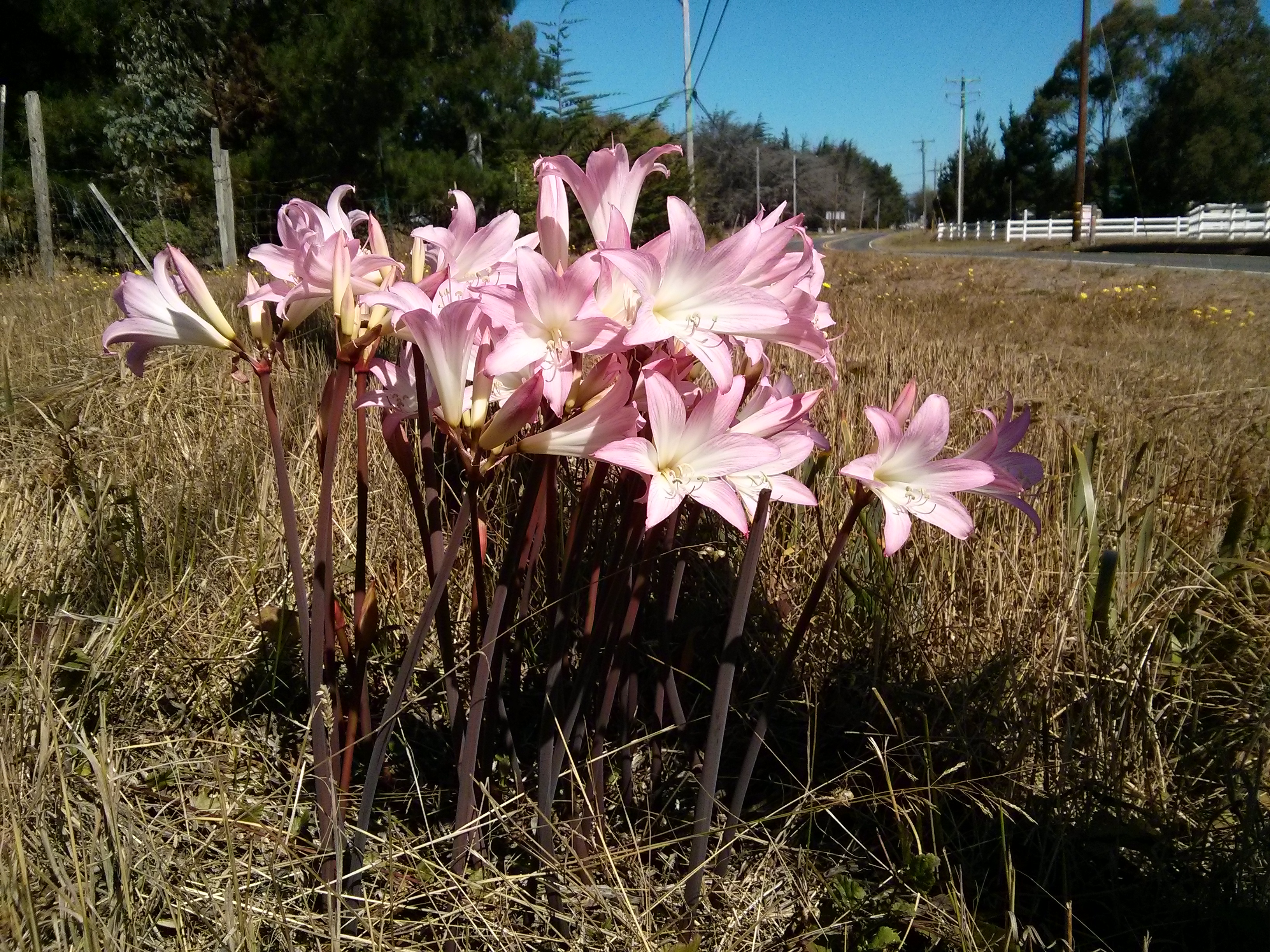
Recently, while travelling in northern California, I learned that the common name Naked Ladies can also refer to Amaryllis belladonna.  Through the countryside, even in ditches & deserted farmyards, these Naked Ladies danced happily.  Everything else seemed to have died back from dehydration.  Wow.  I figure they’re very sun & drought-tolerant to thrive in those places.

Nerine Lilies along a Victoria path
photo by SVSeekins

There’s a very similar pink flower that also blooms in the fall:  Nerine Lily.  Apparently, it’s also part of the Amaryllis family, but the flowers aren’t naked; the leaves show up along with the blooms.   I thought I’d identified some Nerine Lilies in our neighbourhood last year, but now I’m not so sure. Some leaves are showing, but not many.  Nerine?  Not So Naked Ladies?  It’s tricky.

This lovely patch of pink blossoms is in a yard along Mayfair Drive on Mt. Tolmie.  What’s especially impressive is how well they’ve stood up through the torrential rains of the past week!  Wow!  Sun & drought-tolerant… deer-resistant… and downpour-durable!

Just imagine: Naked Ladies– dancing in the rain.    Woo hoo !!
🙂

PS – Last night chatting with a couple of Garden Club ladies, a couple other fall-blooming, pink flowers were mentioned.
SK recommended Schizostylis (Kaffir Lily)  from the Iris family. (aka Hesperantha)
JJ recommended Crinum from the Amaryllis family.

-30-

Here are some other pink autumn bloomers:

kaffir lily, scarlet river lily, crimson flag lily, Hesperantha coccinea, Schizostylis coccinea, garden Victoria BC Pacific Northwest
photo by SVSeekins

© SVSeekins and Garden Variety Life, 2013
Deer Proof

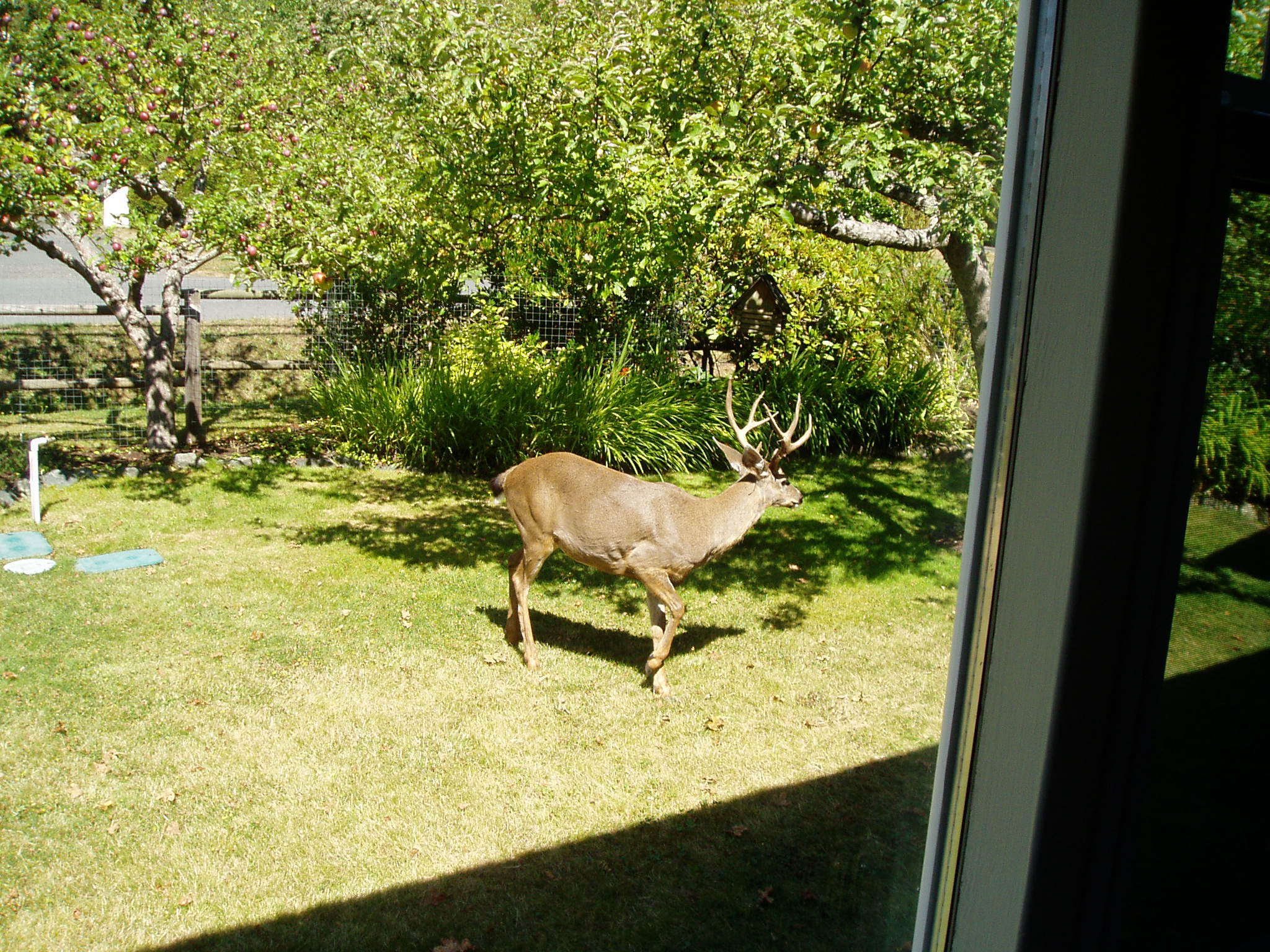
Deer under gravenstein apple tree
photo by SVSeekins

Now there’s Proof the deer really do hang out in our garden.
Photographic proof!!

AND it turns out he’s a 3 Point Buck!  Isn’t he a beauty?

This moment holds me still.. until I gather my wits & move carefully away from the window to get my camera.  I’ve been trying to get a decent shot of this fellow for over a month now but all the photos have turned out blurry….

urban black tail deer under sparten apple tree garden Victoria, Vancouver Island, BC, Pacific Northwest
photo by SVSeekins

Slowly moving back to the dining room window, I pretend to be calm & oblivious of the animal just a few yards away.  I don’t want to spook him.

He’s so close!

Surprisingly, growing up in the-back-of-beyond certainly never presented an experience of a deer so near – – unless it was already dead & being prepared for the oven.  But that’s just not the same.

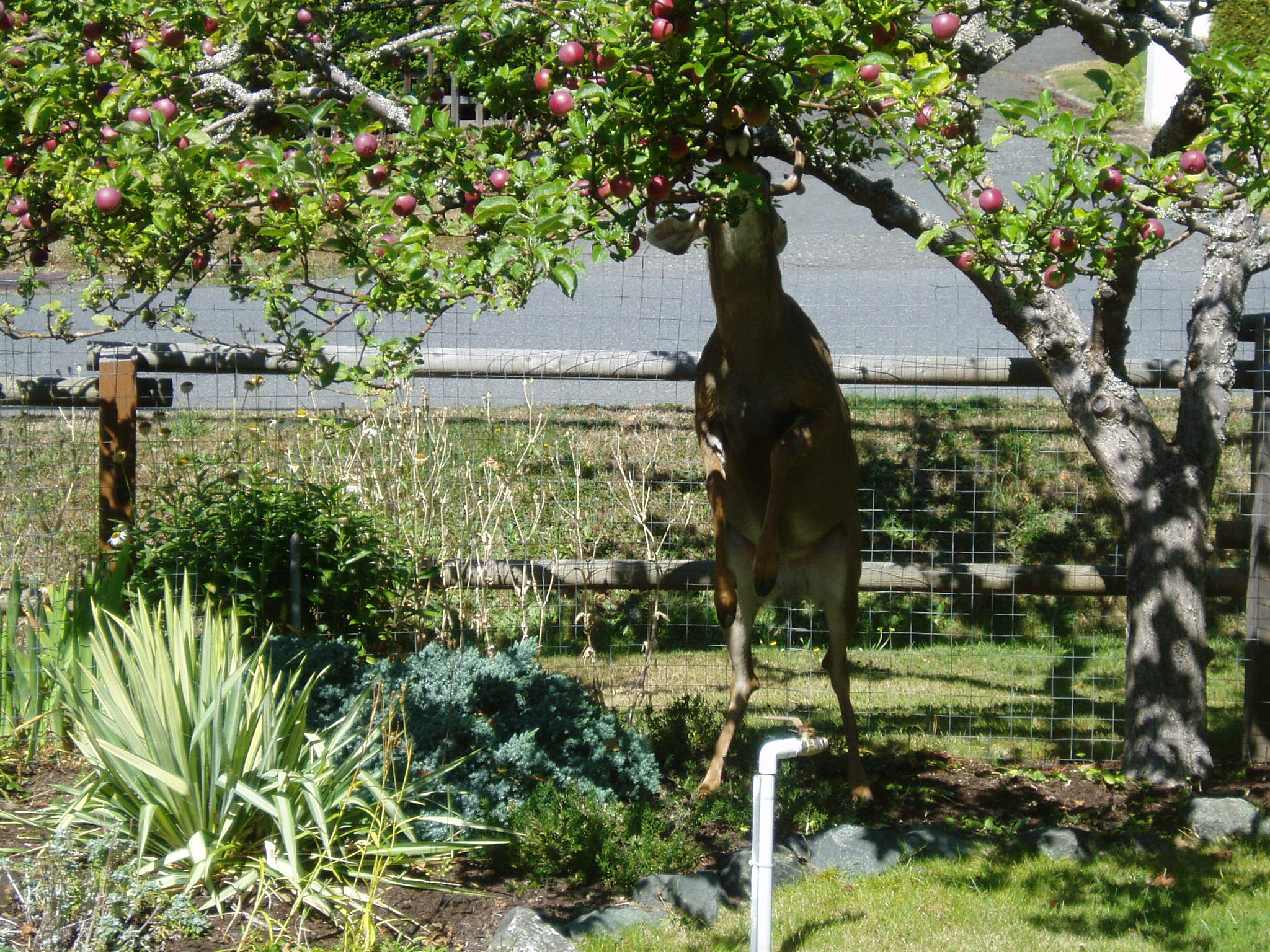
urban black tail deer climbing sparten apple tree Victoria, Vancouver Island, BC, Pacific Northwest garden
photo by SVSeekins

I’m a little in awe.  And quite glad to have the window between me & those antlers.  (There’s no fear when it comes to the doe & fawn.  I ‘shoo’ them out of the yard quite regularly.)

As I watch, it becomes clear he’s not just looking for a little shade.  He has a taste for apples.

Is nothing safe?

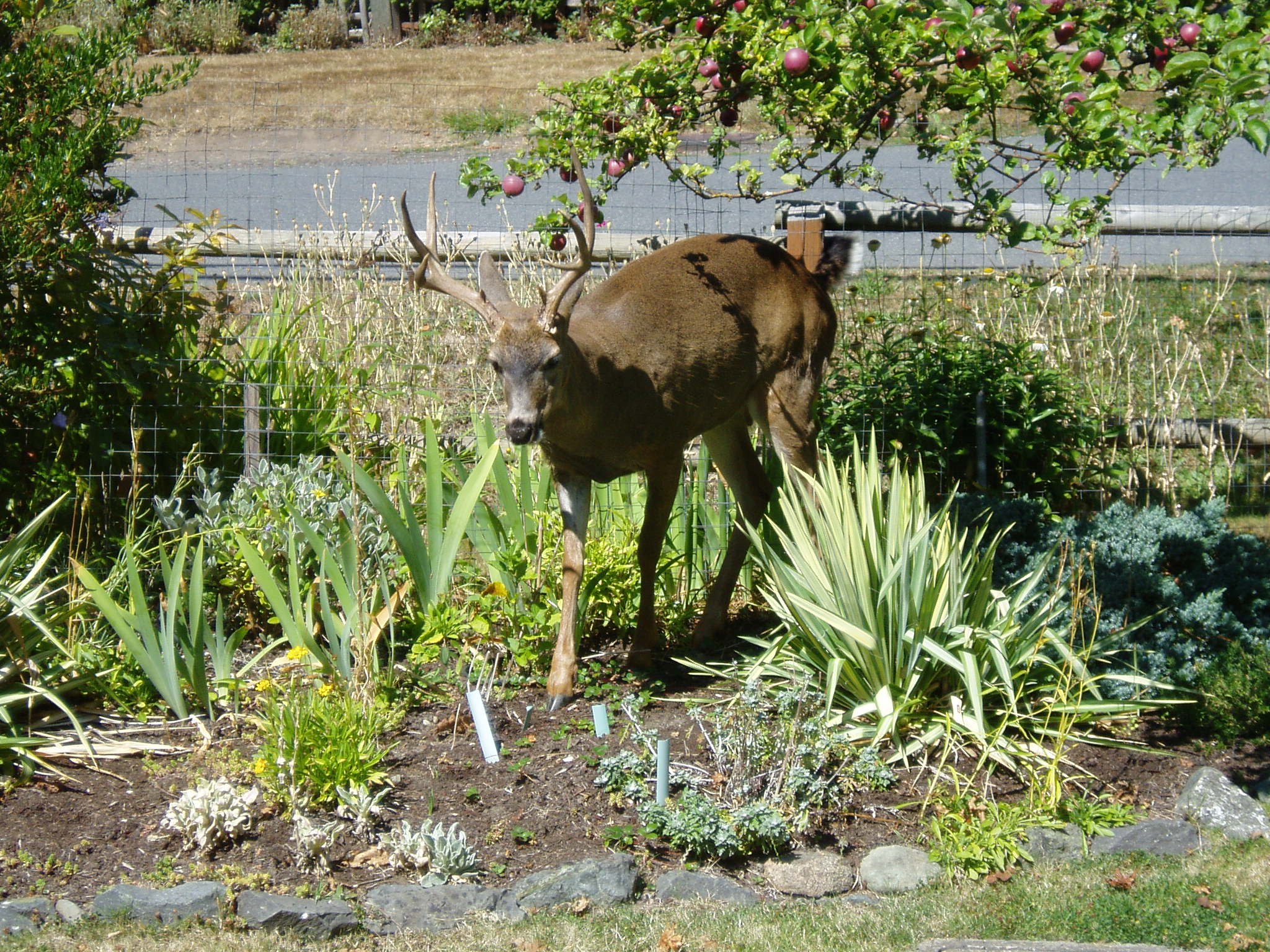
Deer in the full sun border
photo by SVSeekins

Well, there are plenty of apples this year, so sharing those is not really an issue.  I guess that if there is anything in the garden that I really want to be left alone, it’ll need to be caged in or sprayed with some of that stinky stuff.

But then, I dislike the smell of that stinky stuff and don’t like the idea of fencing the whole yard. (& I do enjoy seeing the deer)… So, that leaves the challenge of finding lovely plants that are deer proof… or at least some the deer don’t tend to munch on… that often.

I’m feeling kind of discouraged right now, in the heat of summer, because this year the buck seems to have a taste for the Rudbeckia, the Coreopsis, & Chinese lantern.  (Those were left alone last year)   But I have to keep in mind we’ve had better success with other plants.

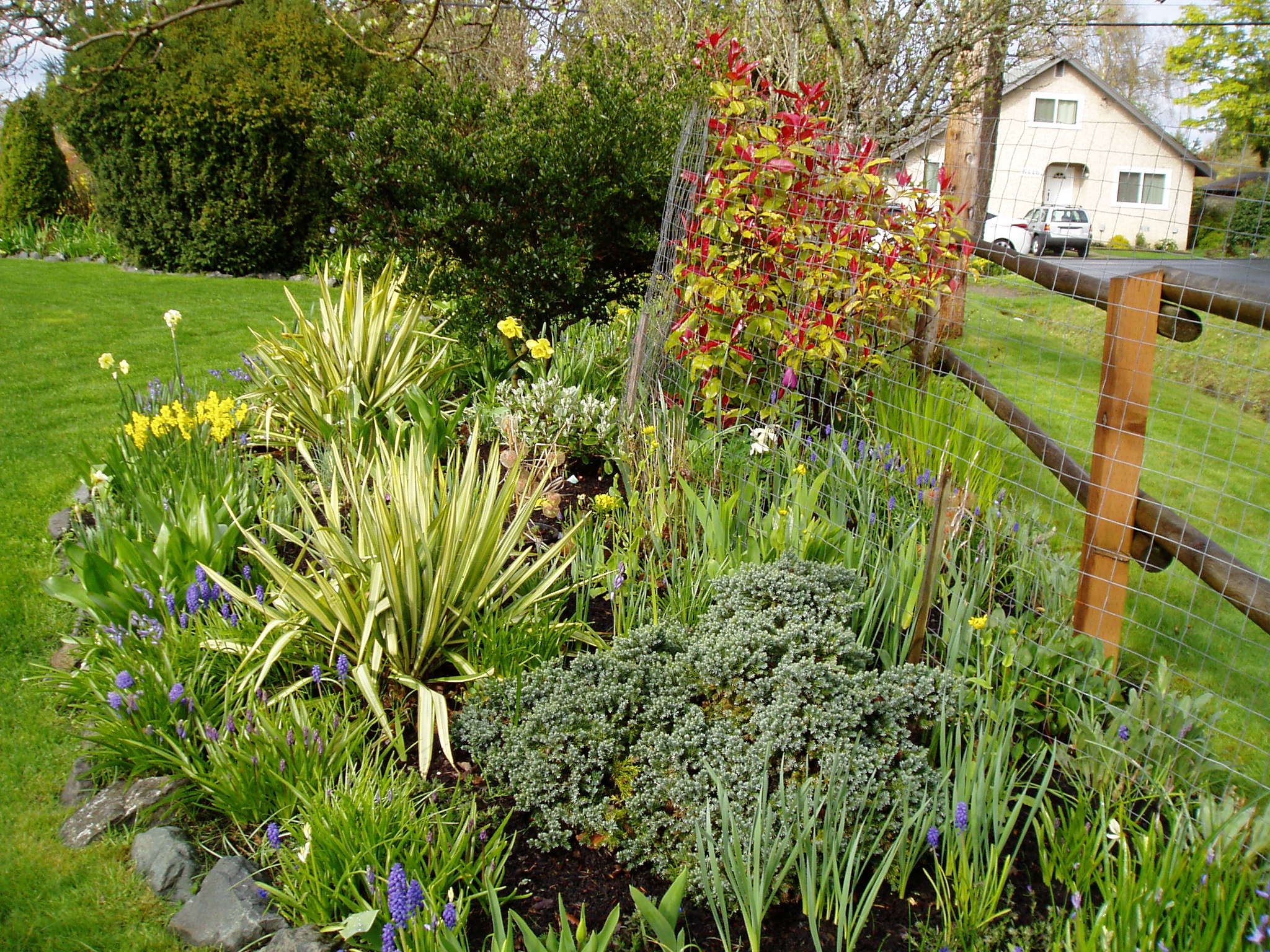
At different times of the year, this patch of the garden can look pretty good.   Many early spring bulbs survive just fine:

full sun garden in early april
photo by SVSeekins

By May there are some other successes:

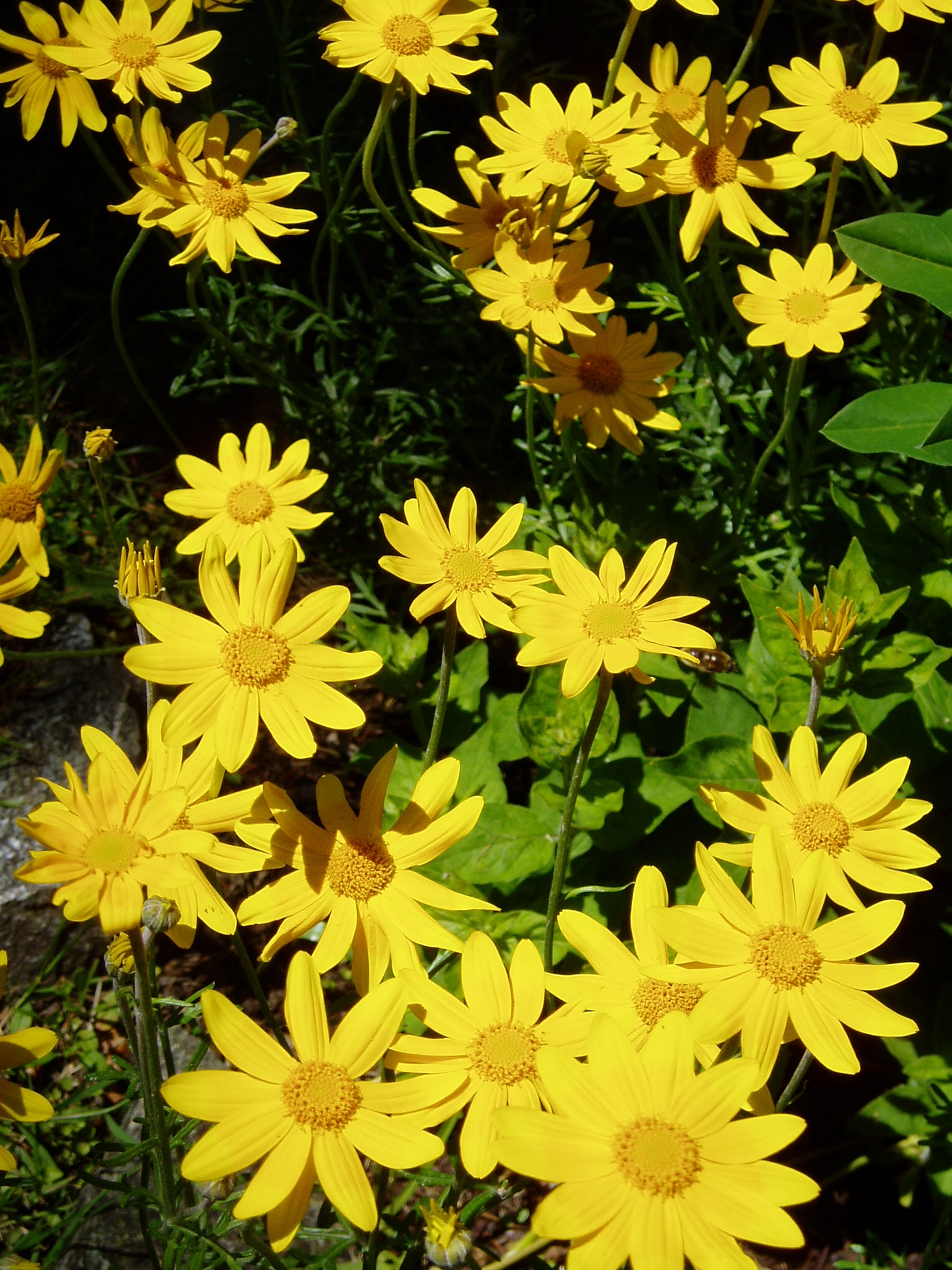
Eriophyllum lanatum, Woolly Eriophyllum, Wooly Sunflower, Oregon Sunshine, woody eriophyllum, wooly daisy, sunshine flower, garden Victoria, Vancouver Island, BC, Pacific Northwest
photo by SVSeekins
  • foxglove – digitalis
  • snapdragon
  • leopard’s bane – an early yellow bloom very reminiscent of a daisy  – – but related to an aster
  • Senecio greyii – also called the daisy bush – – or is it maybe really a yellow aster?
  • wooly sunflower – Eriophyllum – another aster type flower… do you reckon there’s a theme here?   hmmm…     (photo on right)

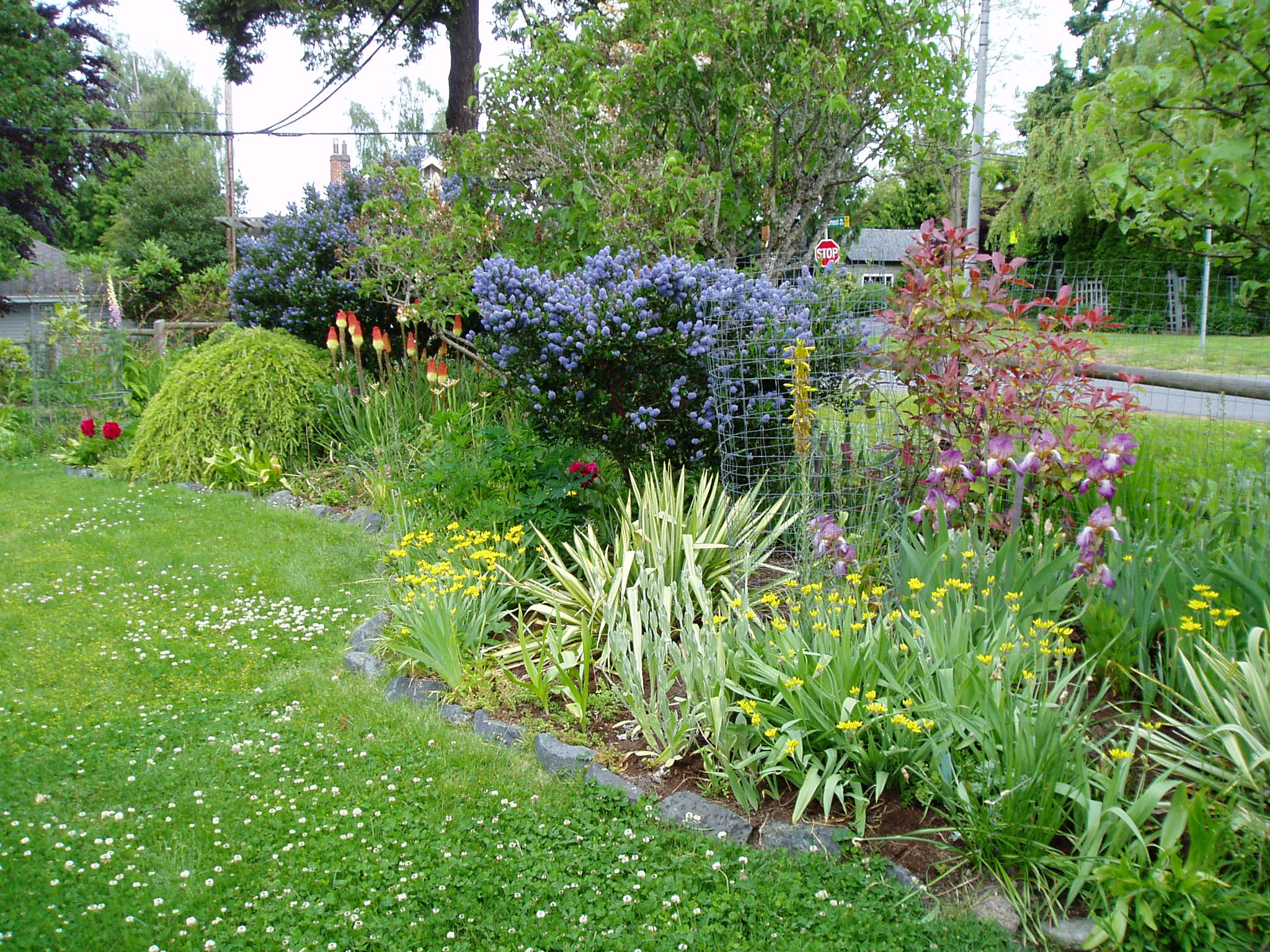
Check out this photo below from early June:

full sun garden in early June
photo by SVSeekins
  • Ceanothus (California lilac) – the two blue blooming shrubs (center & top left)
  • iris – blooming purple with white highlights (right)
  • peony – blooming red (far left)
  • red hot poker – Kniphofia, blooming yellow & orange between the 2 Ceanothus
  • Allium moly lutea – blooming yellow along the front of the bed (the last of the spring bulbs)
goldenrod & shasta daisy
photo by SVSeekins

Later in the summer, there are other gems that I can be fairly confident that the deer will turn their noses up on:

Even into the fall & winter – – when the deer are especially hungry, there are some successful survivors in the garden:

CU Colchicum grouping 1, garden Victoria, Vancouver Island, BC, Pacific Northwestolchicum - fall crocus.
photo by SVSeekins

No doubt there are other ‘deer resistant’ plants in our garden that haven’t been mentioned in this list. The more important thing to realize is that ‘resistant’ is as good as it gets.  Those critters are unpredictable when hungry.  Fawns are curious & just don’t know any better.   ‘Deer Proof’ does not exist.

Deer crossing lawn
photo by SVSeekins


-30-

P.S. The deer saga continues:

SVSeekins