Yes, I said it. “Hens & Chicks get along fine with Deer. ” I said. “They co-exists.” I said. Well that was a cocky thing to say. I’m sorry. I spoke too soon.
photo by SVSeekins
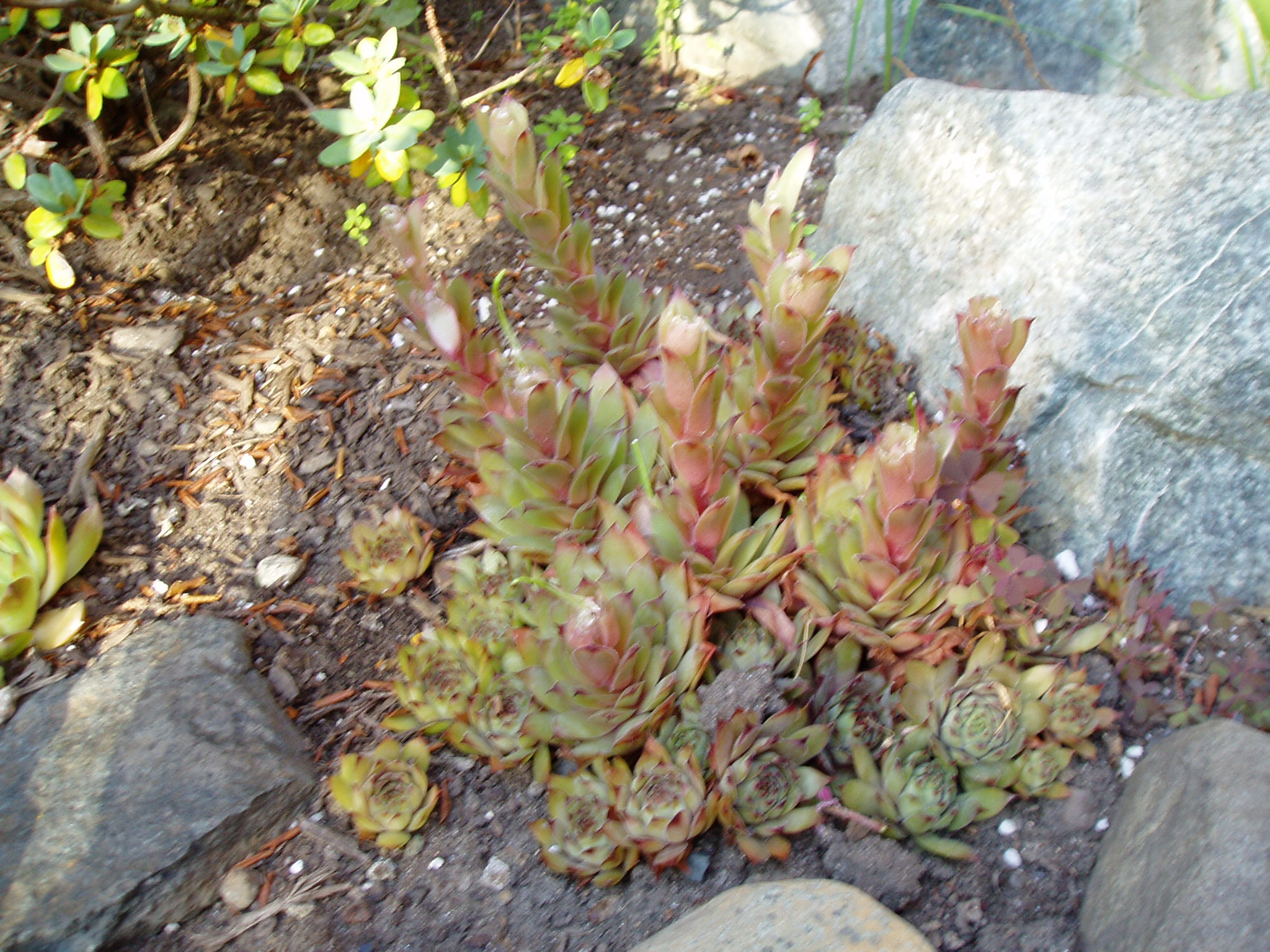
CF called me up this evening to invite me to see her flock after today’s visit from a deer…. Doesn’t that just make you FLINCH ?
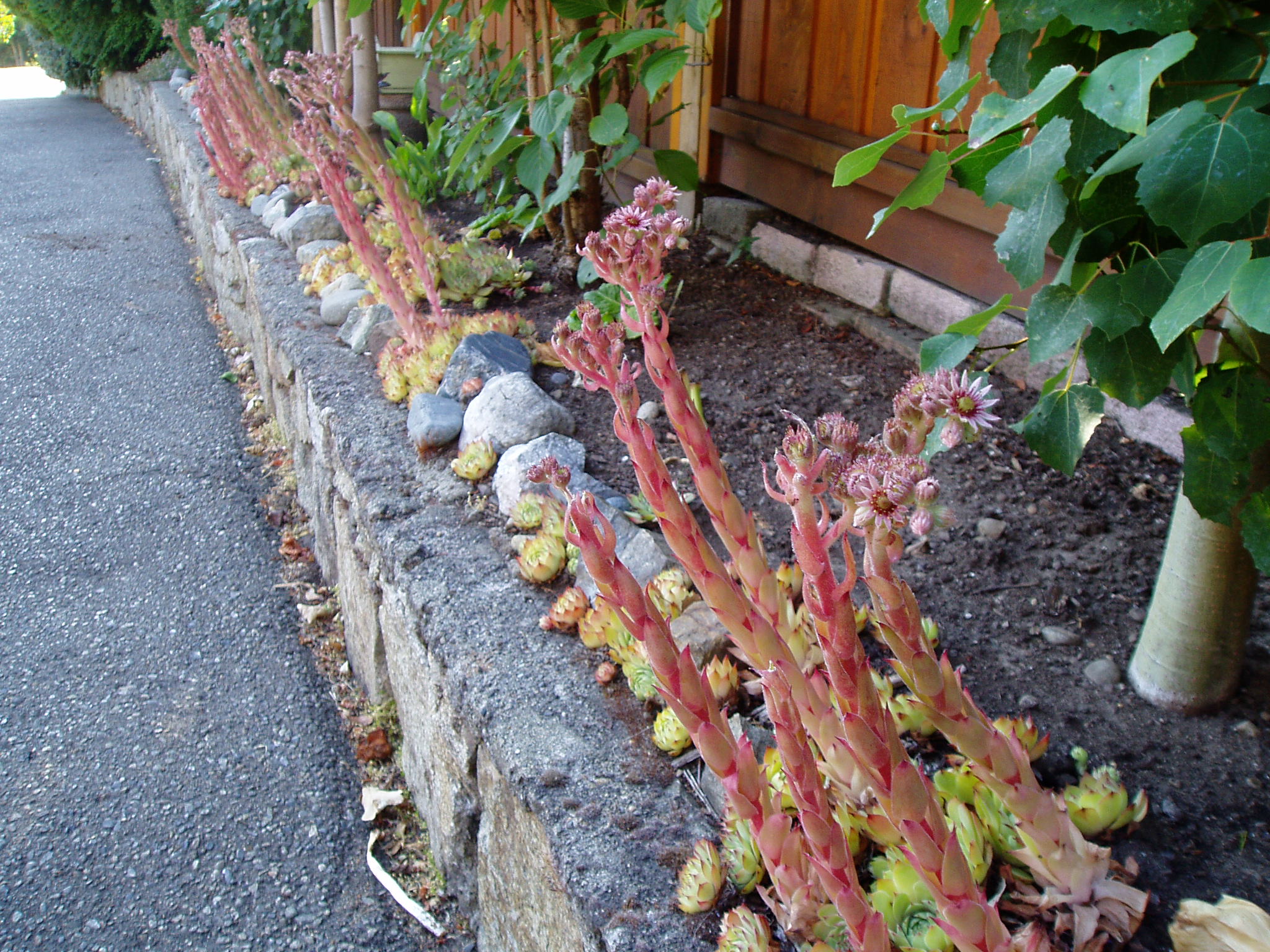
As it turns out, when the Roosters fully develop they flower on top. Who knew? Those on our mountain never seem to get that far.
photo by SVSeekins
It’s nice to see a few blooms left on CF’s plants. Isn’t it amazing how carefully the deer can select a bloom, but leave the adjacent buds for another day? How do they do that?
It’s a good thing that hens & chicks can propagate (via off-sets) without the roosters going to seed. Even so, these poor roosters… isn’t it a kick in the balls?
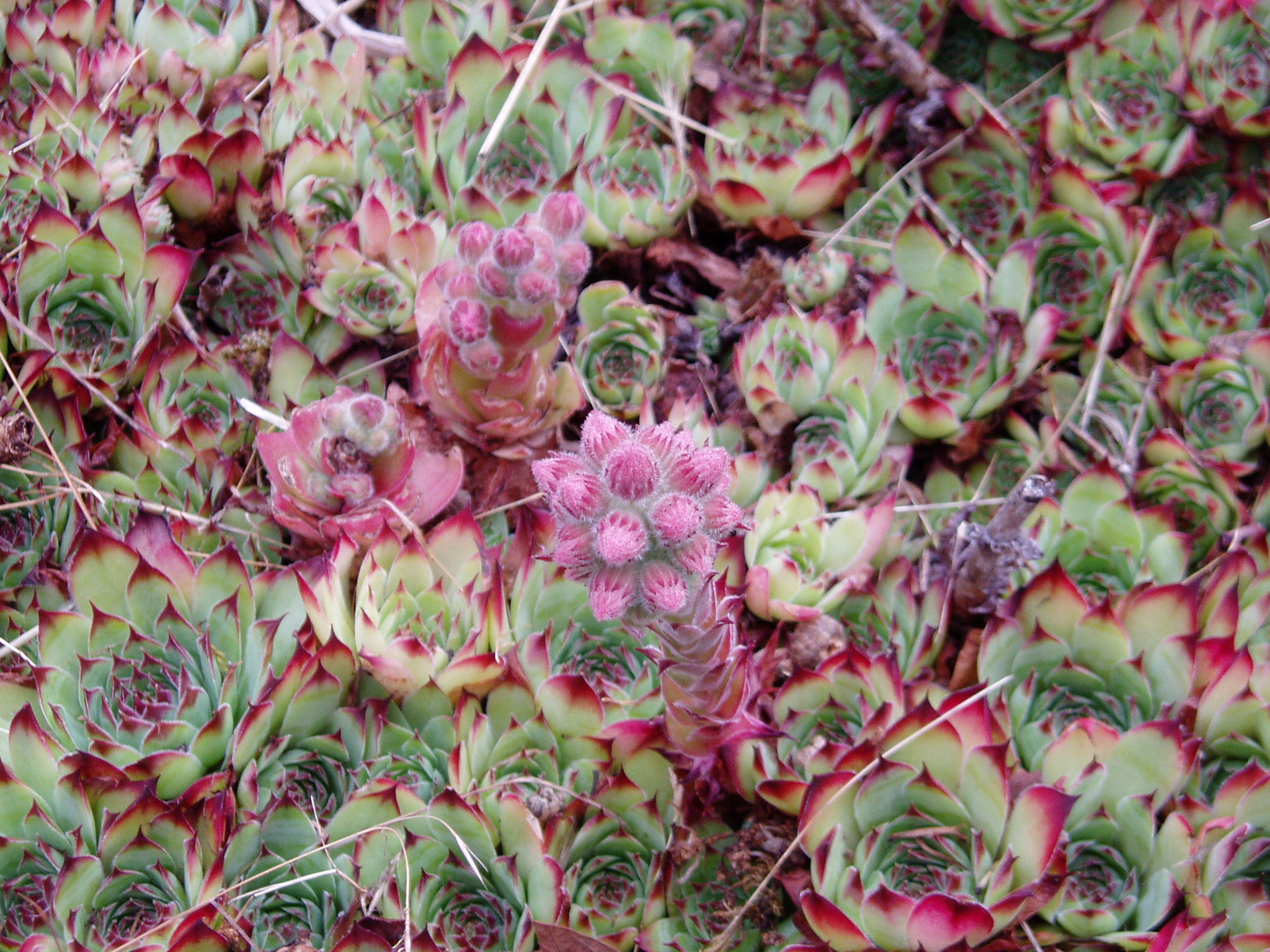
There’s something very alien yet oddly appealing about hens & chicks.
Is it because they cluster together in such a tight & tidy clump?
Is it because their turgid leaves are so different from the regular ones?
Or maybe because they choose the most inhospitable places to bring up their broods? Check out them partying it up in these rocky crevices !! Isn’t that the true meaning of ‘drought-tolerant’? & ‘well-drained” !?!
photo by SVSeekins
I’ve admired sempervivum for ages. To start, I tried to grow some myself but over-cared for them to death. (some succulents are tricky that way – – although I have a pretty good history with jade plants).
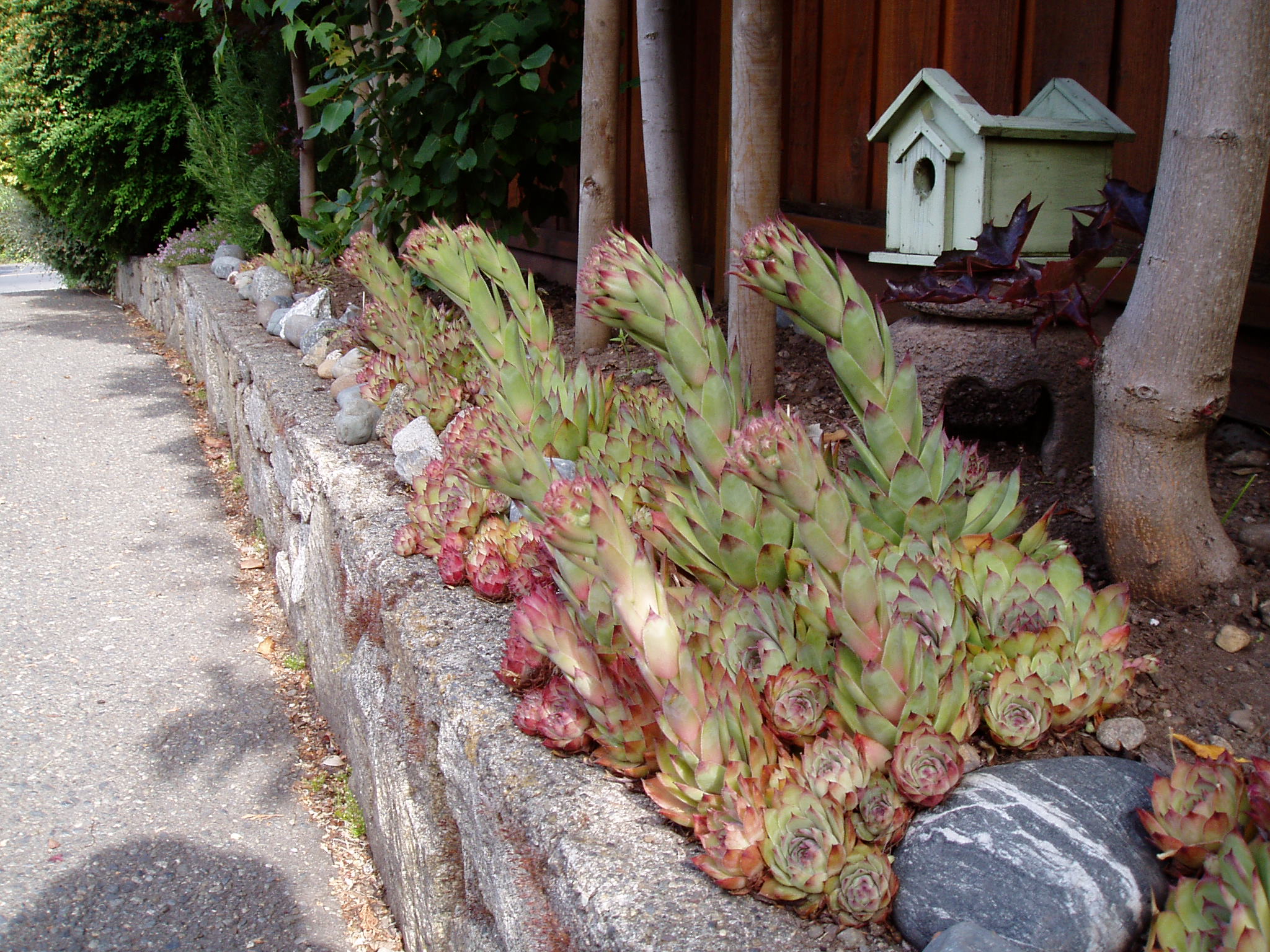
Several flocks were already established on the rocky mountainside when we moved to the Richmond house. I can just let them completely alone & they happily do their thing. They prefer being ignored. So I ignore them.
photo by SVSeekins
The deer seem to ignore them too – – or at least they must ignore them enough that the hens & the deer coexist comfortably.
Occasionally I’ll stumble over a mat of the little guys, which gives them a good squish, but they seem to recover & carry on. If any of the chicks are knocked loose, they just seem to roll down the hill & set up another colony wherever they land. Cool.
They even carry on after being covered by snow, which we occasionally get here on the west coast. I like a plant that just keeps on surviving. 🙂
Can it get any better:
– evergreen
– funky looking
– deer resistant
– drought tolerant
Oh yeah – – check out the hens & chicks when the roosters come to visit !!
For me it’s near impossible to clip a healthy bloom from the garden. A bouquet is a lovely display, but I’ve never had the knack for arranging one nicely. My lack of confidence means sacrificing the beauty in the garden just doesn’t happen.
photo by Joyce Sturney
Friends KC & JJ have the knack & the know how. I’ve admired their prowess for years, so when I was organizing a speaker presentation for the View Royal Garden Club, it’s not a surprise who got the call.
Their challenge was creating ‘a few’ real life arrangements with little more than what’s available in our own homes & gardens.
My garden in early summer looks lush, but pretty much all the colourful spring show is done…. meaning dead. By this time of year I’m more interested in camping than watering the yard. I’m sure there’re more hardy perennials that would stand up to my non-nurturing… I’m sure I could source them out… if I made the effort. But I don’t, so there.
photo by Joyce Sturneyphoto by Joyce Sturney
Even still, I feel kinda guilty having diddly to offer for the project.
The dynamic duo took to their tasks with gusto none the less. Both master gardeners have long since downsized from their family sized gardens (acerages), but they gleaned what they could around their current modest yards. Then they went further afield.
We sweet talked neighbours, pilfered boulevards, and waded rural ditches in search of art & inspiration.
photo by Joyce Sturneyphoto by Joyce Sturneyphoto by Joyce Sturneyphoto by Joyce Sturney
The adventure was for a good cause: my education & entertainment. (AND for the simple sake of the adventure itself!)
I’m happy to report a few of the tips I picked up:
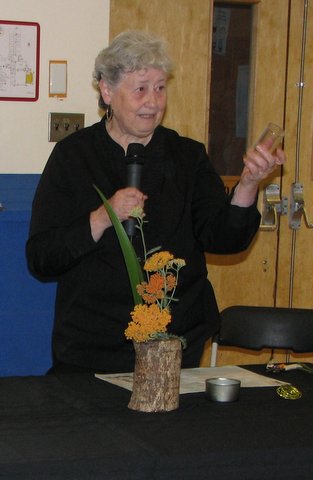
Hiding a little vase inside a hollowed out piece of firewood provides an added element to a rustic arrangement.
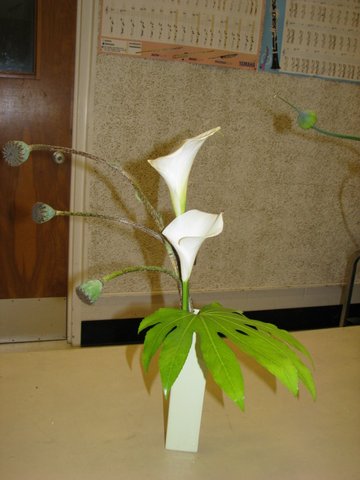
Seed pods, mossy twigs, & other non-blossoms add something extra to a bouquet.
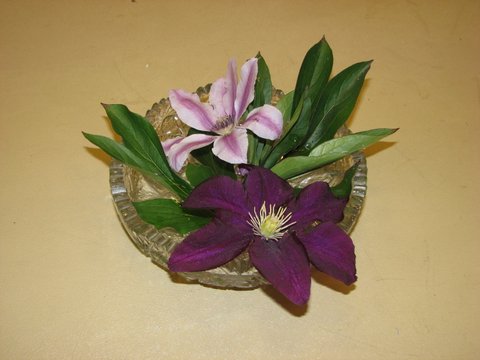
A candy dish works perfectly as a base for a low centrepiece of fragrant clematis and a peony leaf. How easy is that !?!
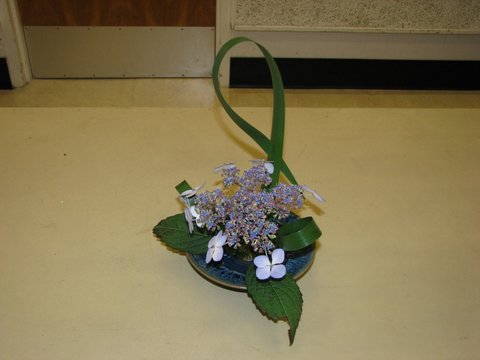
Pulling inspiration from the colour palette of the container helps in grouping otherwise dissimilar blooms.
It is fun to play with different textures in flowers and foliage.
Oasis is really only good once as a medium for holding a fresh display. After that it gets too crumbly to support stems firmly – and it loses its moisture holding capacity.
Those heavy little metal bases-with-spikes-sticking-up have a funky name. They’re called “frogs”. 🙂 They’re far better for holding flowers over multiple occasions; PLUS they help weigh down a top-heavy arrangement; PLUS they can be sourced for cheap at thrift stores. Win Win Win !!!
The safest shape to start with is a triangle & it doesn’t matter if it’s equilateral or obtuse.
Arrangers are notorious for manipulating nature. Securing a gladioli stem to a stick overnight will convince the specimen to straighten for the big show. Carefully stuffing cotton balls behind the blooms for that same time period will bend them just enough they face one direction. Pretty tricky, eh?
Stick to odd numbers in groupings: 3’s, 5’s, 7’s – – for some reason even groups can be boring.
Even when the iris bloom is done, the smooth, flat spike of the leaf works as a background for other blossoms in an arrangement.
Many of the handy tips sound very similar to those for arranging a garden bed. One thing I’ve learned from that experience is if it doesn’t work the first time, switch it up a bit. It’s just a learning thing.








 Garden Variety Life