Tag Archives: BC

Nerine Lily Through Four Seasons

Nerine Lilies have got to be on the list of easiest bulbs to grow. A good friend up the street (DP) has designated a cutting bed just for Nerines.

Nerine Lilies aren’t lilies at all. They come from the Amaryllis family via South Africa, which has weather fairly similar to ours here in Victoria.
Seriously.
Remember, we’re on mild Southern Vancouver Island in BC, Canada– zone 7-9.

Last January, a snowstorm brought temperatures to a threatening -15 C (5 F). DP’s Nerine Bowdenii are sheltered close to her house foundations in a west-facing bed– protection from the worst of the cold.
Clever.

This year, the leaf of her Nerines emerged in early February, a delight, along with some early daffodils. It’s exciting to see any new growth during our cloudy winters.
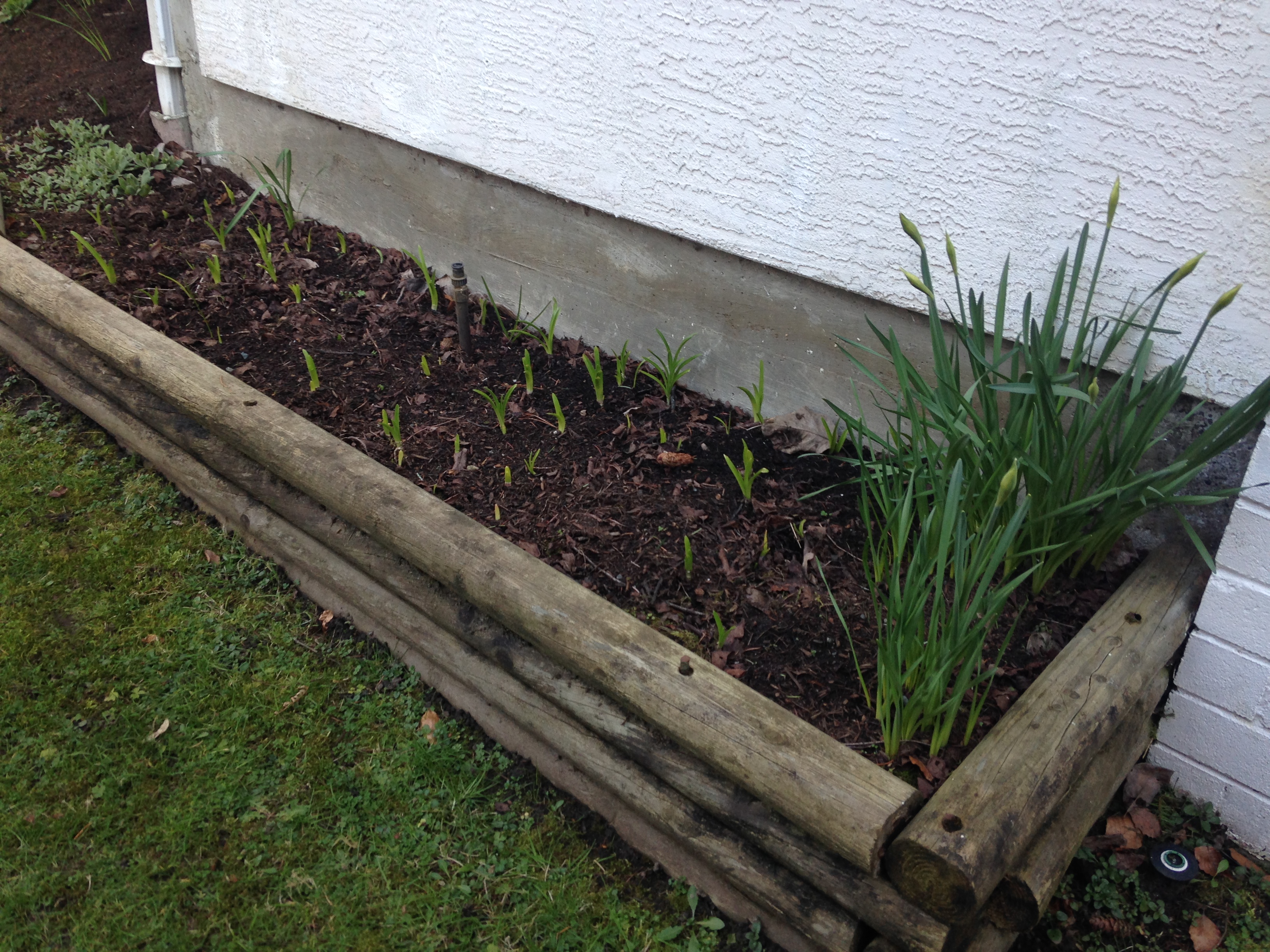
Nerine Lily, Cornish Lily, Cape Flower, Guernsey lily Bowden lily, spider lily, Nerine bowdenii, garden Victoria, Vancouver Island, BC, Pacific Northwest
photo by SVSeekins

The strappy leaves grew & that seemed to be it.
Even by mid-August, it was just a bed of leaves.
Underwhelming.
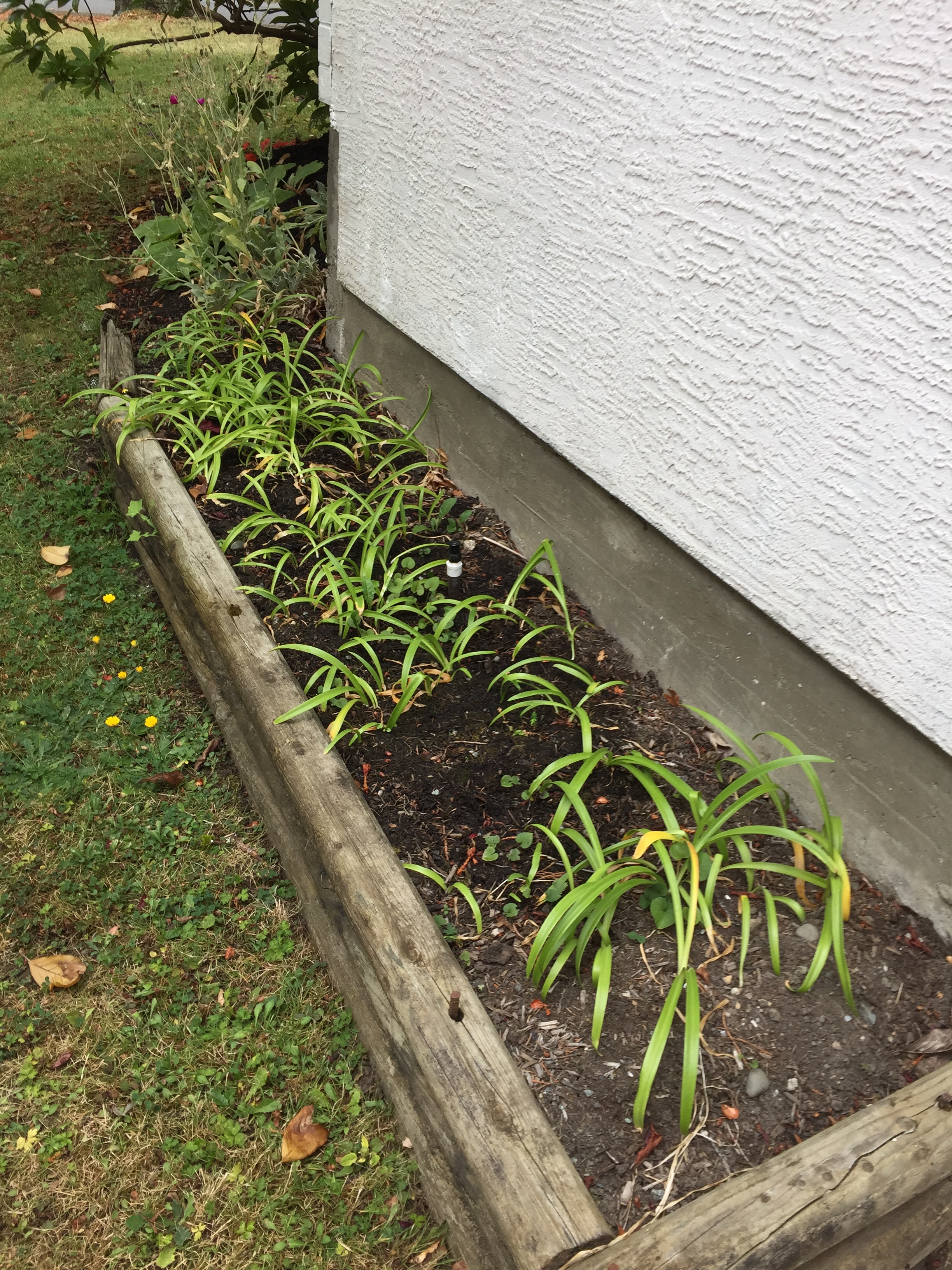
Nerine Lily, Cornish Lily, Cape Flower, Guernsey lily Bowden lily, spider lily, Nerine bowdenii, garden Victoria, Vancouver Island, BC, Pacific Northwest
photo by SVSeekins

The leaves started looking tired in early September, BUT budding stems were shooting out of the ground. With so much summer colour already fading, the promise of new flowers gives hope.
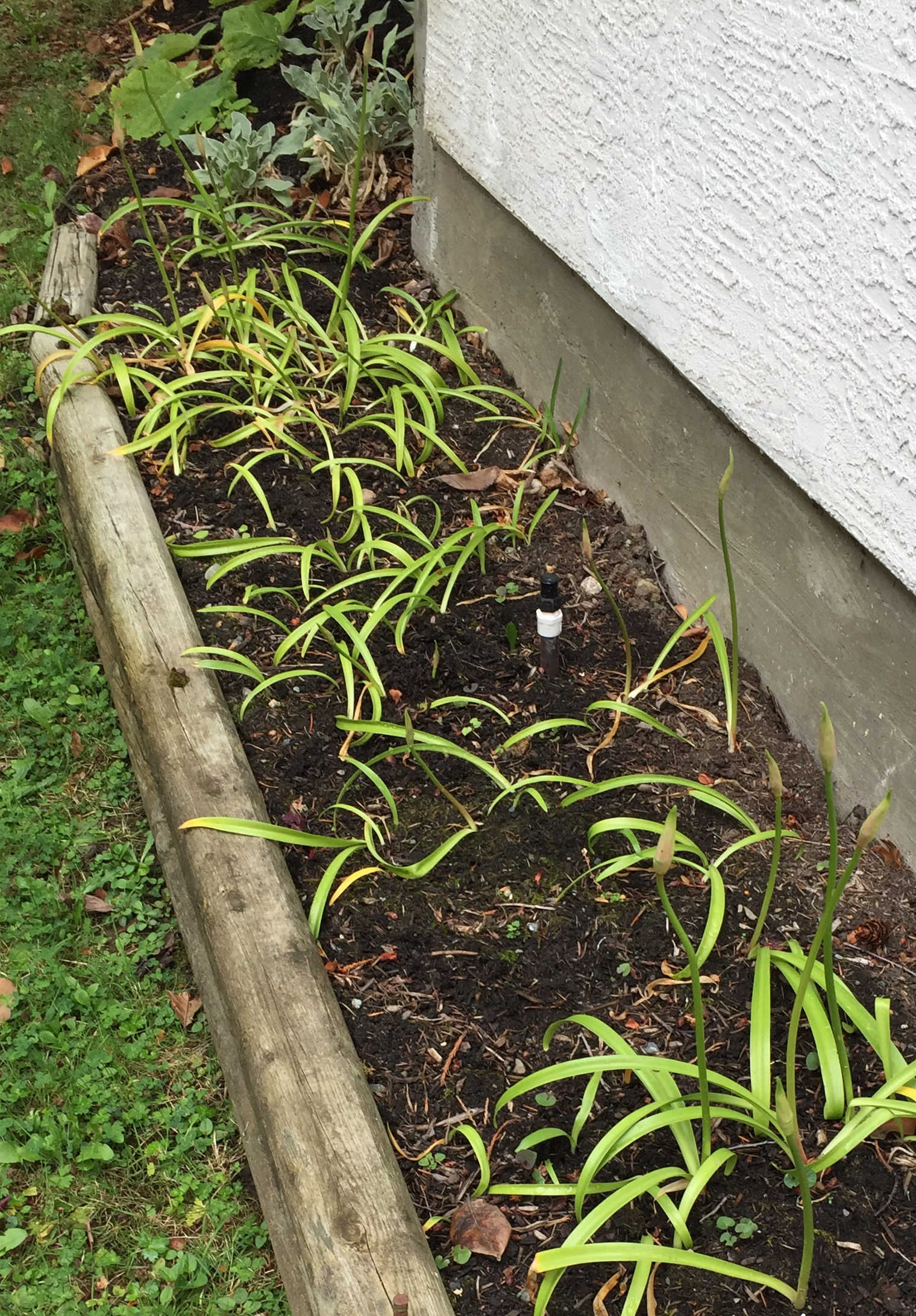
Nerine Lily, Cornish Lily, Cape Flower, Guernsey lily Bowden lily, spider lily, Nerine bowdenii, garden Victoria, Vancouver Island, BC, Pacific Northwest
photo by SVSeekins

Within two weeks, the perky pink flowers were opening. 🙂
Their leaves were fading fast, but the patch of flowers continued through all of October. Even through the rain. (Although these flowers are so close to the foundation that the overhanging roof might have protected them from some of the wet.)

Nerine Lily, Cornish Lily, Cape Flower, Guernsey lily Bowden lily, spider lily, Nerine bowdenii, garden Victoria, Vancouver Island, BC, Pacific Northwest
photo by SVSeekins

A cutting bed isn’t the showiest way to display blooms, but it serves a purpose. There’s no expectation for it to be a constant showpiece. This one is around the side of the house. DP can plunder the blooms guilt-free. She adds several stems of these firework flowers to each bouquet of her pale pink pompom Dahlias — such a striking, and long-lasting combo.

And the best part? Maintenance is minimal.

  • Nerines are deer-resistant, so there isn’t the constant fuss about protecting them from our roaming neighbourhood herds.
  • Pulling the occasional weed keeps down the competition.
  • A bit of automatic irrigation from May through September is appreciated. Most systems run at an inch per week, but even less will be fine.
  • The leaf dies back in the autumn & by mid-November, the naked stems & seedheads collapse at first frost. The only chore is to cover the bed with a blanket of leaf mulch.
  • When they are really comfortable, Nerine bowdenii multiply like crazy. Still, they perform well even when crowded. After several years, dig & divide, shifting & gifting the excess before mulching your treasures.

Easy peasy.
Right?

Nerine Lily, Cornish Lily, Cape Flower, Guernsey lily Bowden lily, spider lily, Nerine bowdenii, garden Victoria, Vancouver Island, BC, Pacific Northwest
photo by SVSeekins

In truth, I’ve yet to succeed with Nerines in our garden.
BUT I think there are a couple of reasons why:

  • It is very dry in Victoria for months in the summer & I barely water our borders.
  • Most of our beds get soggy during our rainy winters.
  • Happy Nerines in our area are irrigated AND in raised beds… or in sandy soil… or on slopes that drain quickly.
  • Nerines also need a shallow planting with their shoulders exposed to light.

Those are a few ways that I could’ve screwed up. Too little water in summer… too much water in winter… or too deep for planting. 😦
Overall, if your nerines are performing well — you’re in the pink.
Easy peasy. 🙂

Nerine Lily, Cornish Lily, Cape Flower, Guernsey lily Bowden lily, spider lily, Nerine bowdenii, garden Victoria, Vancouver Island, BC, Pacific Northwest
photo by SVSeekins

-30-

Other Indispensibles:

Silk Tassel Bush, Garrya Elliptica

There are a few priorities we have for the hedging around our property. I easily get swept up by & fall in love with new, must-have plants. This list reminds me of our conditions… and helps me not waste money by killing off new, unsuitable beauties in our garden.

  • 1 –We want some privacy from the busy street corner, so evergreens are a plus.
  • 2– A solid wall of green hedging can be tedious. Foliage varieties are more interesting to me.
  • 3– A thick telephone cable hangs about 15 feet above our northern border, so we shouldn’t plant anything that interferes with this height restriction.
  • 4– The deer graze through our garden a few times daily, so deer resistance is a factor.
  • 5– The mini-climate on the southern tip of Vancouver Island is Dry Summers & Wet Winters. Our drainage is pretty good, reducing the wet winter threat. It’s dragging the water hose around all summer that’s more work & expense than I’m up for. Drought tolerance is key.
  • 6– Essentially, I’m a lazy gardener, so I prefer low-maintenance choices.
  • 7– And, of course, even though I can be led astray by anything decorative, it’s that ‘decorative’ that makes a garden sing. Some seasonal interest is simply an undeniable factor.
garrya elliptica, silk tassel bush, Wavyleaf Silk tassel, Coast Silktassel, Coast Silk-tassel, Silk Tassel Bush, Wavyleaf Silk-tassel, feverbush, garden Victoria BC Pacific Northwest
photo by SVSeekins

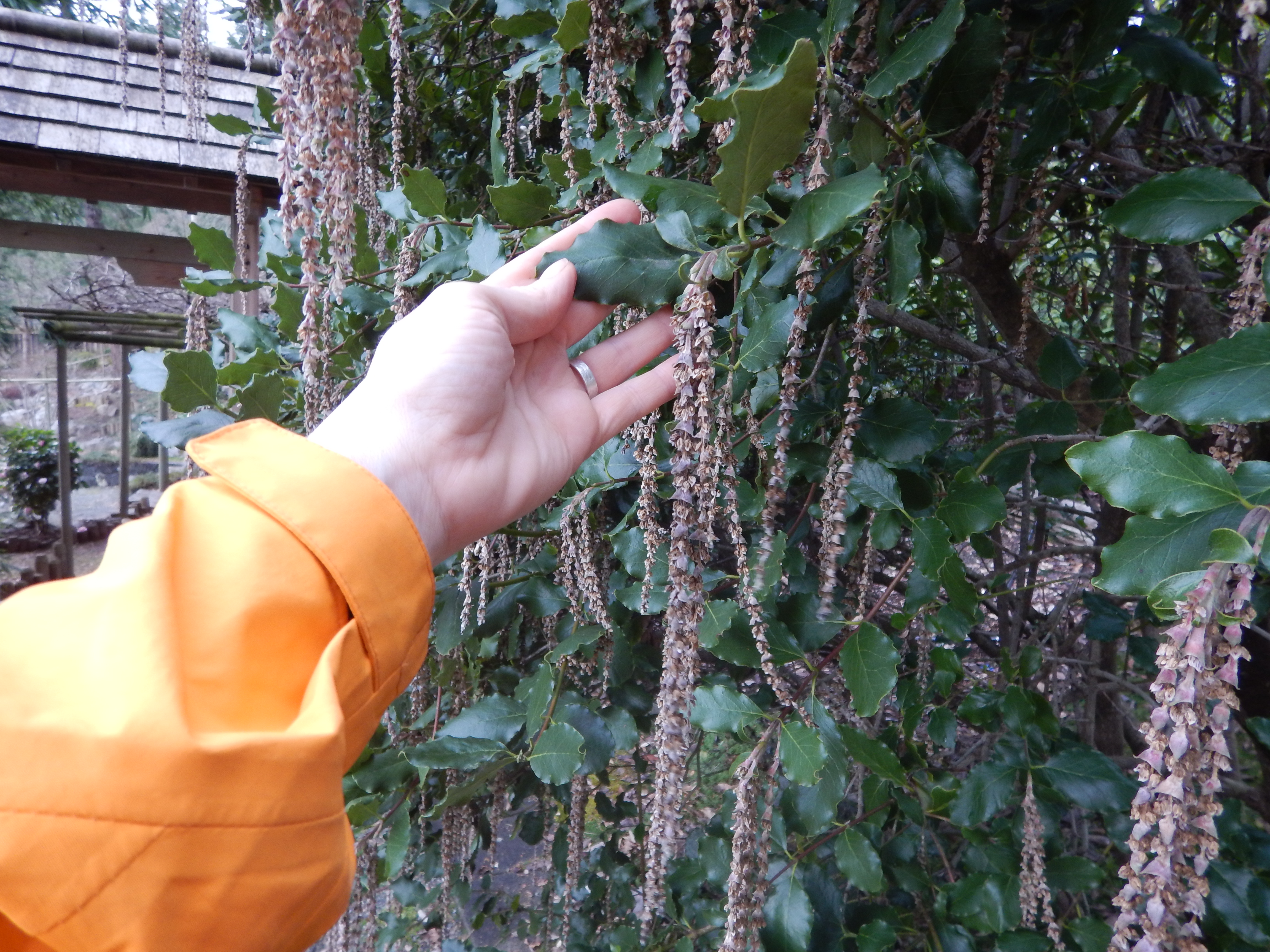
A few years ago, in late February, I was exploring the winter garden at the Horticultural Centre of the Pacific. The Garrya elliptica enchanted me. I wanted one of our own. I NEEDED one… BUT I had to check my list of priorities. (Yes, occasionally, gardeners can show willpower against overwhelming plant lust).

garrya elliptica, silk tassel bush, Wavyleaf Silk tassel, Coast Silktassel, Coast Silk-tassel, Silk Tassel Bush, Wavyleaf Silk-tassel, feverbush, garden Victoria BC Pacific Northwest
photo by SVSeekins

So… How does the Silk Tassel Bush stack up? 
Pretty good, actually.

  • 1 —Evergreen check
    — It is a broadleaf evergreen. Once established, it creates a great background to show off the plants in front of it.
  • 2– Interesting Foliagecheck
    — The small, oblong leaves are unusual.  They’re shiny & dark green on one side & slightly woolly on the other. The leaf edges are a little bit wavy. They’re different from anything else along our shrub border. That creates interest.
  • 3– Mature Height under 15 feet fingers crossed
    — The specimen at HCP is about 12 feet tall. Most websites I found call G. elliptica a shrub growing about 6-16 feet tall. Others say it can be a small tree that might interfere with our overhanging wires. We could risk that, right? Besides, I don’t water much, & I reckon this will limit the Tassel Bush from getting too big. 
  • 4– Deer Resistancefingers crossed
    — Credible websites say Wavyleaf Silktassel is deer resistant, but I’ve learned that each herd & situation can change that answer. However, these leaves are tough & leathery, something deer tend to avoid unless they’re super hungry. So it’s worth a chance.
  • 5– Drought Tolerancecheck
    — The leaves are also a bit waxy. This hints at its drought tolerance. The Tassel Bush is native to the coastal range of Oregon & California, where it grows in warm, dry conditions. I reckon there’s a good chance this species will naturally migrate north to become native here as our summers get longer & drier. Hopefully, our winters won’t get too much colder — G. elliptica is listed as zone 8, tolerating cold to -23 C (-10 F).
  • 6– Low-Maintenancecheck
    — All the websites I researched said ‘low maintenance’… so it must be true, right? I hope so. The 12-foot shrub I admired that January at HCP was at least 3 feet taller by the following October. I suspect the volunteer gardeners there practice a bit of selective pruning to keep it the size they prefer. I’ll likely be OK with a taller shrub, but I’m also up for getting the loppers out if needed.
  • 7– Seasonal InterestBINGO!
    — The catkins are forming in early autumn. Still, because there’s so much attention on the fall colours, these catkins catch little attention. By January, it’s a whole other story. All winter (and even through April), when there’s little else to marvel over, Garrya elliptica becomes the show. The catkins grow into wonderfully long, striking tassels.

That’s it — Garrya elliptica passes our test.
What else could we want? 

The only thing missing is the assurance that Silk Tassel Bush has wildlife value in our area. Usually, it takes eons of co-evolution for these values to develop. I’ve convinced myself that Oregon & California can be considered ‘adjacent’ to our Pacific Northwest. It’s certainly closer than Asia & Europe, where some species we included in our garden originate.
So why not?

We sourced a Garrya elliptica & installed it along our mixed shrub border.

The Garrya we planted has yet to make itself really comfortable & perform to its best. In a few years, it will look more like the specimen at the HCP. 

With G. elliptica, each plant is gender specific. A male shrub creates only male flowers. A female creates only female flowers. The male catkins are super long compared to females. I don’t know for sure which gender our shrub is, but I’m happy to see the tassels! Time will tell. Either way, I’m pleased with our decision.  🙂

garrya elliptica, silk tassel bush, Wavyleaf Silk tassel, Coast Silktassel, Coast Silk-tassel, Silk Tassel Bush, Wavyleaf Silk-tassel, feverbush, garden Victoria BC Pacific Northwest
photo by SVSeekins

-30-

Snowdrops Survived Deep Shade

A rocky outcrop across from Camosun College’s Dunlop House entrance has been covered by a sprawling evergreen for ages. 

galanthus, snowdrops, garden Victoria BC Pacific Northwest
photo by SVSeekins

Each year, the Juniper grows a little bit more & covers even more of the knoll. We often pass by on our morning walks. Over time, memories of what grew alongside those shrubs fade. This winter, there is a welcome flashback.

galanthus, snowdrops, garden Victoria BC Pacific Northwest
photo by SVSeekins

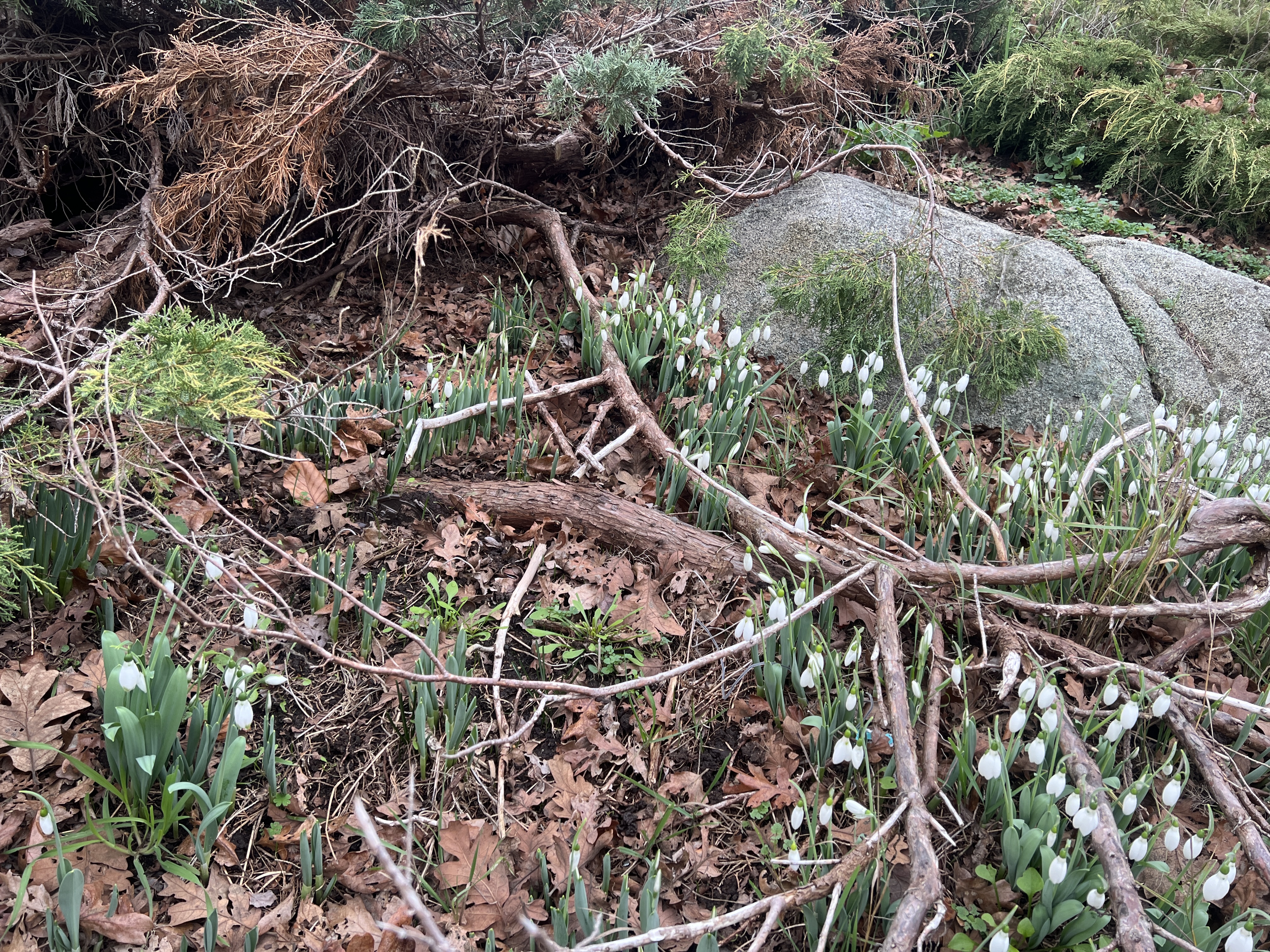
A branch has died back, allowing the winter sun to warm the ground beneath. When we walked by on the morning of December 29, this swath of snowdrops was there — already in bloom! I’m delighted & so impressed that these galanthus survived all those years of overgrowth. Had they continued to bloom annually despite the darkness underneath the Juniper foliage?

galanthus, snowdrops, garden Victoria BC Pacific Northwest
photo by SVSeekins

Most articles about growing snowdrops explain that these bulbs prefer partial to moderate shade. I’ve yet to find any that mention dense coverage.

GOERT (Garry Oak Ecosystem Recovery Team) says Native bulbs can lie dormant for many years when covered by invasives. Perhaps snowdrops react the same way? 

Now, I’m curious to see which other types of bulbs bloom here through the spring. What’s next to come? Crocus? Glory of Snow? If we’re really lucky — perhaps our native Shooting Star or Fawn Lily … ❤️

-30-